



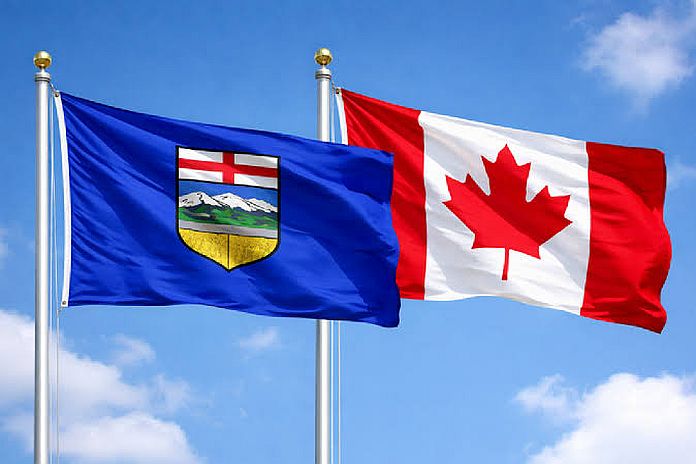
 CALGARY, Canada – Prime Minister, Mark Carney, has announced that the government of Canada will refer the government of Alberta’s proposal for a West Coast pipeline project to the Major Projects Office (MPO). This pipeline would transport one million barrels per day of oil toward global markets. The proposed route will largely follow the existing Trans Mountain corridor and will fully respect the Oil Tanker Moratorium Act.
“The world faces an energy crisis on three levels: our cost of living, our climate, and our sovereignty increasingly depend on a nation’s ability to supply and control its own energy. More than any other country, Canada is positioned to become the leading supplier of clean and conventional energy to ourselves and the world. To harness this opportunity, we need a new approach – one that builds sustainably and in full partnership with provinces, territories, Indigenous Peoples, and the private sector, and at the speed and scale this moment demands,” said the prime minister’s office – Communications.
Canada and Alberta will each share equal partnership in the project, and there will be a meaningful equity stake reserved for Indigenous Peoples. Consultations with Indigenous representatives will begin immediately. Pembina Pipeline Corporation will be a private sector investor and will contribute its expertise to the project’s development, which will be led by Trans Mountain Corporation. With the governments’ stake in this project, we will act as catalysts creating additional opportunity for private investment as the project advances. This is a historic partnership between government, the private sector, and Indigenous Peoples to build nation-changing infrastructure that unlocks our resources and delivers them to global markets. This moment is a once-in-a-lifetime opportunity – and Canada is moving quickly to seize it.
The MPO will now initiate the process for the pipeline’s potential listing as a national interest project under the Building Canada Act and immediately begin consultations with Indigenous groups, provinces, and territories. Listing under the Act means that the project would undergo a streamlined review that upholds rigorous environmental standards and fully respects the rights of Indigenous Peoples, while streamlining the federal permitting process. Should the project be listed as one of national importance by the MPO, it will be subject to the conditions set by the Office. Throughout this process, the MPO will engage with the Government of British Columbia, and all decisions will be informed by meaningful consultations with Indigenous communities.
“To ensure Alberta will export some of the lowest-carbon intensity oil in the world, the Government of Canada, the government of Alberta, and the Oil Sands Alliance have reached an agreement to advance construction of the Pathways Project. Pathways will be one of the world’s largest carbon capture and storage projects, and alongside other emissions reductions commitments in this agreement, it will achieve 16 million tonnes of emissions reductions per year.”
“Together, the construction and operation of a west coast pipeline project and the Pathways Project will create approximately 175,000 new jobs in Alberta, British Columbia, and across the country. In addition to the economic development opportunity inherent in Indigenous Peoples participating in holding an ownership stake in the pipeline, the project will generate significant economic opportunity for Indigenous communities through business development, contracting opportunities, jobs, training, and opportunities for equity ownership,” said PMO.
The initiatives announced reflect the Memorandum of Understanding between the government of Canada and the government of Alberta reached in November 2025, and its Implementation Agreement reached on May 15, 2026. The agreement reached with the Oil Sands Alliance gives industry the certainty they need to invest and build. It includes major commitments to sustainability and unlocks our world-class natural resources.
“This is cooperative federalism at work. Today’s agreement realises the enormous potential of Canada and Alberta when we build together. In a more dangerous and divided world, Canada is focused on what we can control – we are building our strength at home, diversifying our export partners, and fulfilling our potential as an energy superpower.”