



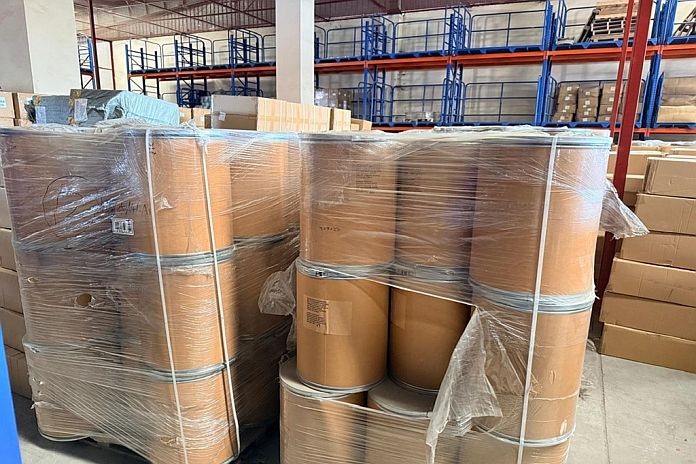
SINGAPORE – An INTERPOL-coordinated operation across 90 countries and territories has resulted in the seizure of 6.42 million doses of unapproved and counterfeit pharmaceuticals worth USD 15.5 million.
Operation Pangea XVIII (10 – 23 March 2026), led to 269 arrests and the dismantling of 66 criminal groups involved in the illicit pharmaceutical trade.
Law enforcement agencies worldwide launched 392 investigations and executed 158 search warrants targeting criminal networks distributing unapproved, counterfeit, substandard and falsified medical products.
Among the most seized products were erectile dysfunction medications, sedatives, analgesics, antibiotics and anti-smoking products. In addition, digital enforcement operations disrupted approximately 5,700 criminal-linked websites, social media pages, channels and automated bots used to market and sell illicit medicines.
INTERPOL secretary-general Valdecy Urquiza, said:
“Fake medicines are not just a fraud – they put lives at risk. Through online marketplaces and informal supply chains, criminals can exploit gaps in oversight, targeting people looking for fast or affordable treatment. The consequences can be severe, or even fatal. For law enforcement, protecting the public means disrupting the networks behind these products by strengthening cooperation across borders. Nearly 20 years after the first Pangea operation was launched, it continues to deliver real results.”
Antiparasitics making a comeback
There was a sharp rise in the seizure of antiparasitic medicines – a trend last seen in previous editions of Operation Pangea during the COVID-19 pandemic.
This increase is being driven by growing online promotion of these products as alternative cancer treatments, despite repeated warnings from health authorities that such claims are not supported by scientific evidence.
Two substances dominated the seizures: ivermectin, used to treat parasite and worm infections, and fenbendazole, a deworming agent approved only for veterinary use.
Often mislabelled as health supplements, these products are being sold as part of so-called “cancer treatment kits”, making them easier to access and avoid regulation.
Australia, New Zealand, Singapore, the United States and the United Kingdom all reported significant seizures of both substances.
Quick fix promises threaten health
Demand for pharmaceuticals linked to performance and lifestyle continues to grow, with anabolic steroids once again the dominant category, with 86,732 doses seized globally.
Demand is largely driven by the bodybuilding and fitness communities, with production detected in parts of Eastern and South-Eastern Europe and established manufacturing hubs in India, the United Kingdom and the United States.
In Bulgaria, authorities dismantled a clandestine production facility and seized millions of mislabelled pills, ampoules and injectables.
Biser Vuchkov, director of international cooperation directorate at Bulgaria’s ministry of Interior, said:
“Through its continued involvement in INTERPOL’s Operation Pangea, Bulgaria demonstrates unwavering resolve against illicit pharmaceuticals, dismantling criminal networks and protecting public health. The latest results highlight the power of coordinated action in disrupting illegal production, trafficking, and online distribution worldwide.”
Authorities across the globe also identified growing demand for peptides – synthetic substances promoted online for muscle growth, fat loss and recovery.
Originally used in research settings, these products are now widely sold as “research chemicals” or “cosmetic peptides” to avoid detection, despite having no approved dosage or safety standards for human use.
Significant seizures were reported in Australia, Ireland and New Zealand, with hundreds of peptide vials were intercepted in multiple enforcement actions.
Meanwhile, high demand for GLP-1 medicines, originally developed to treat diabetes but now widely used for weight loss, has opened up new opportunities for criminal networks.
Illicit versions are often manufactured in Asia and sold online for as low as USD 10. In some cases, they have been found to contain sibutramine, a substance banned in many countries due to links to heart attacks and strokes.
Criminals targeting essential medicines across Africa
The participation of 12 African countries in this year’s operation revealed a clearer picture of the flow of illicit pharmaceuticals across the region. Unlike other regions, seizures in Africa mainly comprised essential medicines such as painkillers, antibiotics and antimalarials.
Criminal groups often sell these illicit medicines through informal markets to meet treatment demand, particularly in areas where access to affordable healthcare is limited. Many of these illicit medicines were found to be substandard, falsified, expired, improperly stored or missing key safety information.
Enforcement actions reflect the scale of the problem. In Burkina Faso, authorities intercepted 384,000 antibiotic capsules. In Côte d’Ivoire, one tonne of counterfeit ibuprofen was seized from a single vehicle, and in Cameroon, thousands of bottles of suspected counterfeit antimalarials and antibiotics were intercepted.