



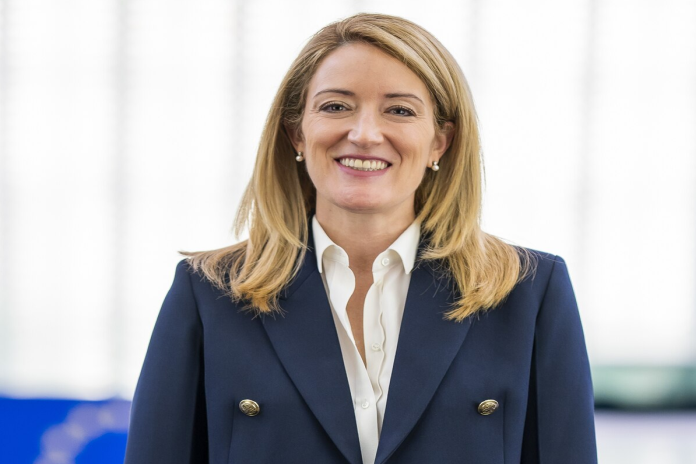
– President of the European Parliament, Roberta Metsola Speech at the Informal Meeting of Heads of State and Government Nicosia (Cyprus), 24 April 2026
The first is our response to the economic impact of the Middle East crisis. The second is parliament’s assessment of the ‘One Europe, One Market’ Roadmap, and the third is on the Multiannual Financial Framework. But before I begin, I want to welcome the adoption of the 20th sanctions package and the release of the 90 billion Euro loan for Ukraine that parliament had voted and signed into law two months ago. I understand that our attention is on the Middle East, but in a world that is growing more volatile, leadership is measured by the ability to act on one crisis without turning our backs on another. We are proving that.
Which brings me to my first point: energy prices and the Middle East.
Seventeen days into the ceasefire, it remains fragile – we all see that – but it creates the conditions for talks, and it must hold. I met with the Gulf Cooperation Council, including their secretary-general, to offer the European Parliament’s support, and I know you will also be meeting with him and regional partners today. Nikos, Cyprus is Europe’s lighthouse in the region, and the Cypriot Presidency is proving to be a crucial bridge to the Middle East.
We all want the same thing: a swift and lasting end to the war – one that secures rights, dignity and liberty for the Iranian people, that addresses concerns over Iran’s nuclear and ballistic missile programme and their support of proxies, and that puts an end to the obstructions in the Strait of Hormuz. Still we see the Iranian regime conduct arbitrary executions, or detain dissidents – including Noble Prize laureate Narges Mohammadi who was sentenced again to seven and a half years in February. It is important that all those people and their families see that Europe has not forgotten them.
Freedom of navigation must be restored, and I welcome the growing coalition of partners cooperating on this front and showing the ability of Europe to tackle a crisis we did not invite but we must confront – and here again, we see how important it is for us to have a clear strategy for Article 42.7 as part of our European Defence and security toolbox. On energy prices, I have seen the Commission’s proposals, and I agree that we need temporary and targeted relief. Quickly. But while we act for today, we cannot abandon what is working for tomorrow. We shouldn’t fix what isn’t broken.
The gas-storage rules we introduced four years ago stabilised markets, strengthened trust and improved cooperation between member states. And our move to diversify our energy mix and reduce dependence is paying off. The countries holding up best today are those with more renewables, stronger nuclear capacity and less reliance on gas.
That didn’t happen by accident. It happened because we took deliberate decisions to make us more resilient, more independent, and less exposed to shocks. Our long-term strategy is working. We need to stay the course.
That means more investments in the infrastructure to make it work. Parliament is already advancing its work on the Grids Package which will modernise our networks to support cleaner, more decentralised energy, and I expect we will conclude it in the second half of the year. How these proposals are received matters for the legislative process to function smoothly.
It also means keeping an open mind about how we generate our electricity. The Commission’s strategy for Small Modular Reactors and Advanced Modular Reactors is a step in that direction. This is something the European Parliament pushed for, and we are ready to move quickly to make it happen.
Point number two: the ‘One Europe, One Market’ Roadmap.
In Alden Biesen in February, we agreed that at the European Council in March we would take decisions and set timelines. We are now at the point where commitments need to turn into delivery.
I am grateful to the Commission and Council for their cooperation in getting this roadmap over the finish line. Under the circumstances, I think our teams worked well and quickly. The process could have been better – and longer. Some Political Groups would also have liked more emphasis on investment, housing, digitalisation, the social dimension, and the need to address national blockages and gold-plating. But with that said, it is ambitious, it strengthens our capacity to withstand shocks, and it delivers on what we set out in the Joint Declaration. This is Europe responding to what it needs.
On the priority files in the roadmap, the European Parliament will do its job. And we will do it well. But we also need the space – and the trust – to do our job of democratic oversight and legitimacy properly. 720 MEPs from more than 200 political parties are not, and will never be, a rubber stamp. Now we have target dates for priority files and a political commitment that we will do what we can to reach them, in full respect of the legislative process – this is critical -, and there are some files that have not yet been proposed. So, the disclaimer here is that the European Parliament will not accept to be put under pressure if proposals do not come in good time and are well drafted. Ambition is good but so is realism. We owe citizens that. I have said this before: most people see Europe as one system, and they judge it on one thing – whether it delivers. We need to work together.
This ties into my final point: the multiannual financial framework.
Last week, members of the European parliament’s budget committee endorsed our negotiating position on the next long-term budget with a strong majority. Next week, plenary will vote. That will allow us to enter negotiations with the Council, once they adopt their mandate. So in April, we will have our position, we will know what we want, and we will be ready. Allow me to clarify two things before we move forward though.
First, our committee report is not challenging the overall structure of the new budget. We support a stronger focus on competitiveness and defence. What we are doing is asking you to stay open to the idea of new Own Resources. And secondly, we cannot expect new generations to pay for old debt. On NextGenerationEU, we need to ensure that repayments and interests do not eat into our future ambitions. Once again, short-term measures shouldn’t create long-term problems.
Let me end with this: Europe cannot face a new era with an old framework.
The current budget has been stretched to its breaking point by crises it was never designed to absorb. We made it work, but we see its limits. We cannot keep responding to a changing world with outdated tools. What we need now is a budget that is fit for purpose – ready to deliver where, and when, it matters most.