

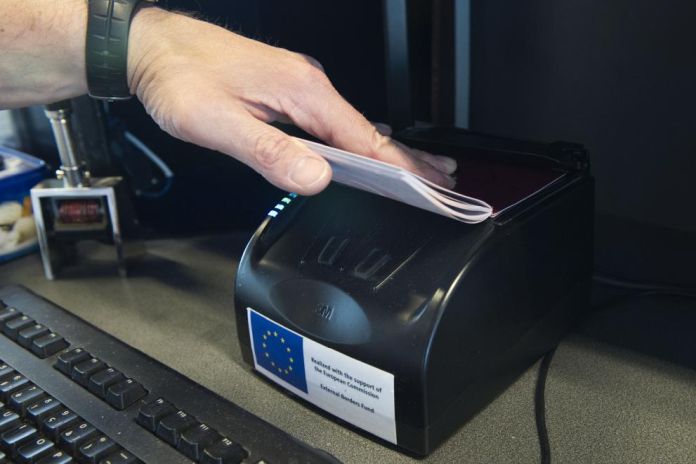
 BRUSSELS, Belgium – The EU’s new digital border system, the Entry/Exit System, became operational on 12 October 2025. It will apply to non-EU travellers entering or leaving the EU and will make travelling smoother and safer for all. From now on, EU countries will start electronically registering the data of those coming into the EU for short stays – 90 days in 180-day period.
In practice, where the new system is already in place, non-EU nationals will have their passport data, biometric data (facial image and fingerprints) and entry or exit data registered in the system. The registration will be done at the first entry and at the first exit; then, for each subsequent entry and exit, only a fast verification will be needed. The new system replaces the current practice of manually stamping passports and meets the highest standards of data protection and privacy.
Travellers affected by the new rules can find detailed information about the new procedures on the Official Travel Europe website before entering the Schengen area.
This new system will be progressively rolled out over a period of six months. During this time, EU countries will be able to decide when and where to start deploying the system at their border crossings.
The gradual introduction will help border authorities, the transport industry and travellers adapt smoothly to the new procedures. As of 10 April 2026, the system will be fully operational at all external border crossing points, officially replacing passport stamping with electronic records.
Strengthening the EU’s common borders is a key priority for the Commission. With the entry into force of the news Entry/Exit System, border control will become not only more secure, but more efficient and convenient for all people coming in and out of the EU.
About the Author