



By BDC
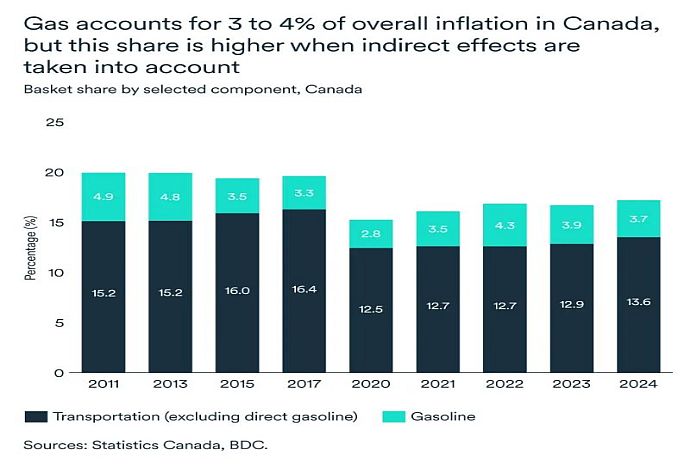
MONTREAL, Canada – The price of crude oil has surged 40 percent over the past two weeks, rising from USD 65 per barrel at the end of February to nearly US$95 per barrel. In response to Israeli-US strikes that began on February 28, Iran has blocked the Strait of Hormuz—a key oil transit route. This has sent shockwaves through energy markets, with the price even surpassing the US$100 mark.
Prices are not expected to drop anytime soon
Last year, it was estimated that more than 20 million barrels of oil per day passed through the Strait of Hormuz, representing about 20 percent of the world’s oil supply.
Besides Iranian oil, energy from key member countries of the Organization of the Petroleum Exporting Countries (OPEC), including Saudi Arabia, the United Arab Emirates and Kuwait transit through the strait, destined for such major markets as China, India and Japan.
The price surge is mainly due to the risk of a massive decline in global oil supply. Producers in the region have already cut output by 10 million barrels per day, or about 10% of global production. The conflict has also led to the closing down of several refineries and gas processing facilities for security reasons.
As a result, prices could very well go much higher. When will they peak and at what level? It’s impossible to say.
What is certain is that volatility will persist beyond a ceasefire. Large quantities of oil may remain stranded in the Persian Gulf for weeks, or even months, once the war is over.
Are we heading into a recession?
Volatility in the energy markets has plunged the stock markets into turbulent waters and increased fears of a recession—or worse, the onset of a period of stagflation.
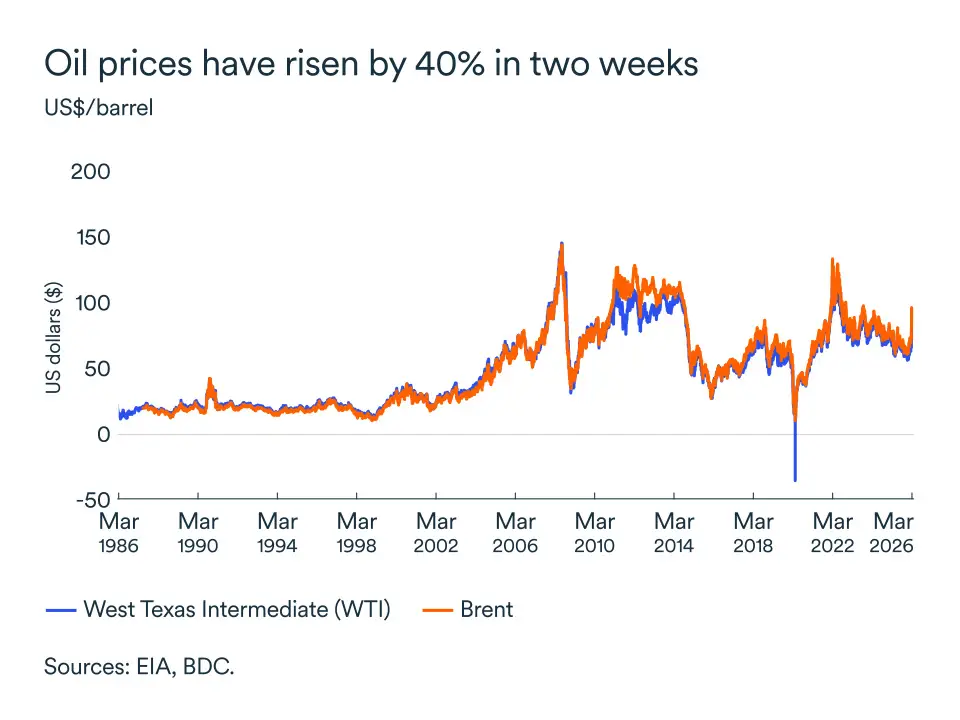
Historically, two of Canada’s last five recessions have been linked to an oil shock. Will the rapid rise in oil prices over such a short period lead to a recession this time? Probably not in Canada.
An oil shock can cause a recession by pushing up inflation and interest rates, and, in turn, depressing consumption and growth.
However, the economies of Canada and the United States are much less vulnerable to oil shocks than they were in the 1970s and 1980s.
While our analysis leads us to believe the risk of a recession has increased, we don’t believe one is on the horizon.
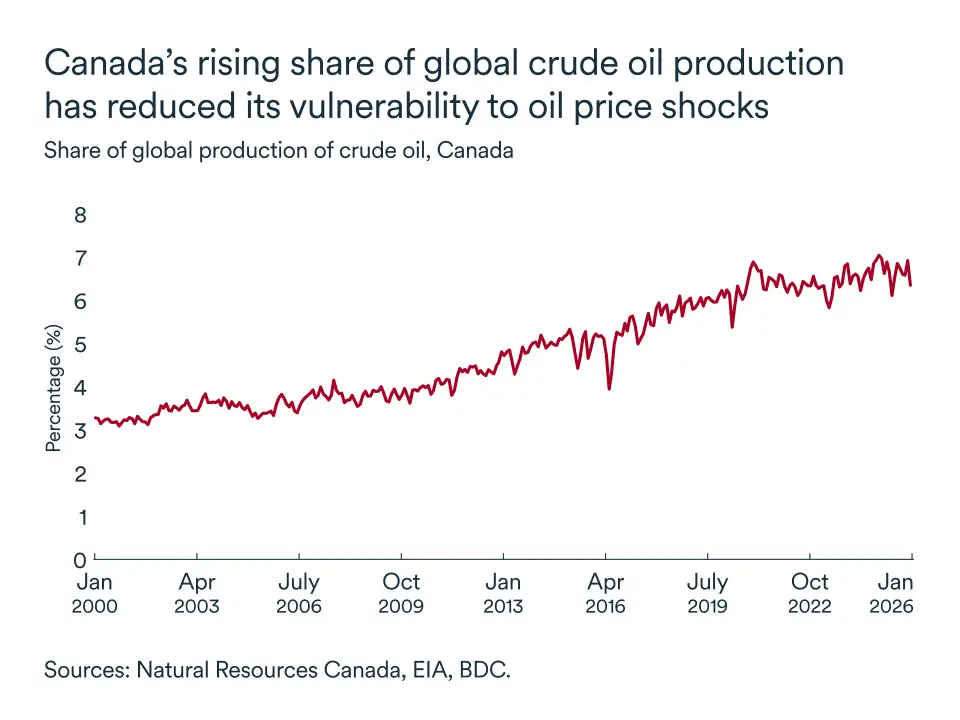
Before the conflict with Iran, we were already forecasting modest economic growth. Rising oil prices could further slow the economy, while higher prices at the pump will further limit household spending.
But it’s not all bad news for Canada. The energy sector represents a significant share of the country’s economic activity. Higher prices will benefit Canada’s energy-producing regions, which don’t face the supply constraints currently experienced by their Middle Eastern competitors.
Worse yet, stagflation?
The term stagflation is derived from the combination of stagnation and inflation. It describes a period characterised by high inflation and low (or even negative) growth.
The precise cause of stagflation remains the subject of debate among economists. However, the last two episodes—in 1974–75 and 1978–82—share distinct similarities. They both stemmed from an energy crisis and were preceded by periods of expansionary monetary policy. The latter condition isn’t the case today.
Oil prices would have to remain high for months, not just a few weeks, to have a ripple effect through global supply chains and ultimately lead to higher inflation and stagnant growth in Canada. At this point, we don’t see stagflation as a likely outcome of the Iranian conflict.
So what are the implications for the economy?
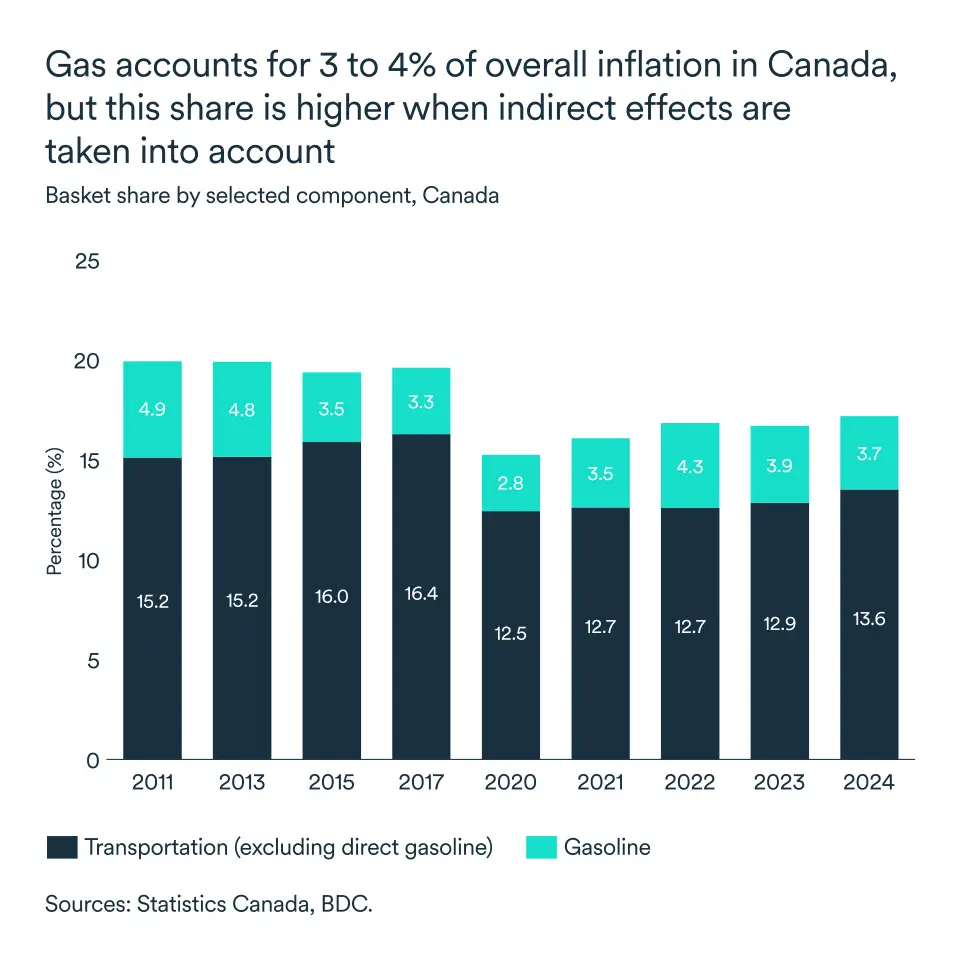
The economy was already slowing when the war started. The rise in energy prices will obviously push up inflation, but we don’t expect it to exceed 3 percent on a sustained basis in Canada this year.
The decline in purchasing power linked to higher spending on energy is likely to further constrain demand for other types of goods and services and could partially mitigate the effect of higher inflation.
It would be highly surprising to see any action from the Bank of Canada in this context. Our forecast still calls for the key interest rate to remain at 2.25 percent for the coming months.
However, even without action from central banks on either side of the Canada-US border, we still expect effective interest rates for households and businesses to rise, given the prevailing uncertainty.
In short:
- Inflation to increase but not sustainably above 3 percent in Canada;
- The policy rate to remain at 2.25 percent:
- Effective interest rates to rise slightly due to the risk premium;
- Opposing forces on the Canadian currency to limit its volatility against the greenback;
- No recession, no stagflation, but slow growth.
The impact on businesses
For Canadian entrepreneurs, rising oil prices represent a new headwind to contend with in 2026.
Production costs were already a challenge for many businesses. This will intensify if crude prices remain high for a long period because price shocks will work their way through the production chain.
Meanwhile, rising prices at the pump will reduce household purchasing power, which could further slow demand for your goods and services. For non-energy producers, profit margins will be further squeezed.
In response, focus your efforts on improving profitability by:
- Reviewing internal processes to eliminate inefficiencies;
- Automating repetitive tasks;
- Outsourcing non-strategic activities;
- Discontinuing low-margin products or services;
- Strengthening discipline in managing fixed costs.