



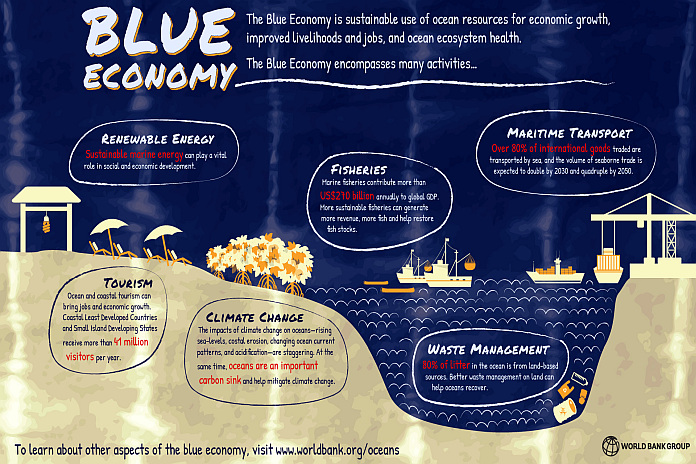
WASHINGTON, USA — The World Bank Board of Executive Directors approved yesterday a US$20 million credit to support Grenada’s transition to a resilient blue economy. The Second Fiscal Resilience and Blue Growth Development Policy Credit foster reforms to support fiscal sustainability, strengthen marine and coastal management, and build climate resilience.
The US$20 million operation is financed by the International Development Association (IDA), the concessional financing arm of the World Bank. The credit has a maturity of 40 years, and a grace period of 10 years.
This operation, the second in a programmatic series of two IDA credits, deepens support for Grenada’s policy and institutional measures to maintain fiscal discipline and diversify the economy towards a blue growth model that is based on sustainable and well-governed use of ocean resources. It includes fiscal reform measures such as building fiscal buffers, improving public expenditure management, instituting customs and excise reforms, and improving transparency of public enterprises.
“Fiscal sustainability and strengthening environmental management are critical for building cross-cutting resilience in Grenada,” said Tahseen Sayed, World Bank Director for the Caribbean.
“Protecting and preserving the rich marine and ocean resources is essential for the country’s successful transition to a blue economy and for boosting coastal tourism, which contributes 24 percent to the country’s GDP. The World Bank is committed to expanding its support for the Caribbean’s transition to a sustainable blue economy.”
The operation also supports the government’s measures for better environment and natural resource management, including integrated coastal zone management and inclusion of environmental sustainability requirements in public procurement.
A major policy measure is the ban of Styrofoam food containers, and the phase-out of single-use plastic shopping bags and disposable utensils. Plastic pollution represents one of the Caribbean’s main environmental challenges that is polluting watersheds, coastal areas, the ocean and poses a threat to ocean biodiversity and tourism development.