



- Demand for critical minerals is rising fast.
- Supply remains highly concentrated.
- Trade policy is a strategic tool to increase the gains resulting from trade in critical minerals.
- Developing countries face both opportunity and risk.
GENEVA, Switzerland – As the global economy shifts towards cleaner energy systems, electrification and digital technologies, trade in critical minerals has become central for development in an international context of strong industrial policy and geopolitical competition.
The June 2026 edition of UN Trade and Development’s Global Trade Update examines how governments are responding as demand rises for minerals that are essential to electric vehicles, battery storage, renewable energy technologies, semiconductors and data centres.
These minerals include copper, nickel, lithium, cobalt, and rare earth elements. Demand for lithium is projected to grow by more than 350 percent by 2040, while graphite demand could rise by more than 130 percent.
Why supply concentration matters
The issue is not only rising demand. It is also where supply is located, who controls processing, and where economic value is captured.
Critical mineral supply chains remain highly concentrated. In 2025, the Democratic Republic of the Congo accounted for 74 percent of global cobalt mine production, while China produced 78 percent of the world’s natural graphite. Australia, Chile and China together produced more than 70 percent of the world’s lithium.
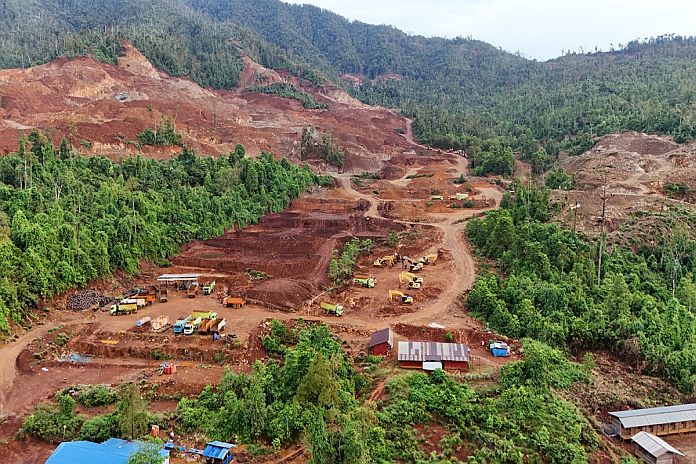
The concentration is even greater in refining and processing, where much of the value is created. China plays a dominant role in refining several critical minerals, while Indonesia accounts for 43 percent of global nickel refining capacity.
The challenge for many mineral-rich developing countries is that they keep exporting raw materials while higher-value processing and manufacturing take place elsewhere.
Trade policy moves to the centre
As demand rises and supply risks grow, governments are increasingly using trade policy to secure to critical minerals, build domestic extraction and processing capacity and strengthen their position in global value chains.
Since 2020, nearly 100 export-related measures have been introduced on critical minerals. These include licensing requirements, export taxes and export bans. The Democratic Republic of the Congo, China and Indonesia have been among the most active users of such measures.
For mineral-producing countries, these policies can support domestic processing, revenue generation and job creation. For major importers, the priority is often different: diversifying supply, reducing dependency and building more resilient supply chains.
This is why critical minerals are no longer simply a commodity story. They are becoming a trade, investment and industrial development story due to the key role they play in a variety of downstream high-technology sectors.
Partnerships are multiplying
The report also points to a rapid rise in international critical mineral partnerships since 2022. UNCTAD identified 73 international agreements and partnership instruments, with 58 signed after 2022.
These agreements increasingly cover the full value chain, from exploration and extraction to processing, refining, manufacturing and recycling.
For developing countries, this can create new opportunities to attract investment, develop industrial capacity and move up the value chain. But the benefits are not automatic.
Many agreements still focus heavily on extraction. Mineral-rich developing countries need to strengthen local processing and value addition, notably through technology transfer and skills development, to avoid remaining locked into low-value roles in these global value chains.
Cooperation or fragmentation?
The next phase will be decisive.
As more countries compete for access to critical minerals, the risk is a fragmented system of overlapping agreements, rules and standards. This could raise costs, complicate investment decisions and pressure developing countries to align with one partner over another.
A more coordinated approach would help keep critical mineral trade open, predictable and development-oriented. It would also support a faster and more affordable energy transition.
The central question is whether critical minerals become another source of fragmentation, or a basis for more resilient and inclusive global cooperation.