



By Saroj Kumar Jha and Andrew McConville
In September 2025, the World Bank and the Murray–Darling Basin Authority (MDBA) launched a new partnership and signed a memorandum of understanding to strengthen knowledge sharing and collaboration on river basin and transboundary water management. This partnership culminates a long-standing exchange of practices and knowledge, including a three-report series that distills Australia’s experience in valuing water for economic, environmental, and cultural uses.
The agreement between the MDBA and the World Bank is timely: it reinforces core priorities and enablers of the recently approved World Bank Group’s (WBG) Water Strategy Implementation Plan (WSIP), and coincides with the 2026 MDBA Basin Plan Review. These processes share commonalities and emphasize a focus on scalable solutions and broad-based approaches to complex water challenges.
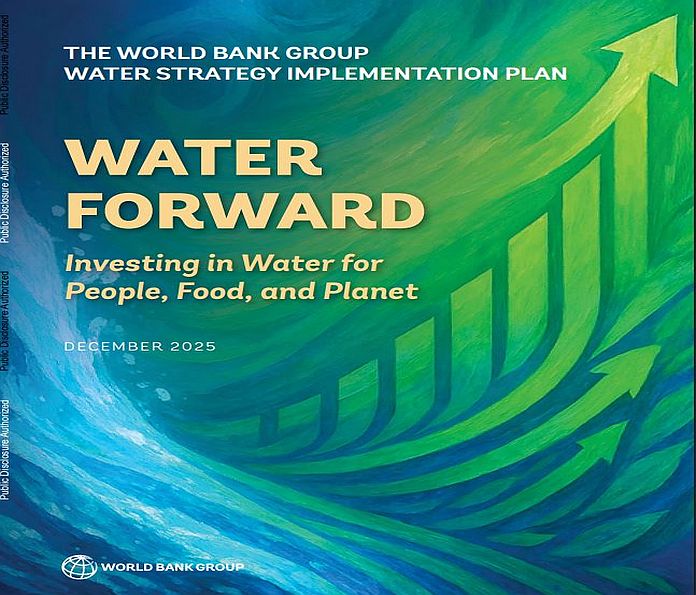
The WSIP sets an ambition to improve water security for 400 million people by 2030 across three pillars: Water for People (250 million), Water for Food (50 million), and Water for Planet (100 million) and is the WBG’s contribution to the new Water Forward initiative. It operationalizes seven scalable solutions, two of which are particularly relevant to shared river basins: responding to floods and droughts and restoring and protecting rivers and aquifers. Delivery is enabled by the WBG Knowledge Bank, country-led Water Compacts, a Water Forward approach that mobilizes specialized mechanisms such as the Global Facility for Transboundary Waters. This approach is further augmented by efforts to align multilateral development banks, UN agencies, philanthropies, and the private sector around government-led priorities.
The MDBA’s 2026 Basin Plan Review focuses on climate change, sustainable water limits, First Nations outcomes, and regulatory design. It will deliver a roadmap to better secure environmental resilience, cultural values, and community prosperity under increasingly variable and dry conditions in a federal river basin.
Three lessons from the MDBA Basin Plan resonate with how WSIP is designed to deliver water security worldwide, and in shared river basins at national and transboundary levels.
First, data, technology, and knowledge systems. The MDBA’s reliance on sound science, monitoring, remote sensing, and decision support demonstrates why credible data and transparent analytics are the backbone of sustainable water resources management. The WSIP’s delivery model explicitly leans on the WBG Knowledge Bank and regional hubs (e.g., the Singapore Water Center) to turn data into decisions, and to replicate what works. The WSIP prioritizes digitalization, practical AI tools, remote sensing, and data analytics—creating a virtuous loop where better information builds trust, lowers risk, and crowds in finance to sustain reforms and investments.
Second, robust policy and institutional frameworks. The MDBA’s experience underscores the importance of basin-level planning within a clear legal and governance framework that encompasses multiple jurisdictions, with important lessons for transboundary river basins. The WSIP places similar emphasis on institutions and governance frameworks that set clear direction and priorities for water-related investments. Through Water Compacts, the WSIP helps governments set targets, clarify roles, and track outcomes across agencies and borders, with an emphasis on adapting to changing hydrology and evolving development priorities.
And third, partnerships and coordinated action. The Murray–Darling Basin’s success depends on nurturing partnerships across states, users, and communities. WSIP’s partnerships focus extends this logic globally. It invites multilateral development banks, development partners, philanthropies, and the private sector to align, mobilize, and coordinate financial and technical support from partners around country water compacts to increase the effectiveness and sustainability of water related interventions, reaching many more people than the WBG can alone. Existing mechanisms such as the Global Water Security and Sanitation Partnership (GWSP) already help enable this coordinated action, with support from partners including Australia’s Department of Foreign Affairs and Trade (DFAT), which contributes technical expertise and financial resources to strengthen country‑led water programs.
Looking ahead, we see concrete opportunities to continue exchanging lessons and translate this partnership into real impact for basins around the world. Three specific areas where governments and river basin organizations need support are:
- Standardization of planning and implementation. While all water challenges require context-specific solutions and approaches, greater standardization of river and aquifer management plans—both in preparation and in follow-up—can facilitate uptake of these instruments and accelerate the time from investment identification to implementation and impact.
- Bringing the right expertise to governments. Institutional and regulatory capacity for river basin planning at national and transboundary level is essential, yet many countries have capacity constraints. The MDBA’s expertise is distinctive and highly relevant to inform WBG engagements on water allocation across sectors, setting sustainable withdrawal limits, and recognizing traditional water uses.
- Leveraging AI to help fill data gaps. Despite improvements in observational data sharing, Africa, South America, and Asia remain underrepresented in hydrological data collection, underscoring the need for improved monitoring and data sharing. AI-enabled and earth-observation-based technologies can help leapfrog constraints associated with low or no data availability. For example, AI-based approaches can support flood early warning in ungauged basinsor guide the creation of river basin digital twins.
In conclusion, critical changes in water availability, combined with growing demand, call for faster, more streamlined responses to help countries realize the growth and resilience potential of water resources. The World Bank Group and MDBA partnership aims to contribute to these responses, combining the MDBA’s experience in managing Australia’s largest river system, with the World Bank bringing global knowledge to innovative financing in river basins at national and transboundary levels.