


- The EU and India have signed a long-awaited trade agreement which promises to reshape trade, growth, and employment across two of the world’s largest markets. ILO experts Radhicka Kapoor and Kee Beom Kim examine what this means for jobs, wages, and inclusive growth, and what is needed for trade gains to also benefit the world of work.
By Radhicka Kapoor and Kee Beom Kim
After nearly two decades of negotiations, the European Union and India have announced a trade agreement covering a market of almost two billion people and accounting for more than a quarter of global trade. Beyond its geopolitical significance, the agreement raises an important question: what does deeper economic integration between the world’s largest single market for trade and the most populous country mean for jobs and growth?
From a Ricardian perspective, the agreement strengthens trade performance by deepening specialisation according to relative productivity differences, with India expanding exports in labour and skill-intensive sectors, notably textiles, garments, leather, marine products and gems and jewellery and the EU in technology- and capital-intensive industries such as paper and publishing, machinery, chemicals, and electronics and electrical equipment. The reduction of tariffs enables both economies to exploit their comparative advantages more fully, leading to efficiency gains, higher real incomes, and welfare improvements.
Model-based simulations indicate that by lowering tariffs on goods and services, EU GDP is expected to rise by 0.1-0.2 percent by 2030, while India’s GDP is estimated to increase by 0.6- 1.0 percent. The agreement is also expected to raise real wages for both unskilled and skilled workers in both the EU and India.
However, wage gains are expected to be markedly stronger in India, with unskilled real wages rising by 0.8–1.3 percent and skilled wages by 0.4–0.6 percent, compared to modest expected increases of around 0.1–0.2 percent for EU workers. The relatively larger gains for India emanate from the fact that starting from higher tariffs and a less open trade regime, reductions in trade barriers and improved market access are likely to translate into stronger increases in trade, productivity and labour demand. By contrast, the EU economy is already highly open and well integrated into global markets.
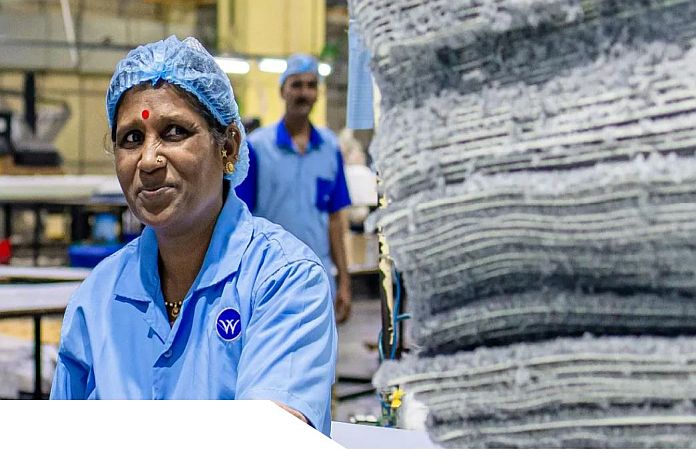
Substantial employment effects are also anticipated, though their magnitude is likely to differ across sectors and between the two economies. According to the European Union, trade with India currently supports around 800,000 jobs across its market, and the agreement is expected to further strengthen employment in manufacturing, services and integrated supply chains as trade volumes expand. In India, the potential scale of job creation is considerable. The textile sector employs around 45 million people directly, and gaining zero-duty access to the EU market is expected to significantly increase this figure. For both partners, the macroeconomic value of the agreement may also extend well beyond headline growth and employment figures, particularly as it supports supply-chain diversification at a time when geopolitical fragmentation is reshaping global commerce.
Indeed, trade can be a sustained driver of growth and employment, and the EU–India trade agreement is no exception. Trade- and investment-linked jobs tend to be more productive, more formalised, and better paid, strengthening their contribution to sustainable growth. [3] Yet the benefits of trade integration are not automatic. Without deliberate policy design, gains from deeper integration may not materialise or remain confined to a narrow set of sectors, workers and firms.
The extent to which trade-induced growth translates into inclusive outcomes depends critically on the alignment of employment policies with trade and investment frameworks. When demand-side measures that expand markets and the demand for labour—such as trade agreements—are combined with supply-side investments in skills development and effective labour market policies implemented through public employment services, and an enabling environment for sustainable enterprises, trade is more likely to generate broad-based and sustained quantitative and qualitative employment gains.
For instance, for India to realise employment gains in its labour-intensive sectors, dominated by micro-, small- and medium-sized enterprises (MSMEs), it requires improved access to export finance, investments in testing and certification infrastructure, and reductions in logistics costs through more efficient ports, customs, and connectivity.
Equally important is aligning skilling and training systems with export requirements to enable workers to meet global standards in quality, safety, and environmental practices. This is important as stringent EU non-tariff standards disproportionately affect MSMEs in areas such as quality, traceability, labour, and sustainability.
Without a coherent alignment between trade liberalisation and other elements of employment policy, tariff reductions alone would be insufficient to generate sustained employment outcomes.
- Radhicka Kapoor, Employment Senior Specialist, ILO India office and Kee Beom Kim Macro-Economic and Employment Policies Specialist.