



GEORGE TOWN, Cayman Islands – Following the government’s decision on 13 May 2026 to remove import duty on all gasoline and diesel as part of its larger efforts to provide vital cost-of-living relief to Caymanian families, the fuel duty waiver will come into effect from Monday, 1 June 2026.
Temporary fuel duty waiver
Effective through 30 September 2026, the government will make all imports of gasoline and diesel duty-free as part of its Fuel Relief Programme aimed at helping offset forecast increases in international fuel prices linked to ongoing geopolitical tensions in the Middle East.
Under the existing Customs tariff structure, gasoline imports currently attract import duty of 75 cents per imperial gallon, diesel sold at service stations attracts 85 cents per imperial gallon, and diesel imported for electricity generation is charged 25 cents per imperial gallon.
Softening the blow to local consumers
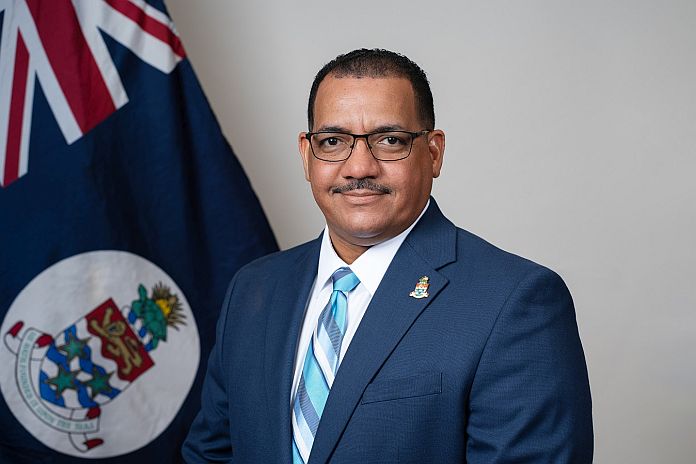
Minister for finance and economic development Rolston Anglin noted that while the Cayman Islands government does not control the international price that fuel importers pay their suppliers, all available measures have been taken to reduce costs at the fuel pump for local consumers.
“It is important for the public to understand that fuel prices are heavily influenced by international market conditions, shipping costs and wholesale supply prices, all of which are outside the control of both the Cayman Islands government and local fuel suppliers” minister Anglin continued. “What government can do is utilise the tools available to us to help cushion the impact of rising global fuel prices on Caymanian families and businesses. Without this temporary waiver, households and businesses would face even higher prices during this period of continuing international instability.”
Multi-Agency coordination effort
The ministry of finance and economic development, the Utility Regulation and Competition Office (URCO), and Customs and Border Control (CBC) have already been working in tandem to oversee implementation of the duty waiver.
This process has included URCO liaison with both wholesale and retail fuel suppliers to ensure the cost benefit reaches consumers as quickly, efficiently and transparently as possible – following-on from productive meetings held on 27 May involving officials from the ministry of finance, CBC and URCO with representatives from fuel importers.
How the duty waiver will be implemented
To ensure consumers benefit from the duty waiver as quickly and fairly as possible, fuel wholesalers will receive duty credit for all duty-paid gasoline and diesel remaining in their storage tanks as of 31 May 2026.
The credit will be applied against future import duty obligations once duties resume in October. This approach was agreed by the ministry, URCO and wholesale fuel suppliers as the most practical and consistent method to ensure wholesale fuel prices reflect the duty waiver immediately from 1 June, prevent any individual wholesaler from gaining a competitive advantage, and allow the benefits of the relief measure to flow through to consumers as quickly as possible.
Once retailers begin receiving duty-free fuel from wholesalers, fuel prices should be adjusted promptly to reflect the removal of the duty component.
URCO and CBC will conduct measurements of wholesale fuel inventories as of 31 May to facilitate the agreed implementation process for the duty waiver. Fuel wholesalers have also agreed to issue revised wholesale prices to retailers effective 1 June, reflecting the full removal of the duty component.
Retailers have additionally been encouraged to minimise remaining duty-paid inventory before 1 June to help accelerate the pass-through of the price relief to consumers.
URCO CEO Sonji Myles, said:
“We have met with local fuel wholesalers and communicated with local fuel retailers to guarantee that any cost savings resulting from the fuel duty waiver will be implemented as soon as possible and passed on to the public. URCO will continue to closely monitor fuel prices throughout the supply chain, including adjustments at the import, wholesale, and retail levels. This ongoing process is essential to ensure that any savings resulting from the fuel import duty exemption are appropriately reflected in market pricing.”
Myles further noted: “URCO will take appropriate action where fuel operators are found to be non-compliant or are not acting in accordance with the intent of the exemption; and will continue to investigate irregular pricing practices and enforce the necessary regulatory measures to promote transparency, accountability, and fairness within the fuel market.”
Why prices may not immediately drop on 1 June
Despite these efforts, motorists may not necessarily see an immediate reduction in fuel prices at service stations on 1 June, minister Anglin explained.
“While the duty waiver officially begins on 1 June, fuel currently held in storage tanks across the supply chain was imported before the waiver took effect and therefore already had duty paid on it,” minister Anglin continued. “As a result, it may take several days for existing inventory to be fully utilised before duty-free fuel begins flowing consistently through to consumers at the pump. Service stations must first dispense their existing duty-paid inventory before refilling with duty-free fuel from wholesalers, and this will vary from station to station due to the varying volumes that they sell. Higher volume locations will likely implement price drops more quickly than lower volume locations. The ministry, URCO and CBC have been working closely together to minimise delays and ensure the public receives the benefit of the relief measures as quickly as possible.”
It is estimated that consumers could expect to see price change within the first week of June at high-volume retail stations and within the second week of June at smaller, lower-volume retail stations.
What consumers could see during the first weeks of the programme
It is expected that once existing fuel stocks imported prior to the waiver have been exhausted, this will allow the market to more accurately reflect the combined effect of the duty waiver and international fuel price movements.
At that time and during the period to 30 September, consumers could experience one of three possible scenarios:
- No significant change in fuel prices — if increases in the international purchase price of fuel are approximately equal to the value of the duty waiver;
- A reduction in fuel prices — if the duty reduction exceeds any increase in global fuel prices; and
- An increase in fuel prices — if international fuel prices rise by more than the value of the duty relief being provided by Government.
Fuel prices affect the entire economy
Minister Anglin further noted that fuel prices affect virtually every area of the economy.
“We utilise fuel to generate electricity and facilitate transportation throughout these Islands, therefore all economic sectors and households are impacted by changes in fuel prices,” minister Anglin said. “The Cayman Islands remains heavily reliant on imported fuels and therefore exposed to international price volatility. While investments are being made in sustainable energy alternatives such as solar and other renewable technologies, these measures will take time before they significantly reduce our dependence on petroleum fuels.”
Part of government’s wider energy relief strategy
The Fuel Relief Programme forms part of government’s wider Three-Phase Energy Relief and Resilience Plan announced earlier this year, which also includes temporary electricity fuel charge relief for residential consumers, the planned return of the CHEER energy efficiency programme, and longer-term efforts to accelerate utility-scale renewable energy projects.
Monitoring and consumer awareness
URCO will be closely monitoring pricing at the pumps over the four-month duty relief period to ensure that consumers receive any available cost savings.
Consumers are also reminded to remain conscious of their fuel and electricity usage during the summer months by taking practical steps to reduce consumption where possible.
Cayman Islands government announces Three-Phase Plan to lower energy costs and support families