

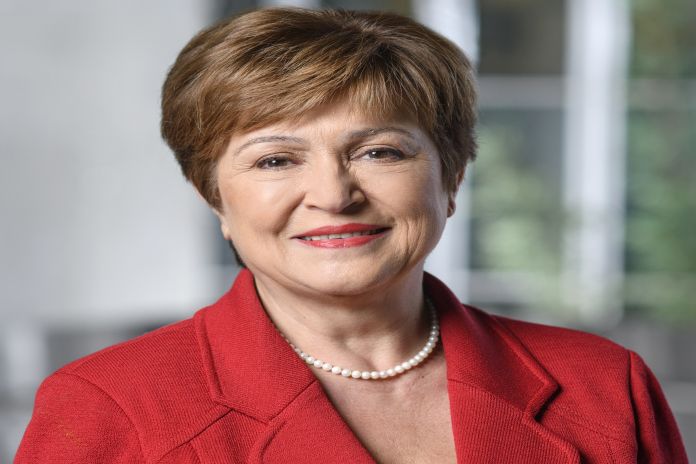
- IMF Managing Director Kristalina Georgieva at the 2026 AlUla Conference for Emerging Market Economies in AlUla, Saudi Arabia
By Kristalina Georgieva
Al salam Alaikum! Welcome everyone! Let me thank minister Al-Jadaan and the Kingdom of Saudi Arabia for once again hosting this fantastic conference in AlUla.
We launched this conference last year in recognition of the growing role of emerging market economies in a world of sweeping transformations in geopolitics, technology, and trade.
I came away from our first gathering with admiration for emerging markets and hope that your pragmatic attitude and determination to pursue good policies and build strong institutions—even in the toughest of times—can help your economies and the world as a whole steer through uncertainty and multiple shocks.
In that respect, there is a lot to be positive about. Our research shows that emerging markets have more independent central banks, clearer inflation targets, and less reliance on foreign exchange intervention to absorb shocks. On the fiscal side, more emerging economies are adopting fiscal rules to help entrench budget discipline.
Simply put: Good policies pay off
Growth rates across emerging markets—at around 4 percent this year— exceed by a large margin those of advanced economies, at around 1½ percent. And their share of the global economy continues to go up, doubling since 2000 to over 56 percent.
Yet, a note of caution. Growth still lags pre-pandemic trends. This is doubly concerning as we will surely experience more shocks, but face them with depleted fiscal buffers, high spending pressures, and rising debt levels in many countries.
Two policy priorities stand out
First priority: Unleash private sector-led growth by cutting red tape, deepening financial markets, strengthening institutions, improving governance—and helping young people develop new skills [for the jobs of tomorrow].
Second priority: Step up integration. In a world of shifting alliances and trade patterns, there are new opportunities for cooperation at the regional and cross-regional levels.
On this, emerging markets are leading the way. From the GCC, to ASEAN, to the African Continental Free Trade Area, to Mercosur, lowering barriers and deepening integration can help preserve trade as an engine of growth.
Coming back to where I started—our second gathering here in AlUla. Higher attendance, more preparatory work done, and the addition of closed-door thematic sessions proves what minister Aljadaan foresaw — emerging markets are a growing source and force of global leadership, and they need a dedicated space for dialogue.
In a more fragmented world, you come together to strengthen your ties. You discuss top-of-mind issues like prospects for global trade, managing uncertainty, monetary policy, and the role of private-sector-led growth. And you build the mutual understanding and respect that forms the fertile ground for cooperation.
I very much look forward to hearing the discussions and your perspectives. I know that we will all learn from each other. And I can’t think of a more beautiful setting in which to do so!