




AFRICA – The African Development Bank Group and Agence Française de Développement (AFD) have held discussions on scaling up joint investment and aligning more closely on Africa’s development priorities.
Senior leaders of the two institutions met in Abidjan on 23 January to sharpen a shared focus on high-impact sectors—energy, including under the Mission 300 initiative; jobs and skills; entrepreneurship; water; and agriculture—while committing to accelerate delivery under a co-financing partnership that has mobilised nearly €2.4 billion.
The discussions at the Bank Group’s headquarters are expected to feed directly into expected negotiations on a new partnership agreement.
African Development Bank vice president for regional development, integration and business delivery Nnenna Nwabufo noted in her remarks that the partnership had entered a decisive phase as the current 2021–2026 partnership agreement nears its end.
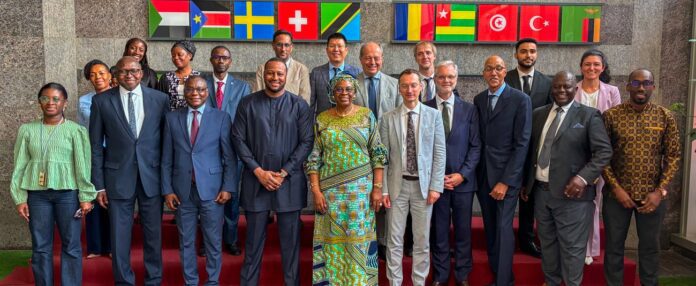
Nwabufo and AFD executive director for mobilisation, partnerships and communication, Adama Mariko also agreed to accelerate project implementation.
We have a strong pipeline of opportunities before us, Nwabufo said. “By sharpening our focus on a few high-impact sectors and moving faster from pipeline to implementation, we can significantly scale up our joint impact for the people of Africa.”
She added that the bank’s proposed strategic orientation places partnerships at the core of efforts to mobilise capital at scale, harness Africa’s demographic dividend, and deliver climate-resilient infrastructure.
Mariko said the meeting raised ambitions for the next phase of cooperation.
“This deep dive came at a strategic moment, coinciding with the leadership transition at the African Development Bank and the final year of the Partnership Framework Agreement,” Mariko said. “We reaffirmed our priority sectors—particularly entrepreneurship, employment, vocational training and agriculture—and explored opportunities for collaboration on key initiatives such as the New African Financial Architecture.”
The meeting also featured discussion of near-term co-financing opportunities and priority actions to unlock projects already in the pipeline.
Beyond financing, participants explored strengthening institutional collaboration, including staff exchanges and closer coordination between regional and sector teams.