

 GENEVA, Switzerland – Voluntary sustainability standards are reshaping supply chains, driving ethical practices, and preparing industries for stricter regulations – while certified areas for key crops surge worldwide, a new report says.
Once dismissed as a buzzword, sustainability standards have become a cornerstone of international trade. These voluntary frameworks, designed to ensure ethical and environmentally responsible practices, are quietly transforming supply chains – and the latest data reveal just how far they’ve come.
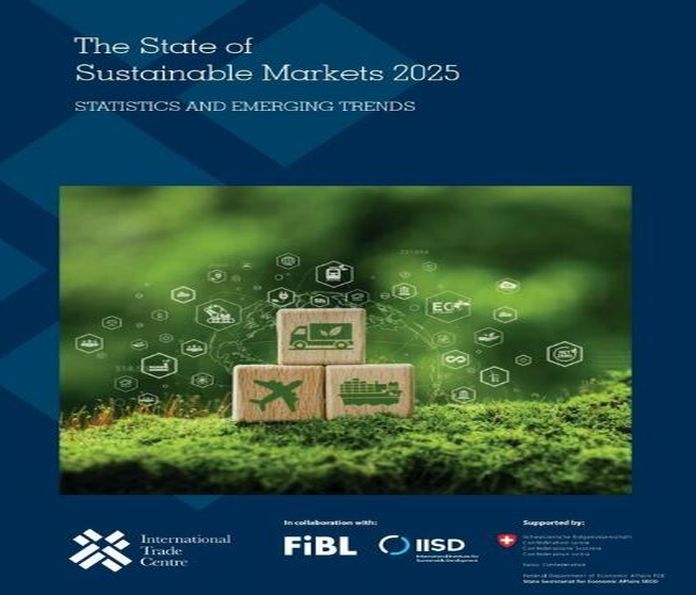
A new report by the Research Institute of Organic Agriculture, the International Institute for Sustainable Development, and the International Trade Centre (ITC) – The State of Sustainable Markets 2025: Statistics and emerging trends – finds that certified agriculture and forestry continue to grow steadily. Now in its 10th edition, the report presents detailed data on certified areas, production volumes, and key trends across major commodities and standards, providing a snapshot of how sustainability is shaping global trade.
In an era of climate crises and mounting social concerns, consumers and investors are demanding more than just products – they want accountability. By embracing sustainability standards, companies signal their commitment to ethics, boost brand trust, and prepare for stricter regulations. As governments raise the bar on environmental and social compliance, those ahead of the curve will lead the transition.
Voluntary standards can play a ‘pivotal role in bridging the gap between ambition and action’, says ITC executive director Pamela Coke-Hamilton. ‘They offer proven frameworks, traceability tools, and on-the-ground experience that businesses need to respond to new obligations and manage risk responsibly. Crucially, they can make this transition more inclusive, ensuring that small producers and firms in developing countries are not left behind in the race to comply.’
Agricultural commodities such as cocoa, coffee, and cotton are essential for global food security and economic development. Ensuring these sectors embrace sustainable practices is critical to building resilience against climate change and social risks. Sustainability standards go beyond mere compliance – they drive innovation, strengthen trade systems, and support long-term stability.
Growth trends and market shifts
The report finds that sustainability standards covered at least 9.7 percent of the global area for eight major agricultural commodities in 2023: bananas, cocoa, coffee, cotton, oil palm, soybeans, sugarcane, and tea. Six crops now have more than 10 percent of their global area certified, with cocoa leading at 36.2 percent, followed by cotton (21%) and coffee (16.3%).
Organic certification remains the heavyweight champion, covering 98.9 million hectares– more than 2 percent of global agricultural land. Other major players include Rainforest Alliance, the Roundtable on Sustainable Palm Oil, Better Cotton, and GLOBALG.A.P., each certifying millions of hectares and driving double-digit growth over the past five years.
Soybeans stole the spotlight in 2023, recording a 19.2 percent increase in certified area, continuing a two-year surge that pushed sugarcane down the rankings. Cocoa and coffee also posted strong gains, while cotton and bananas remained relatively stable. Certified areas for all eight featured crops grew by 7.9 percent in just one year.
Challenges ahead
But it’s not all smooth sailing. Certified forest areas declined for the second consecutive year, largely due to the suspension of certificates in the Russian Federation and Belarus amid geopolitical tensions. The programme for the endorsement of Forest Certification and the Forest Stewardship Council together certified more than 393 million hectares of forest in 2023, accounting for 9.7 percent of global forest area. However, the combined certified area has been shrinking, with a 9.3 percent drop in 2019–23 and a 6.1 percent drop in 2022–23.
Despite the steady rise in certification over the past decade, sustainability markets face a paradox: supply often outpaces demand. Certified products such as palm oil and soybeans often go unlabelled, limiting consumer awareness. While Europe and North America lead in demand for certified goods, emerging economies and producing countries – particularly in Asia – must step up to unlock the full potential of sustainable trade, the report says.
Transparency remains another hurdle. Reliable data on certified crop prices, consumption patterns, and trade flows are limited. Multiple certifications further complicate reporting, making global totals difficult to calculate.
As the report highlights, the future of global trade will depend on greater transparency, stronger traceability, and rising demand for certified products. The silent revolution of sustainability standards is no longer silent – it’s rewriting the rules of commerce.