

By Christian Bodewig, Michael Weber, Marko Bucik, and Aditi Lal
Public works are a common choice to protect people in need through temporary jobs and income. Beyond a paycheck, they can offer dignity and the prospect of a path out of poverty or unemployment, engaging people in meaningful work for public assets, from building roads to repairing schools.
Yet, over the past decades, public works have often overlooked their potential to deliver lasting benefits and rise to the needs of our time. Today’s global challenges demand innovative solutions. A changing world due to digital transformation, climate change, and demographic pressures calls for us to rethink how we can better design public works for jobs and skills. It calls for adapting the conventional model—which typically provides short-term, low-skilled infrastructure jobs for a limited group of beneficiaries—to become more forward-looking and better serve a more diverse group of people in need.
How innovations are rethinking public works
Our new World Bank report, Innovations in Public Works: Rethinking Public Works for Jobs and Skills in a Changing World, explores how a new generation of programs across low- and middle-income countries is responding to today’s challenges and better integrating women and young people. It highlights three innovative approaches designed to deliver lasting benefits and equip people with skills for in-demand jobs:
Care-providing public works address unmet care needs. Instead of building physical assets, participants provide childcare, support older people, or offer home-based assistance. For example, in Burkina Faso, childcare services on public works sites enable mothers to participate while building their hands-on skills as caregivers.
In Rwanda, childcare organized through public works support families across the community, improving early childhood development and creating income-generating opportunities for women. In South Africa, caregivers provide home-based support for vulnerable individuals, including people with HIV/AIDS and the elderly. More countries are adopting similar models, recognizing the potential of public works to ease women’s unpaid care burdens, expand access to essential care services, and help build the care workforce.
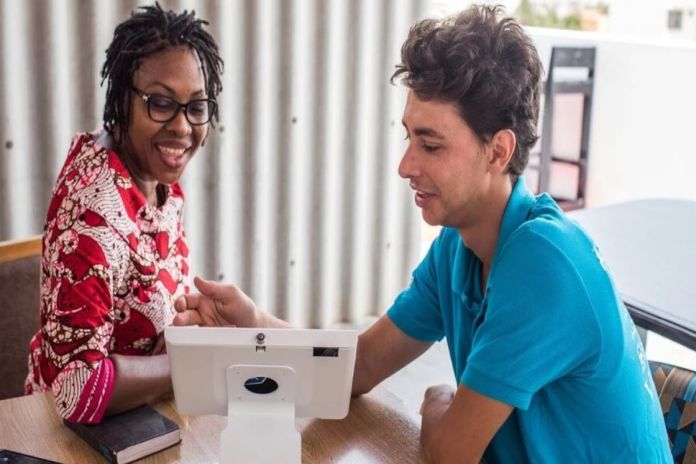
Digital public works seize the opportunities offered by digital technology and artificial intelligence (AI). These programs create digital public assets, ranging from maps and geo-referenced datasets to digitized records, and offer flexible tasks that can be done from home or within the community. In Kenya, for example, young people from informal settlements used smartphones to map buildings, capture street level images, and verify data for urban planning.
In Mali and Tanzania, program participants traced buildings and roads on satellite images, documented infrastructure conditions, and identified waste disposal sites. In Sierra Leone, youth from flood-prone areas of Freetown are collecting and digitizing information on flood risks and community vulnerabilities to improve post-disaster response.
In India, non-governmental initiatives provide jobs for poor and underserved communities to train large language models in local languages for inclusive AI innovation. Such programs can create public value through crowdsourcing techniques, while promoting digital skills and offering practical digital work experience. They also show how digital tasks, often done remotely, are particularly well-suited for women and youth, as well as communities in fragile, conflict and violence-affected settings with mobility restrictions and safety concerns.
Green public works combine social protection with environmental action. These programs restore ecosystems and improve land and water management to reduce disaster risks and strengthen local resilience. In India, for example, workers restore local water sources, revive degraded land, and plant trees. These tasks improve groundwater recharge, strengthen agriculture, and provide steady incomes. In Fiji, workers protect coastlines and stabilize slopes to help villages better cope with cyclones and rising seas. In Malawi, communities reinforce riverbanks and restore wetlands to reduce flood risks and protect homes. These programs protect the environment and strengthen community resilience to climate pressures, while helping workers build practical skills relevant to their livelihoods.
Toward more impactful public works for jobs and skills
Innovative approaches are demonstrating their transformative potential, moving beyond short-term relief and focusing on lasting public value. These new-generation programs show that public works can become:
- More adaptive, by offering new types of work and by shifting toward assets and services that respond better to local needs;
- More inclusive, by opening flexible opportunities for women, youth, and people living in areas affected by conflict and fragility;
- More relevant, by building skills that are better aligned with emerging opportunities in the green, digital, and care economies;
- More strategic, by contributing to wider policy priorities, including climate resilience, digital transformation, closing gender gaps and growing human capital; and
- More cost-effective, by generating greater and longer-lasting value from the same level of investment.
Innovative, forward-looking programs can help countries unlock the full potential of public works. They can better protect people today while equipping them with the skills needed for the jobs of tomorrow. These new-generation programs give policymakers a powerful way to use social policy to tackle the key challenges of our time, while supporting economic development that is inclusive, sustainable, and jobs-focused.