



By Caribbean News Global 
CANADA / UAE – The recent ‘realisation’ that sanctioned Iranian billionaire Ali Ansari, accused by the UK government of financing Iran’s elite Islamic Revolutionary Guard Corps (IRGC), holding a St Kitts and Nevis passport, as he presumably continues to exploit offshore financial structures to shield immense wealth, is not surprising. The Iranian tycoon, sanctioned by the UK in October, is likewise not alone in a Caribbean CIP/CBI programme that continues to pop-up unsavoury characters unabated.
Ansari, a 57-year-old construction magnate described by British authorities as a “corrupt Iranian banker and businessman” sanctioned for “financially supporting” the activities of Iran’s IRGC — a powerful branch of the military — which reports directly to the Supreme Leader and is itself sanctioned by the UK, is not subject to any sanctions in the EU or the US, as reported in the Financial Post.

CIP/CBI Caribbean unnerving reality
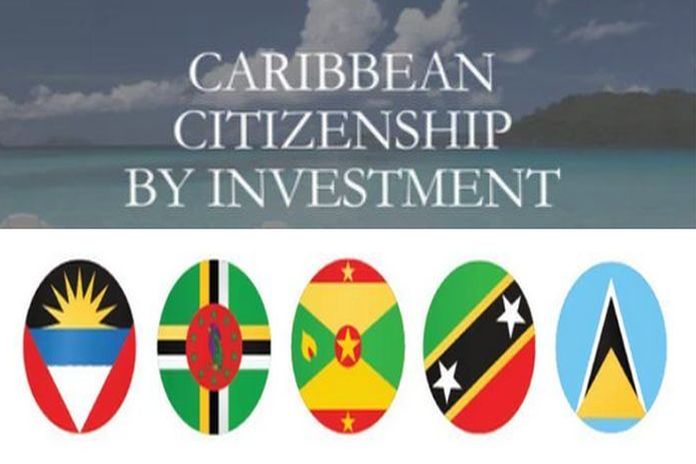
What has become unnerving is that Caribbean CIP/CBI participating countries (Antigua and Barbuda, Commonwealth of Dominica, Grenada, Saint Kitts and Nevis, and Saint Lucia) have become a magnet for concealment. The programme has fallen short of detecting irregular and irregualities, before, during and post-processing of applicants.
Abusers of the Caribbean CIP/CBI programme point to fundamental reform, not cosmetic platitudes, in a programme that now expects its final rights to be nullified.
The unfolding challenges to the Caribbean CIP/CBI programme stem from prerequisites for qualification, shifting goal posts, agents and lawyers’ infatuation with maximising commissions, corrupt financial services companies, shabby due diligence and government regulators.
Ansari is not alone in a Caribbean CIP/CBI programme with a CARICOM Community passport.
Explanations are unavailable on how the son of a former Iranian national security chief obtained a CARICOM Community passport, later revoked following US sanctions. Form D1 calls for the names of parents. A due diligence check on Google provides the answer. And another, operating as an ambassador secured diplomatic immunity, operated out of Labuan, a Malaysian island. CARICOM Community passports have been traced to criminals in Pakistan, money launderers and drug lords in South America.
Participating Caribbean governments are now feeling the full brunt of US, EU and UK global migration measures, via foreign policy mandates. The result is diplomatic, economic, and social pressures on individual governments, all of whom are powerless to say no/and or offer an alternative. Their press releases and domestic postures have become useless, beyond local political boundaries.
It is remarkable how Caribbean foreign affairs ministers are absent from comments and discussions on matters of their presumptive competence. However, can small island states dictate US policy, not knowing what is required and how to position themselves with US movers and shakers? The answer lies with but one or two OECS/ CARICOM diplomats.
- An OECS/ CARICOM remedial exercise in Global Migration and Diplomacy to define next steps is practical.
US action in Venezuela compounds geopolitics. And now, with Cuba on the horizon, it makes matters worse. Caribbean governments are exposed to both Venezuela and Cuba.
OECS and CARICOM are, therefore, wedged in a Western Hemisphere to which they are powerless, beyond basic domestic issues. And even that has its limits, as regional governments are slowly looking and operating as local governments and colonial colonies of the United States of America.
The Caribbean is often described as the United States’ “third border”
The Caribbean CIP/CBI programme has its challenges, operating within the United States’ “third border” and “Western Hemisphere.”
The programme has contributed to the demise of the region globally, while locally contributing as the cash cow for regional governments. The undercurrent of the Caribbean CIP/CBI programme is tarnished with corruption, money laundering, threats to correspondent banking relations (CBRs), and other illicit activities that are ostensibly perpetrated by government authorities.
The people of the Caribbean CIP/CBI countries are the least beneficiaries despite the apparent benefits of housing for the selected few, hotel construction, road rehabilitation, and payment for selected social services.
- There is, however, more rhetoric and platitudes in the face of minuscule national development from the proceeds of CIP/CBI. The quote from a CIP/CBI advertisement says it cleverly: “ I am the I/eye in CIP!”
Consider for a minute how drug lords, their children, Caribbean CIP/CBI unsavoury characters and abusers, family members, and nepo babies live under the shield of Caribbean CIP/CBI programme and citizenship, waving CARICOM Community passports.
Another highlight of economic corruption, mismanagement and political connections is the real-estate market and the entertainment industry. It serves as a safety net for cronies and influential behind-the-scenes figures in the political and commercial system of Caribbean CIP/CBI programmes.
The Financial Post article says much of the money in the network of the Iranian billionaire has flowed through non-Iranian firms like Ziba Leisure Ltd., registered in Saint Kitts and Nevis, the Isle of Man-based Birch Ventures Ltd. and A&A Leisure Ltd., as well as Emirati entities such as Midas Oil Industries FZC and Midas Oil Trading DMCC.
The troubling component of the Caribbean CIP/CBI programme is the unwillingness to revoke citizenship, amid scrutiny and documented evidence of illicit activities. There is likewise little transparency and accountability of the programme in plain sight of corruption.
- Amassing great wealth for relatives and associates is commonplace. A clean report in accounting terms is inadequate, where the rules and the law are indifferent.
De-risking the region
Migration insiders point to a lack of post-citizenship review and actionable guidelines. And as to whether the CIP/CBI Caribbean programme and the Eastern Caribbean Citizenship by Investment Regulatory Authority (ECCIRA) are on the ball is unclear.
Post ownership review and the ability to cross-check the database with leading policy countries, alongside leading experts in database management and migration systems, is critical in the age of biometrics and identification for the quick transfer of data and for informed decisions to be made.
The use of such tools and expertise has the capacity to reveal previously unknown information, identify and prevent much undue exposure, and thus limit undue harm to reputations and the Caribbean CIP/CBI programme.
- The measure is to show good faith and avert pop-up unsavoury characters unabated; shabby due diligence and government regulators; post-citizenship review and actionable guidelines, and cross-check databases.
The burden or responsibility denotes an obligation to accessible tools, procedures and expertise that CIP/ CBI Caribbean programmed should provide for intelligence assessment. This is more prevalent while others look for ways to validate their foreign policy and national security interests.
The non-use or limited availability to consistently apply new technology further highlights the foundational efficacy of the programme vis-à-vis the cosmetic platitudes of the CIP/CBI authorities’ talking points disguised as reform.
- The results to date are of minimal consequences, which the bearer of Caribbean CIP/CBI citizenship and a CARICOM community passport can and continues to absorb effortlessly.
The current lack of authority from regional leaders to take action on Caribbean CIP/CBI programmes allows the US, EU and UK to dictate the OECS/CARICOM community’s course of action. This points to matters of Caribbean sovereignty and independence. Adjudicating these matters rests in another form!
The Caribbean CIP/CBI programme cannot blame others for the inability to show good faith in rooting out bad actors, while Caribbean leaders and the programme’s authority are not in unison, and in total charge, policing the programme, and safeguard the leading revenue earners in the five participating countries: Antigua and Barbuda, Commonwealth of Dominica Grenada, Saint Kitts and Nevis, and Saint Lucia.
Definite efforts towards Caribbean CIP/CBI programmes are subtle and deemed too little, too late, after decades of much undue damage. The realisation may as well be blindness to the fate of the banana industry, not knowing what was required individually or collectively by the island’s government.
Options to navigate change by the then participating banana industry governments were fragmented. The result was overwhelming. The islands were thrown into the dependency and extractive industry of tourism, controlled by US, UK, EU markets.
History is repeating itself, with Caribbean leaders “not knowing” what the Caribbean CIP/CBI programme should deliver collectively for the region.
Next steps
Reputable Caribbean CIP/CBI programme agents and service providers in major markets are contemplating delisting. The risk outweighs the reward, and reputation matters.
Caribbean CIP/CBI programme service providers, companies and associates that have taken matters into their own hands and subjugate the Caribbean, again, have established the factual to be sanctioned.
