



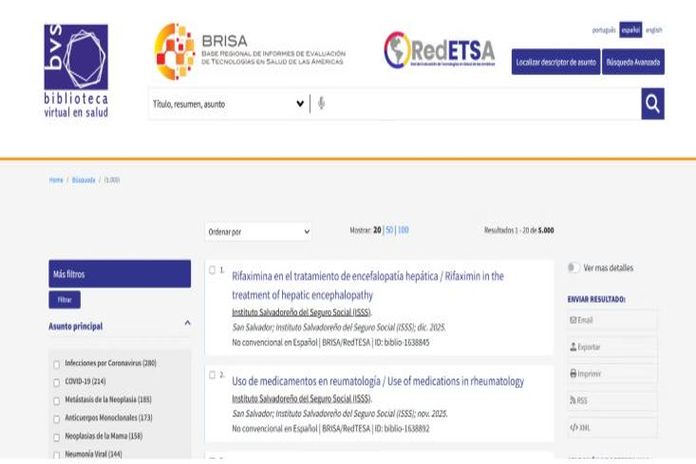
 WASHINGTON, USA – Less than a decade ago, Health Technology Assessment (HTA) in our region faced a critical challenge: Health technology assessment reports were scattered across multiple repositories, lacking centralised access. This lack of coordination resulted in duplication of effort by governments, decisions made with incomplete information, and a transparency gap that negatively impacted health equity.
In 2017, we decided to change that story. During the RedETSA annual meeting in Panama, the Regional Database of Health Technology Assessment Reports of the Americas (BRISA) was launched: the first open virtual library in the Americas dedicated to centralising HTA reports. A pioneering initiative, developed with the support of BIREME, with a clear purpose: To make evidence available to everyone, so that every decision about health technologies is informed, cost-effective, and oriented towards people’s well-being.
What has happened since then?
- From a few hundred reports to more than 5,000 today, in four languages and with advanced filters that allow precise searches by topic, country, institution and year.
- From isolated efforts to a collaborative network: 11 countries and 43 institutions contributing knowledge, avoiding duplication and sharing experiences.
- From lack of information to regional impact: around one million page views, consolidating BRISA as the reference for authorities, researchers and professionals who need reliable evidence.
Today, BRISA is not just a database. It is a catalyst for change. It has helped to evolve HTA from an isolated technical exercise to a collaborative, transparent, and equity-oriented process. Every report uploaded, every search performed, contributes to stronger health systems and fairer decisions.