


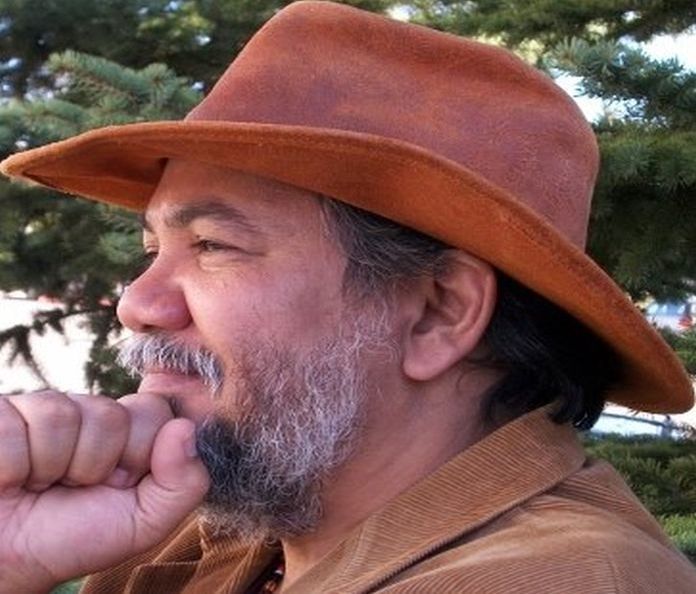
By Johnny Coomansingh
Ushering out the old and ringing in the new is all well and good, but some things remain the same; they never change. Although change is the ever-present constant, the harangue of certain old habits and embedded cultural traditions tends to resist change.
In light of this, I sometimes ask: “Why do people make resolutions without acknowledging what they must seriously do to change, to find the solution?” According to Mars Girolimon from Southern New Hampshire University (SNHU), “a New Year’s resolution is an intention or commitment to achieve a goal or make a change in the new calendar year. While some people’s resolutions find success, more resolutions fail than you might realise.” Dr Barb Lesniak, executive director of social sciences at SNHU added: “Many people set New Year’s resolutions because it’s the thing to do. They feel awkward if they don’t take part in this societal tradition.”
Notwithstanding the fact that churches are always open, many souls attend ‘church’ on ‘Old Year’s night (New Year’s eve) as a custom in the quest to find a point of conversion of ideas, a compass, that they could utilize for the New Year. Despite their efforts, a few days later they fall into the same mold in which they were fashioned in the years of the past. Is making a resolution just a societal custom? Is it a concept or style that we cannot do without? Is it a moment of retrospect (soul searching) after the gustatory and libatious excesses at Christmas?
In no way am I denigrating or bashing churchgoers about what they consider to be the path to salvation. Not me! For many, it could just be a ritual to make their oblations and/or supplications known unto their God…whatever they consider God to be. I don’t know if the German philosopher and economist Karl Marx was correct. Nevertheless, in his 1844 introduction to his work A Contribution to the Critique of Hegel’s Philosophy of Right, he declared:
“Religious distress is at the same time the expression of real distress and the protest against real distress. Religion is the sigh of the oppressed creature, the heart of a heartless world, just as it is the spirit of a spiritless situation. It is the opium of the people.”
Again, I am not a disciple of Marx, and certainly, in no way am I saying that religion is unsound. However, my eclecticism must be allowed to voice concerns and observations to all, without fear or favour. I have realised that change is hard, and many times we are tied by the chains of circumstances, inclusive of pleasing other people. A case in point was when I was scolded for arriving late to the ‘Old Year’s’ meeting at church. I was probably like Cinderella, who forgot the time while I was with my girlfriend on that fateful evening.
After those special moments, I faced the ire of my mother. Because of my tardiness, my mother’s countenance exhibited a high degree of displeasure. I could have seen her level of disappointment in me. What was important to me was spending every ounce of time with my sweetheart, cutting it too close for the church service. Once again, my mother was very particular about my soul. Later on in life I learnt: “Business before pleasure unless pleasure is your business,” an adaption from Thomas Hutchinson’s Diary and Letters (1767).
On the journey, life came to me much like the Fast and Furious. I survived all my resolutions and ablutions, some with, and some without solutions. I kept asking God the same questions every Old Year’s night at church. Even though we seemed to be ‘brethren’ in the same church, I had a few questions after the ‘display’ of several people who made public individual testimonies about God’s goodness and grace. Why wasn’t there any change in their behaviour? Why were some of my so-called brethren still so rough, intolerant, and cantankerous? Why were some still so judgmental? Why could they not accept unbelievers as people? Why did some of them just love to wag their tongues with more and more gossip? Why were some still stuck up in their own private ‘sycamore tree?’
Worst of all, why were some so prejudiced and still so racist? I reasoned that I should not worry too much about those who would not change. I read somewhere that there was a ‘sower who went forth to sow,’ and some of the seeds did not fall on good ground.
I must echo, some things remain the same; they never change. As Marshal McLuhan said: “Fish is the last animal on Earth to discover water.” This ‘rant’ of mine is a micro-rant concerning resolutions at the church level. But wait! There are macro-rant situations at the local level in Trinidad and Tobago (T&T), at the regional level in the Caribbean region, and definitely at the international level. Is there a smidgen of political polarisation in the Caribbean today? All around us, there are wars and rumours of war. I guess that we are fully aware of the tirades relative to regional and international unease. Are our leaders inclined to make resolutions without envisioning the solutions?
At the local level, political entities keep ‘fighting dong’ each other; political mischief. It appears that there is no hope for betterment in T&T with an empty treasury, a shutdown of the Petrotrin oil refinery, scarce Forex, festering crime, and overt racism. The great carnival mas designer and producer, Peter Minshall once said: “All ah we is one family.” He did not lie. It was probably a terminological inexactitude because tribalism continues to raise its ugly head from the swamp of stupidity. Nature dropped off all of us here on this outcropping of rock in the Caribbean Sea. It was probably nature’s great experiment to see if we could live peacefully with one another.
We here in T&T might make thousands of resolutions to do better in 2026, but I prophesy that this would not be a reality; too much mauvais langue, lawlessness, lack of concern, consideration and compassion. I must have said these statements already, but I must reiterate what I said in my book Sweet and Sour Trinidad and Tobago. I published this book in 2010, and the ambience in T&T surely changed. It got worse! It could be humorous to some, but resolution or not, this is the reality we live with in T&T:
“One thing ah know is dat some people say dat God is a Trini. Although this might be so, ah find it rel disheartening to sense the morass of the present atmosphere of Trinidad and Tobago. It is quite likely dat God was lucky and he geh ah visa and duss it…I am almost sure that Jesus would not hang around in Trinidad and Tobago…because he ‘fraid dey go kill him again. And with all the Sunday morning bawling and shouting and screaming “hallelujah, hallejujah, hallejujah, thank you Jesus, thank you Jesus” in all dem chuch an dem, the Holy Spirit eh coming back…he dun wid dis place; the devil take over di place. God and di devil cyar dwell in the same place…everybody know dat! Dis place is hell! It is as though there is odium of evil stalking the land. Maybe God decided to take a holiday, a long holiday; maybe God is afraid to be shot or knifed by some arrogant bandit in Tunapuna, Maloney, Grande, Arima or Sando.
“There is no need for Jesus to die twice and certainly not in Trinidad, a place that Christopher Columbus named in honour of the Father, Son and Holy Ghost [La Isla de la Trinidad]. Note carefully dat Jesus never eat any cascadura so he eh go dead in Trinidad. I eh think dat the Sea of Galilee had any cascadura. Yuh know why ah say dat about di cascadura fish? Somebody did say dat according tuh some Trini legend dat people who eat cascadura no matter whe dey go dey go come back tuh Trinidad tuh dead. I eh know how true dat is buh ah have ah American friend who rel fraid, he fraid tuh eat cascadura fish because he say dat he eh want tuh dead in Trinidad and Tobago. Does anybody really know how dey go dead and whe dey go dead? Nevertheless, if Jesus happen tuh visit Trinidad and Tobago ah sure he go try two, three cascadura because he is ah man who like fish and who does roast fish and gih people tuh eat fish all di time.”
On my trek in life, I ended up attending Fort Hays State University in Kansas to read for a masters in communication science. In a guess lecture presented by Dr Carlos Cortes at the university, he mentioned the Arabian adage: “The caravan is moving and the dog is still barking.” He spoke about the imperceptible changes that were occurring on the American landscape and the reaction of people to these changes. The maxim gave me fodder to write the poem Change:
“The dog, it ran,
Behind the caravan,
Woof! Woof! The dog was saying,
But the caravan, with steady pace was still moving,
Caravan moving to a distant place,
Inside the capsule—the human race.
Contented with his bark was indeed the dog,
Who ignored the moment that entered his log,
With ambling pace continued the wheels,
The dog with his “woofing” on the caravan’s heels,
Then, the dog his last tired “woof” barked—so alone,
And into the horizon, the caravan was gone.”
The truth is the truth…many people make resolutions like what I heard in the song: “I go to church on a Sunday. The vows that I make I break them on Monday. The rest of the week I do as I please. Then come Sunday morning, I pray on my knees…” The ‘holier than thou’ mentality existed during my early years in the church until one morning in North Dakota this thought came to me from out of the blue: “When we cease to subscribe to dogma, ritual, and liturgy then we’ll come into the essence of the knowledge of truth, and we’ll need no one to unravel or decipher for us the mystery about truth, for truth in itself is not mysterious…no never was.” I changed!
We all know that “change is difficult…it’s the number one reason people fail to follow through on their resolutions,” said Dr Thomas MacCarty, associate dean of social science at SNHU. He added: “Most people make resolutions with the best of intentions but soon find it takes commitment, effort, a true desire to change and being personally accountable to stay the course.”
So if we are planning to make resolutions for 2026, make sure that we have “a true desire to change”… to get to the solution for which we hoped and supplicated.