

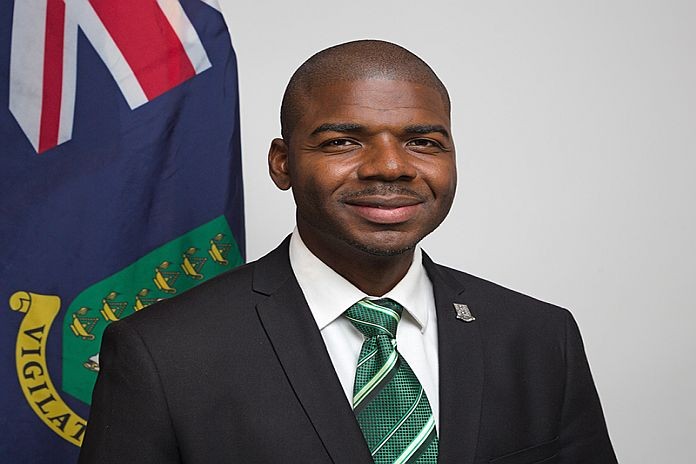
TORTOLA, BVI – Premier and minister of finance of the Virgin Islands, Dr Natalio Wheatley, has described his participation in the recent political caucus of heads of government of the Organisation of Eastern Caribbean States (OECS) as both necessary and encouraging, given the pace of current regional and international developments.
“It was important for me to be there for this somewhat emergency meeting due to all of the developments which have been taking place,” Premier Wheatley said, noting the Virgin Islands’ long-standing relationship with the OECS and the significance of regional coordination at this time.
Reflecting on the outcome of the closed-door discussions, the premier said:
“I was very pleased with the resolve of the leaders there, their commitment to work even closer together, in terms of our foreign policy objectives, and even practical areas of functional cooperation. I left the meeting very encouraged that we would have good follow-up, and we would have very strong cooperation in areas of mutual benefit.”
Premier Wheatley reaffirmed the Virgin Islands’ commitment to continued engagement with the OECS, emphasising the importance of regional unity, shared learning, and coordinated responses to evolving geopolitical and regional challenges. He also addressed the Virgin Islands’ status within the OECS and the prospect of deeper regional integration. The Territory has been an associate member for over 40 years.
“We’ve been in discussions with the United Kingdom government … about full membership in CARICOM and OECS,” he said. “Of course, that’s something that the United Kingdom has to give their sign-off on, and then we can go ahead and make an application.”
The 12 January 2026 caucus was hosted by the Honourable Philip J. Pierre, prime minister of Saint Lucia, and under the chairmanship of Dr Godwin Friday, prime minister of St Vincent and the Grenadines, in his inaugural heads of government meeting.
Commenting on Dr Friday’s leadership, premier Wheatley said: “He was humble, he was modest, he was measured. He ensured that we stuck to the agenda and that every head of government had an opportunity to share their views.”
The heads of government reaffirmed their commitment to collective action, regional solidarity, and principled international engagement to safeguard the security, stability, and sustainable development of the OECS.
They underscored the importance of enhanced public communication to ensure timely access to accurate information on proposals and agreements, and agreed to convene in political caucus as needed to enable coordinated and responsive decision-making amid a rapidly evolving geopolitical environment.