

WASHINGTON, USA – The General Secretariat of the Organization of American States (OAS) and Spain’s National Cybersecurity Institute (INCIBE) signed a Memorandum of Understanding (MOU) establishing a cooperation framework to promote policies, projects, and initiatives with a direct impact on the lives of people across the Americas, strengthening democracy and equality in digital spaces.
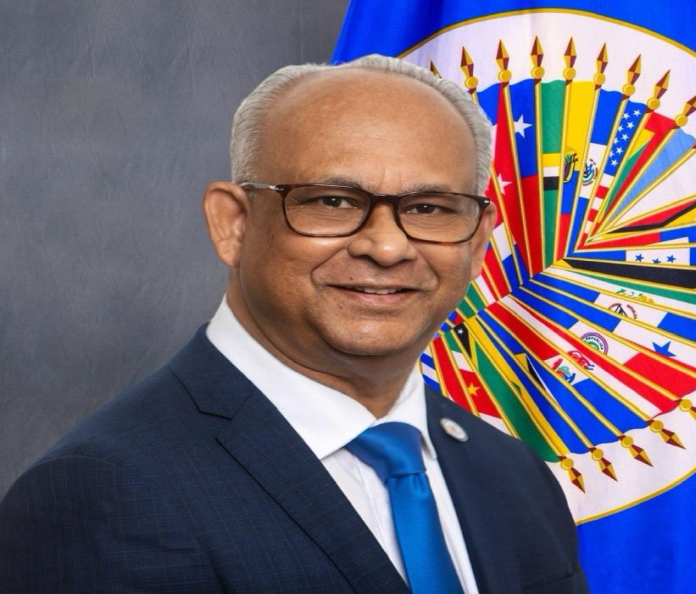
The agreement was signed Friday at OAS headquarters in Washington, DC., by OAS secretary general Albert R. Ramdin and Spain’s secretary of state for telecommunications and digital infrastructure, Antonio Hernando Vera, in the presence of the president of the OAS permanent council and permanent representative of Colombia, ambassador Luis Ernesto Vargas; the permanent observer of Spain to the OAS, ambassador Carmen Montón; and the executive secretary of the OAS Inter-American Commission of Women (CIM), Alejandra Mora Mora.
The memorandum—implemented in coordination with the OAS Inter-American Commission of Women (CIM)—prioritizes action in key areas such as digital rights and democracy; women and cybersecurity; artificial intelligence applied to equality policies; prevention of digital violence against women (with an emphasis on public and political life); promotion of women’s talent in cybersecurity; and the design and implementation of initiatives to strengthen cybersecurity.
OAS secretary-general Albert Ramdin welcomed Spain’s cooperation with the OAS and underscored the agreement’s impact for the people of the Americas:
“This Memorandum allows us to move toward digital societies that are more inclusive, safer, and more democratic. When we protect rights in the digital environment, we also protect democracy and the daily lives of millions of people across the Americas,” he said.
Spain’s secretary of state for telecommunications and digital infrastructure, Antonio Hernando Vera, highlighted the link between cybersecurity and democracy:
“Improving our cybersecurity today is strengthening democracy: it means protecting privacy, the integrity of information, and the trust within our societies. With this step, we deepen a cooperation that has delivered excellent results and project it into the future.”
For her part, Spain’s permanent observer to the OAS, ambassador Carmen Montón, reaffirmed Spain’s commitment to the OAS and to equality in the digital era.
“Spain is expanding its commitment to the OAS by adding a new area of work with the CIM to strengthen women’s digital inclusion and security. Defending equality today is also defending democracy,” she said.
The agreement signed today aims to translate into tangible benefits for Member States and their societies by:
– Defending democracy online, helping prevent attacks, fraud, and manipulation that undermine public trust in institutions and electoral processes.
– Making the internet safer for people, especially women and girls, with tools to prevent and address harassment, threats, and other forms of digital violence that limit their participation in public and political life.
– Providing practical support so countries are better prepared for digital threats, through training, technical assistance, and exchanges of experience to respond more quickly and effectively to digital incidents and risks.
– Expanding opportunities for women in cybersecurity, promoting training, professional networks, and technical skills that open pathways to quality jobs and strengthen the region’s digital security.