


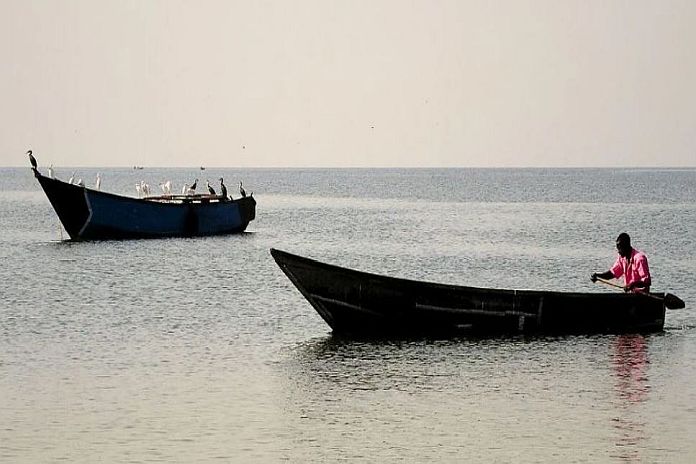
Aquaculture could deliver millions of jobs and boost incomes at scale when the right conditions for investment are met.
With capture fisheries nearing their limit, aquaculture, which has the lowest carbon footprint of all animal protein production, now makes up almost 60 percent of global seafood production. Put simply, it offers a viable option to close the nutritional gap that wild fisheries can longer meet.
So, what will it take to reduce risk in the sector and unlock the public and private financing needed for it to grow?
In our new major report Harnessing the Waters: A Trillion Dollar Investment Opportunity in Sustainable Aquaculture, produced in collaboration with the World Wildlife Fund, we take a deep dive into the aquaculture sectors of seven top-producing nations, highlighting investment opportunities and specific measures to unlock financing flows into the sector.
The report features key investment risks and opportunities in chapters on Atlantic salmon in Chile, black tiger shrimp in Bangladesh, carp in China, giant river prawn in Thailand, Nile tilapia in Egypt, pangasius in Viet Nam, and whiteleg shrimp in Ecuador.
Our verdict: to reach its sustainable growth potential, aquaculture requires a major transition from small-scale to intensive production. This transition is needed to ensure more efficient use of the land and water resources available and improve yields and productivity.
Aquaculture is potentially the largest sustainable food investment opportunity over the next 25 years. We project that US$0.5 trillion to US$1.5 trillion of financing is required between now and 2050 under business-as-usual and upside cases respectively.
Small-scale operations will need significant transition financing and investment capital to fund improved practices such as pond aeration, and use of aquafeeds that will increase yields.
We believe the effort will be worth it. Our research shows that investments could generate as many as 22 million new jobs, a doubling of the current aquaculture workforce.
For example, in Egypt, more than 150,000 people are currently employed in the tilapia value chain, and more than 580,000 work in the aquaculture sector. While men are the biggest beneficiaries, women work mainly in fish retailing, equal to 32 percent of total jobs.
Creating the right infrastructure—both human and physical—is essential for scaling aquaculture sustainably. This means investing in training programs and workforce development to ensure farmers and processors have the technical skills needed to adopt modern practices.
Physical infrastructure, such as cold-chain systems, hatcheries, quality testing labs, and transport networks, enables producers to maintain product quality, reduce losses, and reach lucrative markets.
While each country has its own unique profile, here we isolate three key contributors to create the enabling environments to create an economic boom in aquaculture.
Innovative financing
Governments have a crucial role to play in ensuring the transition from small-scale to intensive production. They can accelerate sector growth by streamlining licensing and ensuring predictable regulatory processes. Establishing clear standards for disease control and environmental protection—paired with transparent enforcement—helps investors feel confident in long-term sector stability. Tax incentives, investment guarantees, and access to affordable financing further encourage private-sector participation.
The private sector plays a critical role in helping aquaculture scale by introducing innovation, and investment capital. Public-private initiatives can improve resilience of aquaculture production and build effective responses to production shocks while unlocking efficiencies in feed production, hatchery development, processing facilities, and digital monitoring systems.
By collaborating with governments and research institutions, private companies can help expand export capacity, strengthen value chains, and drive inclusive job creation across rural and coastal economies. Industry-level collaboration, in conjunction with government agencies can aid the development of export markets for the country’s aquaculture producers.
In the Harnessing the Waters report, we show how Chile’s salmon aquaculture sector made a switch from state-backed development to sophisticated private-sector financing, including green loans and sustainability-linked instruments. Although it started toward the end of the last century, the country is already the second-largest producer of farmed salmon after Norway. By 2022, Chilean exports were valued at US$6.61 billion and in 2023, production reached 1.08 million tons propelled by strategic government support, international collaboration, and technological innovation.
Policy shifts
Effective policy shifts at the national level will help bolster and reshape the global aquaculture sector by redirecting investment, supporting research and development for innovation, setting new standards for environmental and social sustainability, social equity and shifting market dynamics and value chains. Practical national policies can reduce regulatory uncertainty and attract domestic and foreign investment in the sector.
In China, the aquaculture sector was transformed from semi-intensive farming to high-density monoculture systems due to policy reforms that opened up international trade, leading to improved technologies, equipment, and foreign investment. China now leads global carp production, accounting for more than 65 percent of total output, reaching 20.23 million tons in 2021 and valued at more than US$46 billion. The country’s carp production is the largest single aquaculture sector in the world.
In Bangladesh, where women work mainly in post larvae collection and seasonal shrimp processing, concerns regarding gender disparity and unequal distribution of wages exist. However, the government made recent amendments to labor laws in an effort to promote gender equality.
Feed supply gap
To meet projected aquaculture growth-related demand, new feed sources are required. Feed is the single highest operating cost for aquaculture operations, representing up to 70 percent of total operating costs given the relatively high protein required of farmed fish. Just to keep current fish meal and fish oil feed levels the same requires the production volume of feed sources to double by 2050 under the business-as-usual scenario, and to triple under the upside scenario. This means that exponential growth opportunities will exist in alternative feed sources such as algae, insect meal and other non-fish sources that can fill the coming feed supply gap.
Viet Nam is the world’s leading producer of farmed pangasius, a type of catfish, producing a volume that accounts for more than half of global production. The sector evolved from a reliance on backyard ponds into a major commercial industry in the late 20th century. Sustainable growth was achieved in part by investments in alternative feed sources, which account for 80 percent of production costs. This measure, combined with other focused development strategies detailed in the report, offers an example of how Viet Nam was able to achieve global market dominance in a relatively short time span.
The evidence is clear: aquaculture can become a trillion‑dollar engine for climate‑smart growth if governments and investors act boldly. Creating the right enabling conditions—from improved feed systems to stronger policies—will allow the sector to scale sustainably and deliver transformative economic and social benefits worldwide.