

- “Despite the spending of XCD 59 million on desilting by the former administration, only 8 percent of the material was removed.”
- Saint Lucia has “no choice” but to embrace desalination, given the growing demand from hotels, businesses and residents.
- The Parastatal Monitoring Department (PMD) should launch a renewed series of inspections and inquiries into Saint Lucia’s statutory corporation WASCO.
- The government should reconsider a Central Planning Unit (CPU) to administer National Development Plans.
- WASCO’s infrastructure rehabilitation is estimated at XCD 200 million, which taxpayers will now have to suddenly fund grudgingly.
By Caribbean News Global 
CASTRIES, St Lucia – Last April, the government of Saint Lucia said it was “determined to take measures to solve the issue of the unreliable supply of water in some parts of the island. In collaboration with the World Bank, we have requested a technical visit to advise on water supply and wastewater management sector efficiency and water security.”
“The group made several recommendations: (1) Expanding wastewater and sanitation services (2) Improving efficiencies of water services and augmenting Wasco’s systems, resources, and capacity (3) Water Security and (4) Enabling environment for private capital mobilisation.”
Prime Minister Pierre’s administration previously stated that “Despite the spending of XCD 59 million on desilting by the former administration, only 8 percent of the material was removed.”
“The raw water line that transmits water from the JCD to the Theobalds Treatment Plant (TTP) at Ciceron is over 40 years old and heavily degraded. The TTP needs significant rehabilitation and expansion. The pipeline that takes water to the north of the island needs to be replaced.”
- “We have secured a concessionary loan from the CDB for XCD 61 million to replace the raw water line from the John Compton Dam to the Theobalds Treatment Plant.
- As stated earlier, the World Bank will provide advice to the government on the way forward for the desilting of the John Compton Dam.
- The government is seeking resources for the replacement of the other parts of the northern pipeline.”
- The government has provided WASCO with a monthly subvention in the interim to assist with payment of its liability to LUCELEC and other operational costs.
- “We will ask WASCO to work closely with private-sector companies to explore the possibility of underground water opportunities in the north of the island.”
The government of Saint Lucia subsidises the Water and Sewerage Company Inc., (WASCO) XCD 1.2 million per month. The subsidy is necessary with WASCO’s debt obligation, operational capital needs, while long-term capital and structural reforms are tailored. In addition, rehabilitating WASCO’s infrastructure is estimated at XCD 200 million.
The challenges of WASCO are not unpredictable in the management and distribution of water supply throughout the island, with multiple free-flowing rivers, waterfalls and streams of underground water opportunities.
Years ago, an investment proposition for water desalination was tabled and quickly rebuffed by so-called political leaders and government officials, supposedly equipped with the mindset of national development.
Last January, it was stated that the island has “no choice” but to embrace desalination, given the growing demand from hotels, businesses and residents.
“We have now come to the point where this is a must, and this must be a common feature in our conversations. We do not have a choice anymore. We have to go the desalination route,” said chief operations officer, WASCO, Aly Anthony.
Saint Lucia now stands to learn from St Kitts and Nevis, having 24-hour water service for over 70 percent of households, and with further investments in desalination, storage, and new pipelines delivering real results for households and businesses.
“This administration has made the kind of bold and strategic investments that were long overdue,” minister Konris Maynard said. “We are not only fixing problems — we are securing the water future of Saint Kitts and Nevis for generations to come.”
St Kitts – Nevis announces commissioning of the Basseterre Desalination Plant
CNG Insight
The Pierre administration has a focus on National Development projects, infrastructure and security, inclusive of an upgraded Hewanorra International Airport (HIA), improvements to water supply infrastructure, hospital expansion, development of seaports and construction of bus terminals.
-
-
- These physical structures cannot care for themselves in isolation. Built infrastructure requires provision for maintenance, stability, budget allocation for replacement/modification, and seamless function.
-
The government should reconsider a Central Planning Unit (CPU) to administer National Development projects and plans. The objective should be to strengthen policy delivery, explore capacity-building initiatives, monitor construction projects and plan facilities for onward maintenance and replacements, inclusive of principles and strategies that support coherent investments.
-
-
- Think about it! Not even a computer can operate without a CPU or a chip functioning as the “brain.” Without a motherboard, memory, power supply, and software, the exterior walls are for aesthetic purposes.
-
In this context, WASCO did not make satisfactory provisions for maintenance and future rehabilitation of the JCD and the 30-plus-year-old failing infrastructure. Currently, WASCO’s infrastructure rehabilitation is estimated at XCD 200 million, which taxpayers will now have to suddenly fund grudgingly.
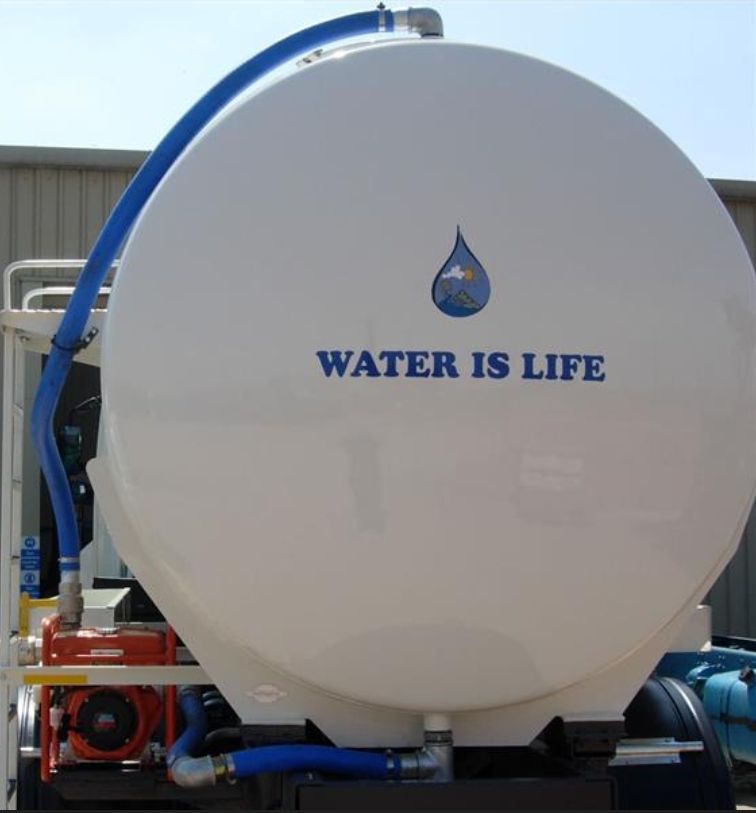
Water is Life!
In the process of calibrating growth strategies and national development plans, investment policy plays a role in supporting GDP growth, competitiveness and long-term development.
AND, in the context of national development and growth methods, activities surrounding sustainability and resilience strengthen policy delivery.
NOW, to improve these investment outcomes, exploring capacity-building initiatives, principles and strategies that promote the flow of quality investment can be helpful to achieve people-centered objectives, while supporting coherent investments.
FURTHER, strengthening human and economic capital adds to the foundation for workforce readiness, people empowerment and poverty reduction.
In the reflection of value, resilient investment, policy and reform, the current outcomes of WASCO point to the failure of responsibility, transparency, accountability, and oversight in the provision of water and wastewater services.
WHILE these matters affect households, workplaces and neighbourhoods from Millet to Gros-Islet, (100 K plus individuals) people’s health, life skills and experience are diverted from workplace productivity and efficiency to personal care.
WASCO requires rethinking how the provision of water and wastewater services, human and capital policy, is designed and delivered in a modern context. (Post 1996).
PRIORITY is essential to accelerate technological change to climate adaptation, realign stalled initiatives and expand opportunities.
The Parastatal Monitoring Department (PMD), a division under the Office of the Prime Minister (OPM), as part of its legal mandate, should launch a renewed series of inspections and inquiries into Saint Lucia’s statutory corporation WASCO.
This would fall in line with the aims of PMD, “to reinforce the principles of good governance, accountability, and transparency.”
Related: Part 1