

Venezuela oil revenues
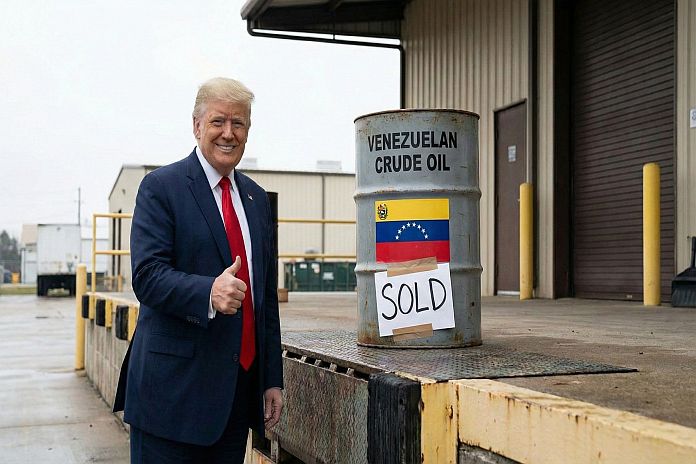
Representative Gregory W. Meeks, Ranking Member of the House Foreign Affairs Committee, sent a letter to Secretary of State Marco Rubio demanding documents and answers regarding the Trump administration’s decision to route Venezuela oil revenues into an offshore account in Qatar.
In the letter, Meeks questions the legal basis of the arrangement, and warned the offshore account could enable corruption, skirt accountability, and shield assets from legitimate creditors seeking legal recourse against the Maduro regime.
A PDF of the full letter can be found here.
“I am writing to express my grave concern that the administration is operating an offshore slush fund for Venezuelan oil revenues while systematically denying Congress the information required to fulfill our constitutional oversight duties. This is unacceptable.
“Following the capture of Nicolas Maduro, the President declared on X that Venezuela’s oil was our oil. That assertion is factually incorrect and legally indefensible. On January 9, the administration declared an international emergency pursuant to the International Emergency Economic Powers Act (IEEPA), apparently intended to shield Venezuelan oil-related foreign deposit funds from American individuals and businesses holding valid judgments against the Maduro-Rodriguez regime. Rather than clarifying the legal and policy basis for these actions, your testimony before the Senate Foreign Relations Committee (SFRC) on January 28 further obscured the administration’s approach.
“While responding to questions about the administration’s plans for Venezuela’s oil revenues, you described a scheme under which profits from Venezuelan oil sales are routed through an offshore account in Qatar, with the State Department monitoring and approving disbursements. You described this arrangement as ‘novel’, ‘a short-term mechanism,’ and ‘the best we could come up with.’ You further stated that this short-term mechanism will remain in place until the administration develops a plan to convert the Qatar-based accounts to those controlled by the US Treasury, without specifying a timeline to do so.”