



- Hotel development amid concerns over VAT non-collection, food insecurity and proposed water rate increases;
- Discussions continue on micro-macro developments and the government development agenda;
- Jobs amid environmental and citizens’ quality of life.
By Caribbean News Global 
CASTRIES, St Lucia – In 2025, the Development and Control Authority (DCA) notified the public of an application for Approval in Principle Development Concept, Vigie, Castries. Comments and/or recommendations were required to be submitted in writing by September 12, 2025.
In the aftermath, multiple red objections and verbal comments were communicated to the DCA on several issues, including water supply, energy resilience, public use of the beach, traffic management and parking, noise pollution, security, conservation, and construction-related activities.
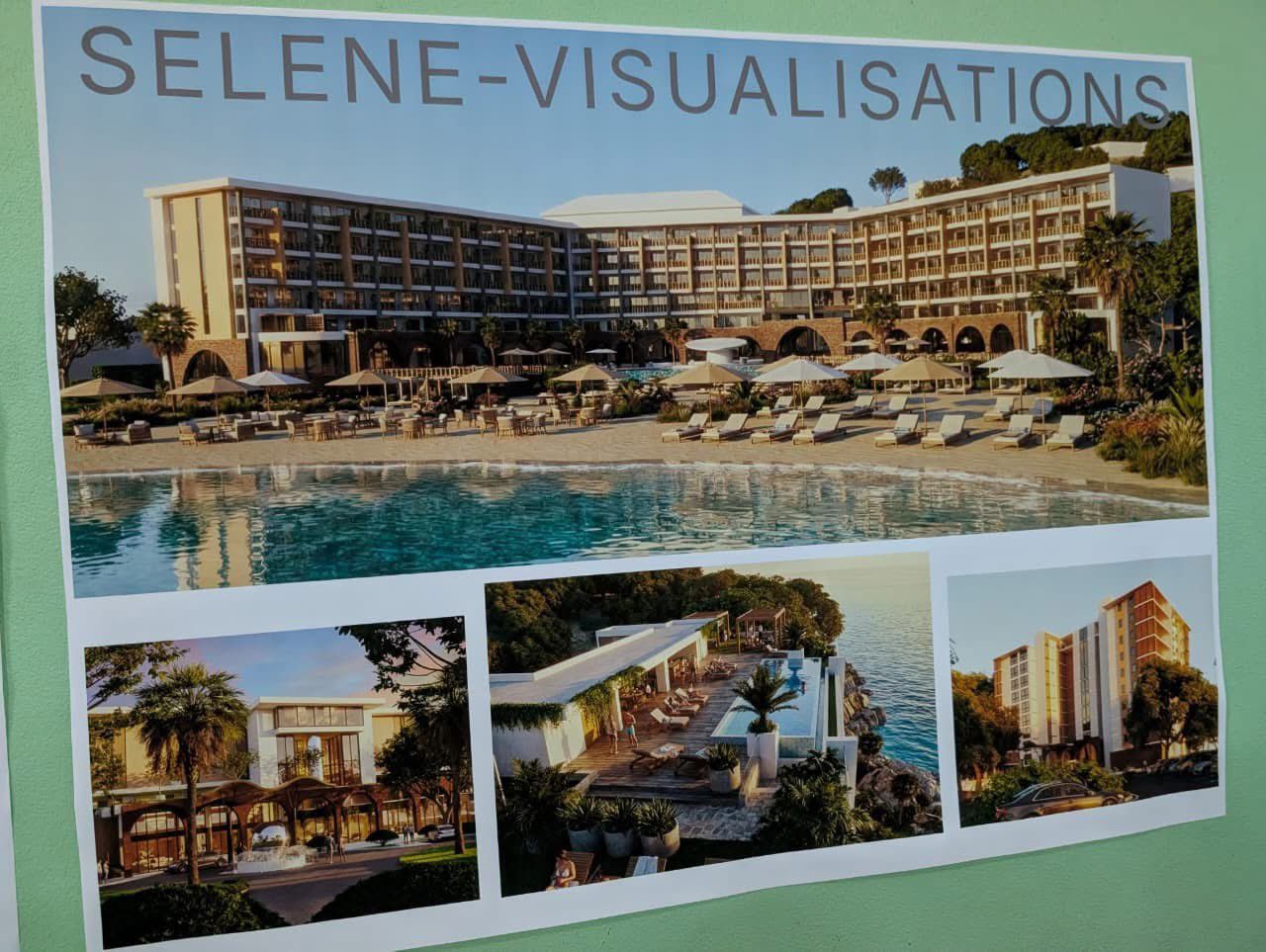
Last week, the Approval in Principle Development Concept, Vigie, Castries, was unveiled – Selene – Visualisation, at a public consultation with residents, government representatives, and the project team.
These discussions are being held amid final preparation for the 2026/ 2027 budget, food insecurity, gun amnesty, VAT non-collection, water woes and micro-macro development discussions that have not generated positive momentum for the government.
High-rise buildings on Vigie Beach
The proposed development, according to DCA notice, will comprise three buildings: a six-storey hotel building, a ten-storey apartment building and a three-storey back of house, on approximately 1.95 hectares (4.8) acres.
Project designer Francisco Ortega, informed the public consultation that the development will comprise a “150-room autographed hotel under the Marriott brand and a building for residences, all in a compound that is managed by Marriot.”
The Vigie Beach location for the hotel development has raised questions related to the impact on residents of Vigie, George Charles Airport, the landscape of Saint Lucia’s tourism, the environment, including turtle conservation and recreation for quality natural living of Vigie beach consumers.
A call to environmentalist …
- What’s the parking requirements for a 150-room hotel plus staff and amenities, and a ten-story apartment building within 4.8 acres?
- Is there a peculiarity between Vigie beach turtle nesting ground and the ministry of agriculture statement on the killing of Saint Lucia’s Boas?
Approval in principle
At the public consultation, Castries North member of parliament Stephenson King reportedly emphasised “that while the project has already received approval in principle, that approval comes with clear expectations.”
“That approval also includes a level of consultation with all concerned, our social partners and others, residents, and communities,” King added. His role will be to ensure continued dialogue, and that his intention is “to continue to encourage consultation, and I refer to sustained consultation …”
Key observations of minister King’s utterances are symptomatic that “ that is more than approval in principle,” said a former government minister with familiarity on these matters.
“Moreover, it was interesting to observe non-government personnel making the normal pitch for hotel development along the lines of boosting Saint Lucia’s tourism product, luxury brand, and high-end tourism, service jobs and the impact towards the wider economy,” the former government official added.
“However, no mention was made of the normal matrix that investors usually require 25-plus years tax-free holiday and duty fee concessions, without equity and guarantees for the benefit of the people and country,” adding, “The natural inclination is satisfaction with service jobs, and the collection of hotel charges, which the Inland Revenue Department has difficulty collecting.”
- The budget book is red when tourism activities do not align with carrying capacity, visitor experience, sustainable development and memorable interactions.
Carrying capacity
In the interest of balancing tourism and economic benefits, the well-being of residents’ quality of life and environmental preservation are metrics that often fall short in the haste for infrastructural development.
Carrying capacity, the maximum number of individuals or activities an environment can sustainably support are matters, that governance should regulate. This allows harmony with environmental management, economic growth, sustainable tourism management and types of allowable infrastructure in a specific area.
Visitor numbers, building dimensions per 4.8 acres of land development, and foot traffic should not exceed the community-environment capacity. This leads to negative impacts. Caution should be exercised on the possible deterioration of the very attraction that draws visitors.
Carrying capacity assessments and Environmental Impact Assessment, (EIA) help avoid severe congestion, erosion and littering, and provide access for seasonal crowds, open and uninterrupted land use of crown property. Hotel development should not overpower and/or dominate the landscape, compromising residents’ quality of life.
Environmental, Social, and Corporate Governance (ESG) is a set of practices and metrics used to evaluate a company beyond its financial performance. The practices and metrics offer a way to measure a company’s health and stability, beyond the particulars of renderings and numbers on a balance sheet or deep-pocket financiers.
In the push for growth in tourism and economic benefits, it is important to secure Saint Lucia’s long-term appeal, and not put further strain on its natural resources, and hinder existing infrastructure (water deficiency, waste collection and disposal, power supply, roads, and security), without new hotels, commercial and housing developments, contributing to sustainable capacity.
Reference is made to the Saint Lucia Building Code and EIA Regulations, per Volume 193 of the Saint Lucia Government Gazette dated November 1, 2024.
These updates include:
- Land Development – enhance standards to promote responsible and effective land use;
- Building Code – clearer construction guidelines to ensure safety and compliance;
- EIA Regulations – new protocols for assessing environmental impacts to protect the natural environment; and
- Fee Structure – adjusted fees to better align with efficient delivery of services.
Concerning public consultation, it is very obvious that strategies to promote sustainability, community-based priorities, visitor experience enhancement, economic development and George Charles Airport, are established thresholds in the determination of economic, future development and community balance to be determined.
At the public consultation, adopting a sustainable model that protects resources to enhance visitor and positive community experience escaped many.
- What is the plan to improve water and sewer management, sustainable energy and climate change mitigation in the Vigie Beach peninsula?
The red budget book
Powering progressive initiatives to modern-day hotel development is key to progressive government needs for future strategies in a “People Centered” economy.
The government of Saint Lucia is focusing on the ease of doing business, water harvesting, the continuous challenge of VAT collection, gun amnesty, US Embassy Media Advisory, US Security Alert, and food security.
“We want Saint Lucia to be a place where business facilitation is easier, where business processes are simplified and where it is easier to set up a business, adding, “the economy is growing. I predict growth again for the fifth consecutive time.” However, “We have not completed the numbers as yet, but I think based on the projections I’ve seen that we will be running some primary surpluses up to now, stating that our debt to GDP ratio is still manageable.”
“Public debt, which also pencils in natural disaster costs, is projected to stabilise at around 77 percent of GDP in the medium term.~ IMF January 14, 2026.
Prime Minister Philip J Pierre has previously expressed his administration’s intention to prioritise water harvesting, the ease of doing business, and a national development programme. This week, he highlighted: “Food security requires a shift in how we plan, grow and consume what we eat. Reintroducing kitchen gardens, strengthening school agriculture programmes, and encouraging food production in small spaces are practical measures that build national resilience.”
The prime minister continued: “With realistic planning and simple lifestyle adjustments, Saint Lucia can strengthen its capacity to feed itself and reduce dependence on external supply chains. This is about sustainability, self-reliance and long-term stability for our people.”
In the well-meaning intension and ethos of food security, it is opportune that policies and exemptions that facilitate hotel development are given the same courtesy as agriculture, agro-business and entrepreneurs.
Saint Lucia’s domestic food production, water utilisation, food import bill and energy prices are projected to increase. The need for foreign currency to procure equipment and supplies is scheduled to increase exponentially in the budget 2026/2027.
Saint Lucia’s tourism direct contribution to the economy, based on government records, is “40 percent of GDP.”
Sustainability advocates
At the current spending and debt trajectory, the government is well aware that new developments, investors, the tourism industry and households must carry a sustainable level of self-sufficiency.
The path forward is to benchmark infrastructure impact, develop realistic goals and partner with local businesses and residents to reflect community priorities. Creating new opportunities for Saint Lucians means matching duty-free concessions and tax holidays with the same vigour awarded to “investors” who always escape the 25-year mark with transformation.
On aspects of sustainability and economic optimisation, policymakers and legislators need to take meaningful steps in opening markets and addressing barriers between tourism, agriculture, and agri-businesses and “people empowerment.”
Pursuing hotel developments that deliver real advancement for Saint Lucian workers and businesses, while supporting a sustainable environment, are good options for Saint Lucia’s lasting appeal and long-term viability.
