
- The US’s first $500 million sale of Venezuelan crude marks a strategic reset in hemispheric energy relations as Latin America and the Caribbean enter a critical investment moment.
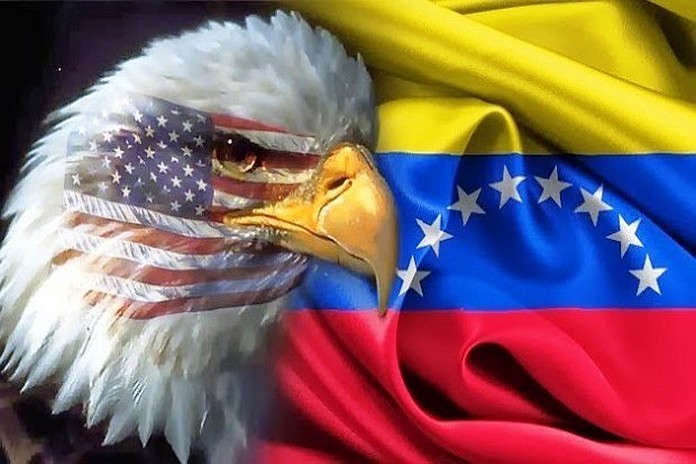
PARAMARIBO, Suriname – When the United States completed its first sale of Venezuelan oil, the $500 million transaction reopened a geopolitical channel that had been largely dormant for years, signaling that energy pragmatism is once again shaping Washington’s approach to the Western Hemisphere.
Carried out under a new US–Venezuela arrangement that allows sanctioned crude to be marketed with proceeds held in US-controlled accounts, the sale marks a tangible shift in how Washington is balancing political pressure with supply security. US officials have indicated that additional cargoes are expected to follow, offering Venezuela a limited but meaningful pathway back into global oil markets after years of isolation that saw production fall from more than 3 million barrels per day (bpd) in the late 1990s to around 900,000 bpd in recent years.
For Latin America and the Caribbean, the implications extend well beyond Venezuela. The resumption of Venezuelan crude sales – reportedly at prices higher than the country previously received – has the potential to stabilise regional oil flows and support refinery economics in the US Gulf Coast, where heavy crude processing capacity remains significant. For Caribbean refineries and energy importers, greater availability of regional crude could reduce reliance on longer-haul imports from the Middle East or West Africa, lowering transportation costs and improving supply reliability for refineries and power producers.
For island economies that remain heavily dependent on imported fuels, even incremental improvements in logistics, pricing and supply predictability can translate into meaningful fiscal and energy-security gains. Over time, this can support local employment, government revenues and more resilient energy systems in markets that have historically paid a premium for fuel imports.
The shift also reflects Washington’s broader effort to reassert economic influence across Latin America at a moment of intensifying global competition. US president Donald Trump has publicly floated figures of up to $100 billion in potential US investment in Latin American energy and infrastructure should engagement deepen – a figure that is more political signal than firm commitment, but indicative of how central energy has become to US. regional strategy. Even a fraction of that capital, if realised, would be transformative for upstream rehabilitation, midstream infrastructure and downstream modernisation across the hemisphere.
For regional governments and energy companies, this moment presents both opportunity and urgency. Venezuela’s partial reintegration could unlock billions of dollars in deferred investment to rehabilitate aging fields, pipelines and export infrastructure. Neighbouring producers and service hubs also stand to benefit from increased regional throughput and collaboration. Guyana and Suriname are already attracting multi-billion-dollar upstream commitments, while Trinidad and Tobago continues to position itself as a gas processing and LNG anchor for the Caribbean.
It is this convergence of geopolitics, capital and project momentum that makes Caribbean Energy Week (CEW) taking place on 30 March-1 April 2026, Paramaribo, Suriname particularly timely.
As the region’s premier energy forum, the event convenes policymakers, national oil companies, international investors and technology providers at a moment when strategic alignment is critical. Discussions around hydrocarbons, gas monetisation, power generation, renewables and regional integration will directly shape the investment decisions being made today.
In a landscape defined by shifting alliances and renewed US engagement, CEW 2026 offers a rare platform to move beyond headline diplomacy and focus on execution: structuring bankable projects, mobilising diversified capital and ensuring that energy development delivers long-term economic resilience.
The US sale of Venezuelan oil may be only the first cargo in a longer process, but it is already a marker of change. For Latin America and the Caribbean, the question is no longer whether global attention is returning — it is how effectively the region positions itself to capture it.
About the Author