

- Venezuela’s state oil company suggested that an eventual agreement could mirror existing deals with multinational firms such as Chevron.
By Ricardo Vaz
CARACAS, (venezuelanalysis.com) – The Trump administration has vowed to control Venezuelan oil sales for an “indefinite” period in the wake of the January 3 bombings and kidnapping of Venezuelan President Nicolás Maduro.
“Instead of the oil being blockaded, we’re gonna let the oil flow to US refineries and around the world to bring better oil supplies, but have those sales done by the US,” energy secretary Chris Wright said in a Goldman Sachs conference on Wednesday, January 7.
According to Wright, the process would begin with crude that is currently loaded on tankers that have not left Venezuelan shores because of the US naval blockade, before selling future production “indefinitely, going forward.”
A “fact sheet” published by the department of energy went on to claim that proceeds from sales of Venezuelan crude “will first settle in US-controlled accounts at globally recognized banks to guarantee the legitimacy and integrity of the ultimate distribution of proceeds.”
The document stated that a “selective rollback” of US economic sanctions will allow transactions involving Venezuelan oil products in global markets. The department of energy likewise announced supplies of diluents and equipment to Venezuela’s oil industry, which also require the lifting of sanctions, alongside broader US investment in the oil sector and electric grid.
Secretary of State Marco Rubio affirmed in a Wednesday press conference that the US has a “three-step plan” for Venezuela in the wake of the January 3 military attack. The first step involves “stabilising” the country to allow for the arrival of US and Western corporations, before a stage of “national reconciliation” and finally a “transition.”
In the wake of the strikes that killed over 80 people in the Caribbean nation, Trump and administration officials have repeatedly threatened the Venezuelan government into accepting its demands, especially in the oil sector.
On Wednesday, US authorities announced the seizure of two new tankers as part of efforts to strangle Venezuelan crude exports. Rubio recently referred to the US’ naval blockade as a “lever of leverage” against Caracas. US forces had previously seized two other tankers transporting Venezuelan crude.
According to ABC, Washington has demanded that Caracas’ oil production and exports be done exclusively with US partners. In 2025, over 80 percent of Venezuelan crude exports were destined for Chinese refineries. However, Politico reported that US oil conglomerates are reluctant to invest heavily in Venezuela.
Trump had emphasised in recent weeks that the US’ main interest was control over Venezuela’s oil industry and reserves. On Tuesday, he wrote on social media that Venezuelan authorities had agreed to “turn over 30-50 million barrels” of oil to the US, in reference to the crude currently blockaded, and that he would “control” the proceeds.
On Wednesday, Trump published another social media post claiming that Caracas would only be purchasing US-made products with the oil sales revenues.
US actions have drawn domestic criticism, with Connecticut Senator Chris Murphy blasting Rubio’s “insane plan.”
“They are talking about stealing the Venezuelan oil at gunpoint for an undefined time period as leverage to micromanage the country. The scope and insanity of that plan is absolutely stunning,” Murphy told press.
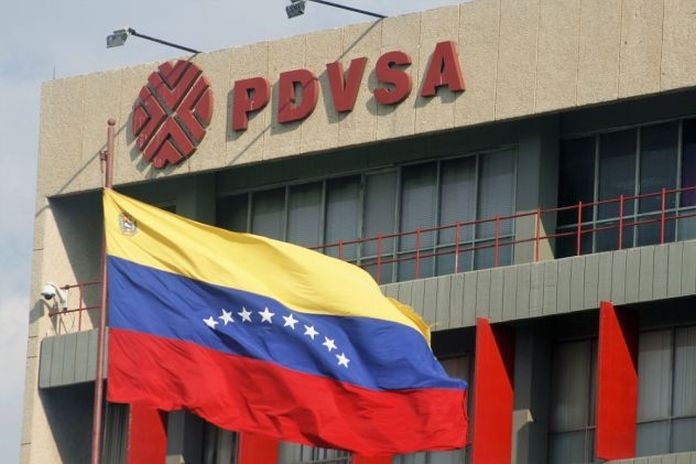
Venezuelan state oil company PDVSA, for its part, issued a statement on January 7 informing of talks for the “sale of large volumes of crude to the United States.” The communiqué made no reference to the terms alleged by US officials.
“PDVSA ratifies its commitment to continue building alliances that boost national development and contribute to global economic stability,” the text read.
PDVSA added that the prospective agreement would follow a “scheme” similar to the one that currently applies to Chevron.
The US oil giant is a minority partner in four joint ventures with PDVSA. Under its present sanctions waiver, Chevron allocates crude for PDVSA to sell. However, under a previous license, Chevron would commercialise all the oil before transferring proceeds to its Venezuelan partners.
Acting president and oil minister Delcy Rodríguez has not commented on the US officials’ claims. In a Wednesday night televised broadcast, she said Venezuela has developed “diversified economic and geopolitical relations” all around the world.
The Venezuelan oil industry has faced multiple waves of economic sanctions dating back to the first Trump administration, including financial sanctions, an export embargo and secondary sanctions.
Caracas has made repeated calls for foreign investment, including from US companies. US refineries, particularly in the Gulf Coast, are especially geared toward Venezuela’s extra-heavy crude blends. The US was the main destination for Venezuelan oil exports prior to the 2019 embargo.
The Nicolás Maduro government additionally created favourable conditions for oil partners in a bid to ramp up oil production. The 2020 Anti-Blockade Law establishes mechanisms that supersede Venezuela’s hydrocarbon legislation, including concessions whereby private companies can lift more than half the crude produced.