

 By Yan Carrière-Swallow and Raju Huidrom
- Substantial savings from past oil production can help build a thriving economy for future generations—if spent better and more slowly
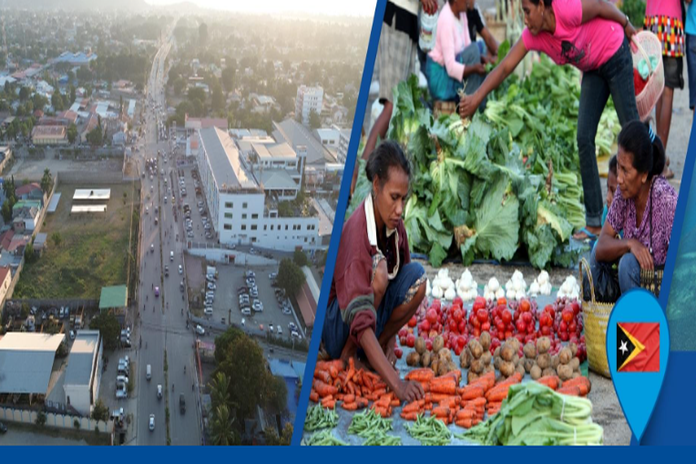
Timor-Leste has achieved significant progress since its independence in May 2002. Asia’s youngest nation has maintained stability, strengthened institutions, and enjoyed enviable economic growth and inflation for a country emerging from conflict.
Notably, it has stockpiled proceeds from its offshore oil and gas fields in its Petroleum Fund, which now exceeds $18 billion, roughly equal to ten times the Timorese economy’s annual gross domestic product.
While most countries that gained from commodity booms have allowed riches to slip away, Timor-Leste has managed to grow its sovereign wealth fund, introduced two decades ago, to be one of the largest relative to the economy’s size. And it did so at a much lower level of development than others, such as Qatar and Bahrain.
At the same time, the population of 1.3 million faces mounting development needs. Growth of per-person income has stagnated in recent years, the private sector needs diversification, and progress on reducing poverty and malnutrition has stalled.
Turning savings into development
Addressing these urgent needs will require resources, and it’s natural that Timor-Leste would draw from its substantial savings to improve the livelihoods of its citizens. But the nation’s hard-earned wealth must be spent better and more slowly.
Better because recent large government budget deficits have not been yielding the desired growth dividends. Refocusing spending on building up human and physical capital would create the foundations for continued economic progress.
More slowly because oil and gas production is dwindling and big deficits could fully deplete the Petroleum Fund by the end of the 2030s. That would be a potentially destabilizing outcome that could halt imports of food and other basic supplies and disrupt public services such as health care.
To ensure a prosperous future for the next generation of Timorese, the government needs a medium-term plan to gradually align its spending with the country’s sustainable income stream. Overall spending should be reduced over the next decade, while accommodating support for priority areas, such as strategic public infrastructure and education. It would be helpful to start by containing wage growth in the public sector, where employment climbed 45 percent from 2020 to 2023, and on transfer payments that don’t go to the country’s most vulnerable people.
Private-sector reforms
Diversification and development won’t come from public spending alone. To durably boost growth, steady progress is needed across the government on a broad reform agenda that strengthens the investment climate. Our report offers options that we think could substantially accelerate growth in per-capita incomes over the next few decades.
This should include efforts to modernize the legal framework for the financial system, develop a functional land registry, and improve corporate financial reporting.
Timor-Leste’s savings give the country room to maneuver and the opportunity to build a thriving economy for future generations—if it can correct course now.
- Yan Carrière-Swallow is the IMF’s mission chief to Timor-Leste and Raju Huidrom is a senior economist in the IMF’s Asia and Pacific Department.
This article is based on the Staff Report for the 2024 Article IV Consultation with Timor-Leste.