


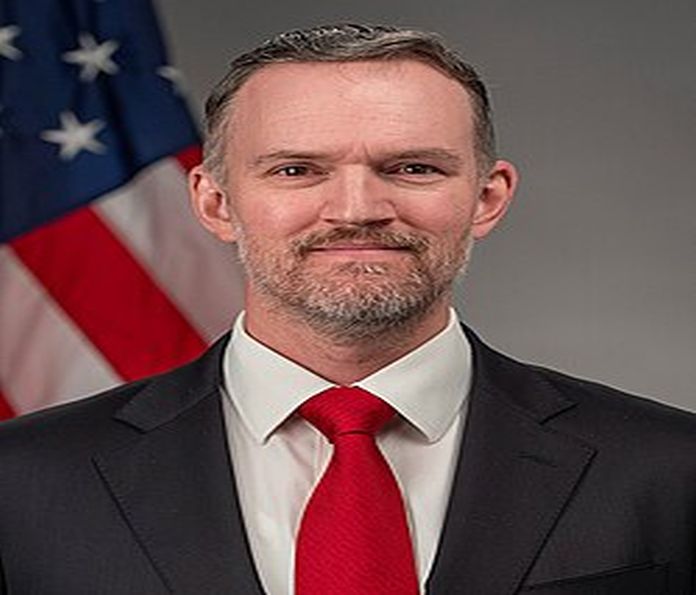
By Ambassador Jamieson Greer
The year 2025 will be remembered as the year of the tariff, regardless of one’s economic ideology. International trade is neither good nor bad — it just is. The real question is whether trade patterns serve the national interest. For president Donald Trump and his administration, that means a trade policy that accelerates re-industrialisation.
America’s growing and persistent trade deficits in manufactured and agricultural goods have been devastating for our country. Multinational corporations may not care where they make their money or products, but it matters for autoworkers in Michigan or cotton farmers in Texas who are trying to sustain local communities. It matters whether innovators have access to know-how and experience on the factory floor. And it matters whether we have the industrial base capabilities and resilience to ensure our national defence.
Reversing this situation demands a strategy of tariffs and deals to combine incentives for domestic production with improved market access for US exports.
The president campaigned on a protective tariff and started his second term with a series of trade actions to implement that promise. Following months of active negotiations, on July 31 he established a new structure for balanced trade: 10 percent tariffs on countries with which the US runs a surplus, 15 percent tariffs on countries with which it has a small deficit and higher tariffs for countries with which we have large trade deficits.
Earlier in July, the president closed a deal with European Commission president Ursula von der Leyen. From there, the “Turnberry Round” of global trade negotiations continues at an accelerated pace. In the autumn, he concluded trade agreements and frameworks with Malaysia, Cambodia, Thailand, Vietnam and Korea. He finalised an investment agreement with Japan, and more recently announced new framework agreements with Guatemala, El Salvador, Argentina and Ecuador.
Our trading partners are agreeing to eliminate or substantially reduce tariffs for US products; eliminate or streamline non-tariff barriers such as import licences, duplicative testing, or non-scientific standards or regulations; expand intellectual property rights and enforcement; prohibit the import of goods made with forced labour; provide fair treatment for digital services companies and refrain from imposing digital services taxes; and expand services market access.
Partners will also consult and co-operate with the US in implementing export controls, investment screening and measures to combat non-market practices that distort global trade. Many countries have also committed to substantial investment in the US and procurement of American goods.
In return, these countries receive from the US meaningful tariff modifications, partnership on cross-border investment, participation in the US technology stack, and ongoing access to the world’s most valuable consumer market.
There are three ways I measure the success of this new trade policy. In addition to boosting overall economic growth (3.8 percent in the second quarter), it should reduce the trade deficit, raise wages for American workers and increase manufacturing’s share of our economy.
The outlook is good. The core inflation rate, 2.7 percent, is the lowest in five years. Since August, our global trade deficit in goods is down, including an approximately 25 percent year-on-year decrease in our goods deficit with China. Inflation-adjusted wages are up. And manufacturing is coming back.
This last piece is admittedly difficult — it took decades to lose our industrial primacy; rebuilding it won’t happen overnight. But this autumn, the first rare earth magnets made in North America in 25 years rolled off the line in South Carolina. The Philadelphia Shipyard has orders for a dozen commercial vessels, including two liquefied natural gas carriers — the first to be built here in nearly 50 years. Foundries and forges are being rekindled, and concrete has been poured for the foundations of new pharmaceutical facilities. Auto production lines are returning to America.
If some want to criticise that as a rocky start, I’ll take it. They should consider the counterfactual: if tariffs came off, would this new production be happening at all?
Our re-industrialisation requires more than just smart trade policy. We need better technology, workforce, regulatory, tax and energy policies — all priorities for the Trump administration. Looking at it from the trade portfolio, I’m glad to see the plan is working.