

Editorial
Timing is everything! Following World Water Day 2026, March 22, 2026, under the theme “Water and Gender.”
Saint Lucia’s water insecurity affords the National Utilities Regulatory Commission (NURC) to recognise that “water is more than a basic need; it is a vital resource that shapes health, dignity, opportunity, and sustainable development for all,” adding “this observance highlights the importance of ensuring that women, men, and all members of society have equitable access to safe and reliable water services, as well as a meaningful voice in the decisions that influence water management and the future of this essential resource.”
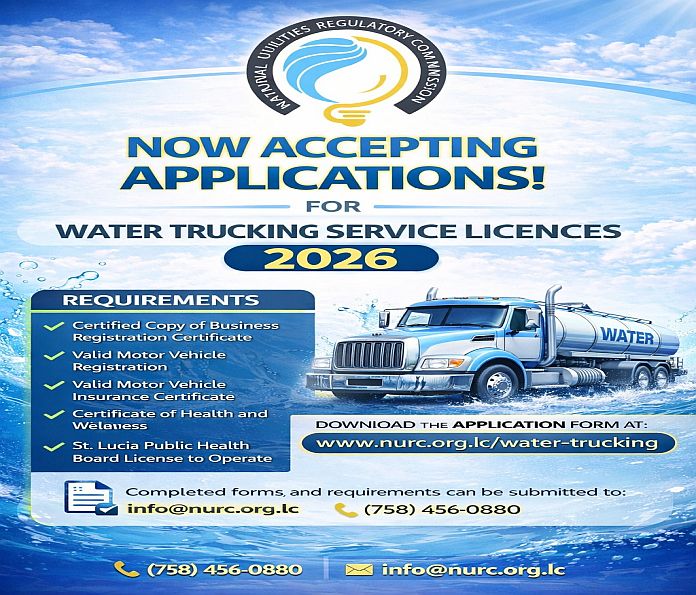
By the same token, March 23, 2026, the NURC invites applications for Water Trucking Service Licences for 2026.
-
- “Signal on in 2026!” – “We are finished?”- How will trucking water solve the water problem?”
“The National Utilities Regulatory Commission invites interested persons and entities to submit their completed application forms together with the required supporting documents. For further information, to access the application form, or to make an inquiry, please contact the Commission via email:info@nurc.org.lc or phone (758) 456-0790.”
The NURC is Saint Lucia’s independent regulator for water, electricity and sewage services. Established by law (NURC Act No.3 of 2016) helps to promote fair, reliable, and efficient utility services. The NURC regulates electricity, water, and sewerage services and plays an important role in strengthening accountability, transparency, and consumer protection across these sectors.”
-
- Has the reality of the water crisis in Saint Lucia collectively burdened the NURC, now accepting applications for Water Trucking Service Licences for 2026?
Saint Lucia’s water crisis is all-encompassing
Resulting from the sitting of parliament on March 10, 2026 and the senate on March 19, 2026, parliament authorised the minister of finance to borrow USD 22,829,181.00 (the loan) from the Caribbean Development Bank (the Bank) to finance the John Compton Dam Raw Water Pipeline Replacement Project, (the Ninth Water Project);
-
- USD 4,233,750.00 (the loan) from the CARICOM Development Fund to finance the rehabilitation and upgrade of the Theobalds Water Supply System;
-
- USD 781,493.00 for the purpose of providing financing to meet the additional cost of the Patience Community Water Supply Project.
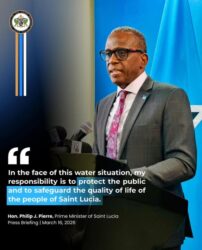
Prime Minister Philip J Pierre has said that, “Every week, I will address the public about the ongoing water challenges facing our country and the steps being taken to protect the well-being of the people of Saint Lucia. The government continues to promote water harvesting and conservation measures while also working with the private sector on short-term solutions to secure additional water supplies. These actions form part of a broader effort to strengthen our water security and ensure that the needs of citizens and businesses are responsibly addressed.”
Wilson Jn Baptiste, in a comment on Facebook, said, in part: “ Prime Minister… you have two choices in the governance of Saint Lucia. You either embrace science and technology or you reject it. The challenges facing the water crisis is not a water problem. The challenge is a science and technology problem.”
Lilia Burunciuc, World Bank country director for the Caribbean, in the article ‘Modernising Caribbean Water Systems for jobs, resilience, and growth,” March 22, 2026, wrote:
Modernising Caribbean Water Systems for jobs, resilience, and growth
“Across the Caribbean, tourism, agriculture, and fisheries shape the rhythm of economic life. They support millions of livelihoods in the region. Tourism alone sustains more than 2.75 million jobs. Agriculture and fisheries provide employment for roughly 3 percent of the population and remain critical for food security, rural incomes, and coastal economies.
“All of this economic activity depends on a fundamental resource: water. Hotels need it to serve guests, farmers rely on it for irrigation and livestock, and fisheries depend on clean coastal waters.
“Yet, across much of the Caribbean, water – and the systems that deliver it – are increasingly under pressure. Water utilities face aging infrastructure, growing demand, and the intensifying impacts of climate change. Strengthening water security is therefore essential for protecting jobs, supporting businesses, and sustaining economic growth.”
Caribbean News Global (CNG) provides insights into Saint Lucia’s self inflecting water crisis.
Related Links:
- DAM the DAM – Back to the river: Part 1
- DAM the DAM – Back to the river: Part 2
- St Lucia battles water insecurity with short-term measures
- Water is life: Neglect created St Lucia’s water crisis, UWP says
Cognizant of Saint Lucia’s water crisis, this has a combined effect to immediately affect job creation, agriculture, healthcare services and public investment.
The World Bank publication: ‘Nourish and Flourish: Water Solutions to Feed 10 Billion People on a Livable Planet’ “report shows how this challenge can be met through three paradigm shifts: (1) embrace complexity to balance the requirements of people, prosperity, and the planet; (2) establish incentives to transition from hardware to services; and (3) end the guesswork by collecting and using data for transparent, evidence-based decisions.
“These shifts are complemented by a new water-food nexus framework that categorises countries by their level of water stress (high/low) and food trade position (net importer/exporter), enabling tailored, context-specific solutions rather than one-size-fits-all approaches. Combined with examples of country experiences, the report illustrates pathways to AWM transformation at scale.”
St Lucia’s water challenges reflect deficiencies of planning, financing, management and policy
Saint Lucia’s longstanding government deficiencies in investing in WASCO (a statutory body), albeit Prime Minister Pierre’s current investments (loans, subsidies, water harvesting, barging water), will require a lot more through 2027 to strategic projects aimed at modernising pipes and infrastructure, treatment plants, longstanding infrastructure non-maintenance and technology that staggers WASCO.
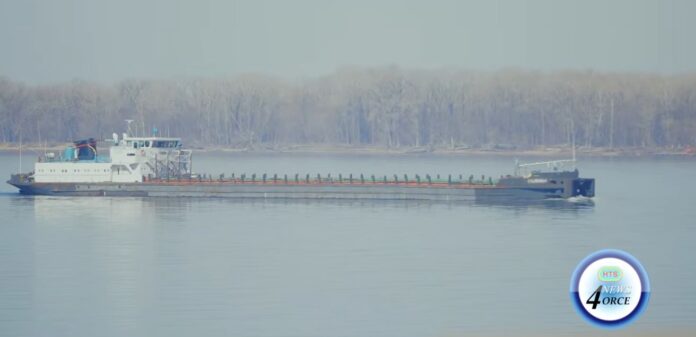
Moreover, Saint Lucia’s decision to barge water from Dominica, a private venture through the tourism sector, underscores the risk associated with the ‘deficiency’ of freshwater to meet current demands.
-
- Will the NURC invitation for applications for Water Trucking Service Licences for 2026 serve to barge/import water, and/or improve WASCO’s water distribution, and to ensure reliable, high-quality drinking water?
The current decision denotes that WASCO is unable to unlock the full potential of water resources and land use management in collaboration with the forestry department throughout Saint Lucia.
WASCO’s vision personifies: “We are a self-sufficient, environmentally sensitive organization staffed by knowledge-empowered employees committed to excellence and customer care in the provision of water and waste water services.” ~ WASCO.
The current crisis projected through 2027 carries risk factors of societal instability from food production, to the tourism and travel industry, and the fete culture. In addition to energy and oil, trade and supply issues, a spillover from the Iran war can affect schedules and projected works.
Duty to dissolve
From an informed assessment, WASCO is currently not structured and resourced for the necessary investment in water infrastructure, and land use management capable to build future resilience, comptable for national development.
Prime Minister Pierre and his cabinet charge on consensus, and a parliament of affirmative resolution, charged with “putting people first” in governance that is “people-centered” should dissolve WASCO (a statutory board).
The NURC merits revision, as stated: “As an impartial and independent body, the NURC remains committed to fulfilling its mandate of protecting consumer interests while at the same time ensuring that the Service Provider has adequate resources to provide the highest quality of service to all customers at efficient cost.”
WASCO and NURC
The deficiencies of planning, financing, management and policy formulation are incompatable for the future state of Saint Lucia’s water resources management and national development. Regulating utilities for a better Saint Lucia – let’s just say, big issues require “delivering high-quality regulatory services in the public interest.”
The replacement? That’s for a future declaration!