


 WASHINGTON, USA – The world is at a critical juncture in managing its mounting volumes of waste. Rapid population growth, accelerating urbanisation, rising incomes, and increased consumption are driving a surge in municipal solid waste generation that is outpacing the capacity of local systems and municipal budgets. Cities and communities worldwide are struggling to keep up.
Within this crisis lies an opportunity. By investing in more efficient, inclusive, and sustainable waste management systems, countries can unlock new avenues for economic growth, job creation, and innovation. Improved waste management systems can transform waste from a burden into a driver of sustainable development, unlocking jobs and benefiting both local communities and the global environment.
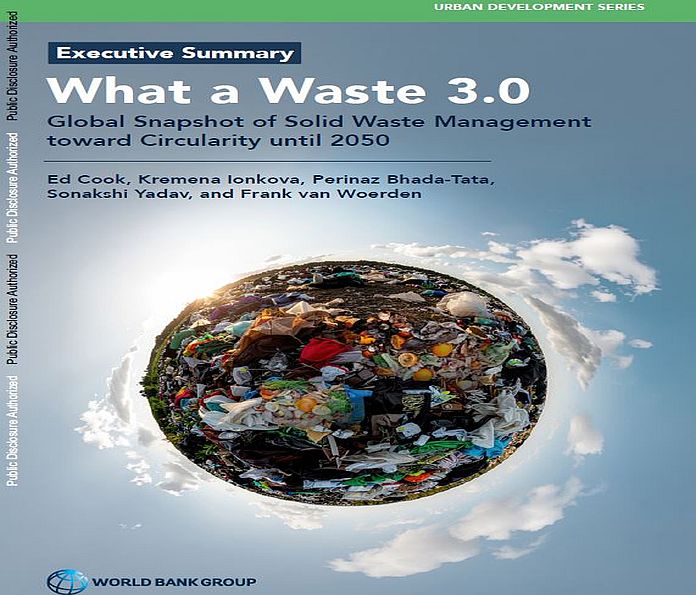
To fully grasp the scale and urgency of today’s challenges, as well as the opportunities they present, the World Bank Group’s What a Waste 3.0 report offers the most up-to-date data and statistical analytics on global solid waste management. Drawing on the most recent publicly accessible data from 217 countries and economies and 262 cities, it provides a framework for understanding how different policy choices and levels of ambition could shape the future of global waste.
Foreword
Solid waste is one of the most visible by-products of human prosperity—and one of the most underestimated threats to our shared future.
Trash discarded on a city street or a neighbourhood dump does not remain local. Plastic carried by rivers reaches the ocean; methane from decomposing food escapes into the atmosphere; and open burning pollutes the air we all breathe. Waste is a municipally managed issue with consequences that are both local and global.
In 2022, the world generated 2.6 billion tonnes of municipal solid waste. This new edition of our What a Waste report reveals that total volumes could soar to 3.9 billion tonnes by 2050—a 50 percent increase—with the fastest growth projected in Sub-Saharan Africa (124 percent) and South Asia (99 percent). Today, about 30 percent of global waste is still either openly dumped or left uncollected, compounding risks to local economies, public health, and the environment.
Meeting this challenge will demand significant, sustained investment. Achieving universal and sustainable waste collection and management will require steady public spending in the range of 0.3–0.8 percent of GDP. Yet the costs of inaction—from worsened flooding and pollution, to declining property values and tourism losses, to foregone jobs and missed economic opportunities—are far higher.
But a different future is within reach. With strategic action, countries can cap total waste generation even as economies grow; expand collection coverage and improve service quality; reduce system costs relative to business as usual; and unlock millions of good jobs across the value chain. Waste services, resource recovery, and circular economy industries already employ millions of workers. With the right policies, investments, and support for small- and medium-sized enterprises and the informal workforce, they can create many more jobs.
The World Bank Group stands ready to help countries and cities turn this waste challenge into an opportunity for resilient, inclusive growth. As the world’s largest official development financier of solid waste management, the World Bank pairs deep sector knowledge with concessional finance and private capital solutions to support reform and investment—from waste reduction and collection to treatment and recovery.
What a Waste 3.0 offers the most comprehensive and publicly accessible global dataset on municipal solid waste, covering 217 countries and economies and 262 cities. Building on the 2012 and 2018 editions, it consolidates data on waste generation, composition, collection, treatment, and disposal; tracks trends by region and income; and maps legislation, institutions, private participation, employment, environmental impacts, and costs and financing.
Although solid waste is generated locally, its impacts—and opportunities—are global. By aligning data with ambition and finance with reform, we can turn the mounting xii waste crisis into an opportunity to build cleaner, more resilient, and livable cities — creating jobs today while safeguarding resources for tomorrow.