



-
- Governments, employers and workers reaffirm the importance of social dialogue to tackle current and future challenges in the world of work.
GENEVA (ILO News) – The 114th International Labour Conference concluded on 12 June with the adoption of the first international labour standards aimed at improving working conditions for millions of people who earn their living through digital labour platforms. The new Convention on Decent Work in the Platform Economy represents a landmark step in global efforts to ensure that technological innovation and new business models go hand in hand with workers’ rights, fair competition and sustainable economic growth.
The Convention (C193) calls on member states to ensure that digital platform workers enjoy fundamental rights at work, including freedom of association and collective bargaining, protection from discrimination, child labour and forced labour, and the right to a safe and healthy working environment.
Recognising both the opportunities and challenges created by digital labour platforms, the Convention extends rights previously limited to employees in Conventions to those outside of an employment relationship, including in areas such as occupational safety and health and employment termination or deactivation.
It also encourages member states to extend adequate remuneration or payment to all workers, including those who are not in an employment relationship. Furthermore, the Convention addresses issues such as protection against violence and harassment, as well as workers’ data protection and privacy. It establishes safeguards for the responsible use of automated systems and algorithms, including requirements for transparency and access to mechanisms for reviewing decisions.
The new standard applies to all digital labour platforms and extends key protections to all platform workers, regardless of how their employment status is classified under national law.
In his closing address, ILO director-general Gilbert F. Houngbo highlighted the significance of the Conference’s achievement.
“We were conscious that the eyes and ears of millions of workers and digital labour platforms were upon us. They were waiting for the results of these intensive days of deliberation. We could not disappoint them, and you showed once again that the ILO remains capable of shaping the present and future of work.”
Referring to his report, A Moment of Choice: Harnessing Artificial Intelligence for Decent Work, Houngbo stressed the need for international cooperation to ensure the benefits of AI are widely shared. “Our task is to help ensure that all countries, enterprises and workers have a fair chance to participate in and benefit from this transformation” and “ensure that AI advances decent work for all through a human-centred approach.”
The Conference also examined a number of issues shaping the future of work around the world.
The ILC adopted a Resolution and Conclusions on gender equality in the world of work, reaffirming that equal opportunities for women and men are essential to decent work and social justice. The Conclusions call for action to help more women access good jobs, strengthen care services and social protection, and ensure that changes in the economy and labour market benefit everyone.
The participants also adopted a Resolution and Conclusions on social dialogue and tripartism, reaffirming the importance of governments, employers and workers working together to address challenges in the world of work. The conclusions highlight the need to protect workers’ and employers’ rights to organise and be represented, and call for stronger cooperation and dialogue to help shape fair and effective labour policies. They also provide guidance for future ILO support to strengthen social dialogue at national, sectoral and workplace levels.
The Conference Committee on the Application of Standards, which marked its 100th anniversary this year, reviewed how countries are applying international labour standards in law and practice. Delegates discussed the role of employment and decent work in building peace and resilience in times of crisis and recovery. The Committee further held special sittings on Belarus and Myanmar and examined 23 individual country cases concerning the application of international labour standards.
The ILC also recorded progress in the ratification of international labour standards, with 13 instruments of ratification from nine member states registered during the session. These included seven ratifications of fundamental Conventions on forced labour and occupational safety and health, as well as six technical Conventions.
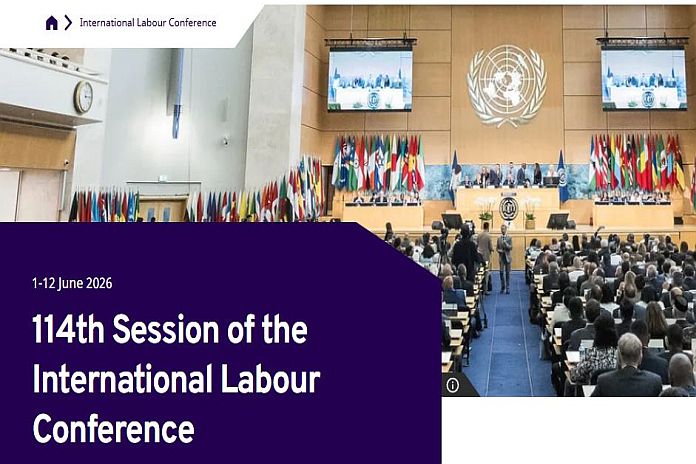
The 114th ILC was held in Geneva from 1 to 12 June 2026. It was attended by more than 5,700 delegates representing governments and employers’ and workers’ organisations. The ILC is the annual meeting of the 187 member states of the ILO, the United Nations specialised agency for the world of work.