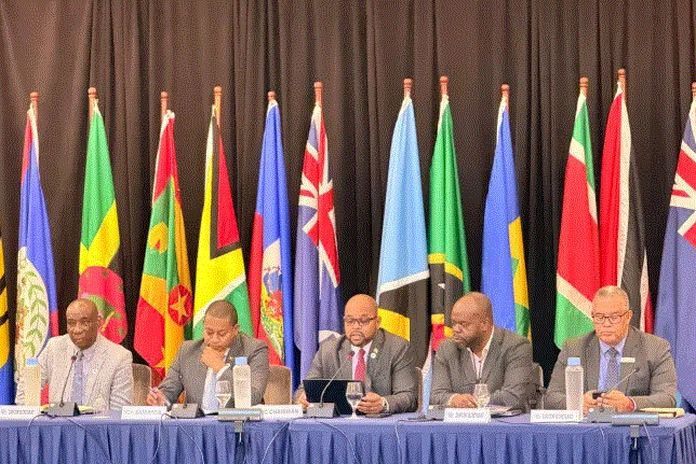

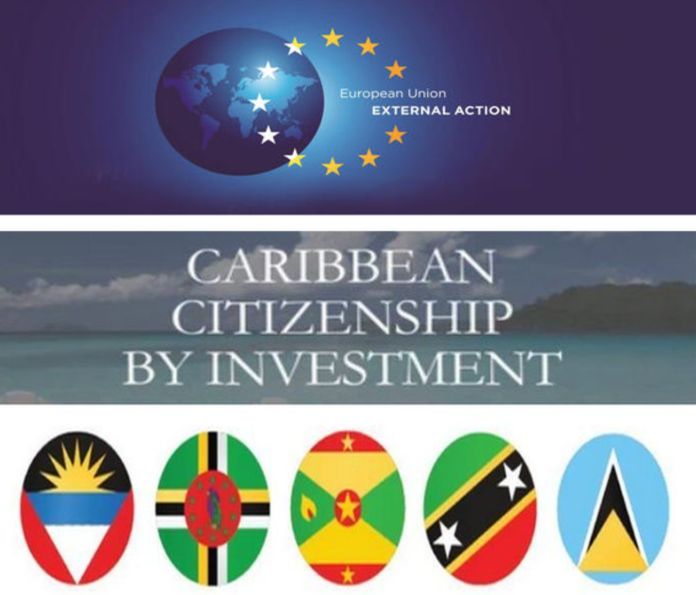
 The European Union (EU) has enshrined in law that a CIP/CBI alone is grounds to suspend visa-free travel under its revised Visa Suspension Mechanism. In response, five Eastern Caribbean OECS, CARICOM and CIP/CBI countries (Antigua & Barbuda, Dominica, Grenada, St Kitts & Nevis, and Saint Lucia) governed by the regional regulatory framework of the Eastern Caribbean Citizenship by Investment Regulators Agreement (ECCIRA) have scheduled a technical team to Brussels in October 2026.
European Union mandate
The EU interim safeguards requested (stronger vetting, exclusion of EU-sanctioned persons) became due by September 2026, while the EU’s next Visa Suspension Mechanism report is due in December 2026.
· Regulation (EU) 2025/2441 (amending Regulation (EU) 2018/1806), adopted in late 2025 and entered into force on 30 December 2025.
· Formal letters ( 25 June 2026, signed by Commissioner for Internal Affairs and Migration Magnus Brunner) requested the five countries to phase out their programmes by 1 June 2028, with a 24-month transition window.
Attempts to remove what has been enshrined in European laws are considered extraordinary. This is partly the result of the incapacity of a ‘Caribbean powerhouse’ to lobby foreign governments, and the individualism of island states. Maximising the best alternatives is the most effective way to exercise bargaining power in a negotiation. The Caribbean region’s fragmented response to foreign powers continues to weaken leverage.
The absence of agreements and solidification of priorities have led to competing economic and political interests of island states that are too limited to influence global powers. The result is evident. The deliverables are unsatisfactory, with varying governments and institutions competing for attention and resources in a small Eastern Caribbean region.
Setbacks to these arise from domestic and political silos; notwithstanding, prevailing weakness prevents a comprehensive understanding of the Caribbean region – wants and needs as a regional bloc.
The European Union mandate to phase out the programs by June 2028, or risk losing Schengen visa-free travel is fixed. The decision has a substantial mobility cost on nationals, the Caribbean region by extension, and a potential reversal of fortune from decades of enhanced engagement.
A redefined CIP/CBI framework is absolute
Efforts to delineate and restructure Caribbean CIP/CBI programmes have been described as subtle, too little, too late, after decades of undue damage, while respective government plans have failed to address security deficiencies.
The Caribbean CIP/CBI technical team assignment to Brussels needs to look no further than to dialogue as a regional bloc supported by economic realities that redefine the CIP/CBI framework. Dialogue must be intellectually appealing, built on a resilient and self-reliant regional agenda, with clear resolutions.
The flexibility and possibility of outcomes for financing options and/or Schengen access are the prerogative of the EU. This moment warrants principles and dialogue on specific large-scale economic and structural transformations to achieve self-sufficiency and resilience.
Security, sovereignty, and regional uprightness should not be taken for granted. A sustainable diplomatic compromise is necessary.
Regional governments have reportedly communicated their core position on a longer transition period for the phase-out, quantified replacement financing, and support for economic diversification. Recognition of small-island states’ vulnerabilities is noted in areas of trade access, climate finance, and investment partnerships.
Climate change and related policies can magnify macroeconomic and financial shocks. The Caribbean region has limited capacity to absorb the spillovers of labour, housing and financial markets. The disproportionate effects are an open secret of debt.
CIP/CBI leaders have described the programme as a critical development financing that cannot simply be abandoned without credible alternatives – ‘binding economic offsets.’ Conversations to strengthen, defend, and protect Caribbean Islands CIP/CBI are progressing; however, this remains intangible and elusive without communicating realistic expectations of the inevitable to the people of the region, who are expected to be further hindered by economic, business, and global mobility issues.
The economic importance of CIP/CBI is valid. Definitive objectives should form part of a collective OECS/CARICOM negotiating apparatus on matters of trade, diplomacy, global migration, and regional security.
Mindful of this, a new strategy is needed to address social, diplomatic, migration, security and due diligence gaps (money laundering, corruption, sanctions evasion, identity fraud), passports for predetermined payments or investments, without requiring meaningful residency, ie, ‘commercialising nationality.’ Ostensibly,107,000 passports were reported issued across the five Eastern Caribbean CIP/CBI programmes.
In reference to sovereignty and mobility trade-offs, the combined population of the five CIP/CBI islands stands at approximately 504,454. Saint Lucia: 180,149 Grenada: 117,303 Antigua and Barbuda: 94,209 Dominica: 65,871 Saint Kitts and Nevis: 46,922, per worldstats2026 estimates.
Related Links:
Caribbean Islands CIP/CBI naked exposure: Who’s looking
Caribbean CIP/CBI to safeguard integrity and sustainability
Caribbean Islands CIP/CBI leaders ‘believe in miracles’ to EU ‘Phase-out Demand’
Caribbean CIP/CBI programmes need fundamental reform, not cosmetic platitudes
Caribbean CBI/CIP to safeguard integrity and sustainability, OECS sets standards
Caribbean CIP/CBI must plan for life after 1 June 2028
The outlook is difficult. Development financing for CIP/CBI countries will remain a continued conversation with the EU towards a transition path that takes account of EU security concerns and the economic realities of the Caribbean region.
Leaders of the five Caribbean CIP/CBI (OECS/CARICOM) member states are yet to begin the process of phasing out the programmes. The pivot is to keep their individual programmes. That means potentially losing visa-free access to the Schengen Area (a 29-country block). Losing visa-free access to overseas countries and territories in the Eastern Caribbean has to be taken seriously! This is a potential nightmare pending the dawn of 1 June 2028.
The UK removed visa-free access for Saint Lucians effective March 5, 2026: “The UK government indicated that there has been a notable increase in Saint Lucian nationals entering the UK as visitors and subsequently claiming asylum, which it says has placed pressure on its border and asylum processes.”
Ireland imposed visa requirements effective June 15, 2026: “The new requirement applies to holders of Ordinary, Diplomatic and Service passports. Saint Lucian nationals transiting through Ireland will also be required to obtain a transit visa.”
The British Overseas Territory of Bermuda, under its new border–visa control policy, Bermuda Immigration and Protection [Prohibition of Entry], Order, mandated that Saint Lucians “are now subject to visa-control requirements and require a multi-re-entry visa issued by the United States, United Kingdom or Canada to enter Bermuda. The Order also reflects the need for Bermuda’s border policy to take account of changes to border, transit and visa requirements in the United Kingdom.”
Real consequences
The desire to act is such that demand for the sale of Eastern Caribbean passports is declining. The potential reduction in future CIP/CBI related economic activity, island states’ budget forecasts, economic development and GDP growth will see a further decline.
The EU’s mandate to end CIP/CBI has immediate budget consequences and long-term jeopardy. Saint Lucia has declared a 10 percent revenue gap. This is not hard and/ or irrevocable to recover; it simply takes innovation and ingenuity. Other CIP/CBI states run up a steep gradient of 60 percent of non-tax revenue.
Either way, the offset is real. The loss of non-tax revenue is an economic emptiness that adds pressure on public services. Satisfying this revenue with new taxes, borrowing, or development capital is an immediate and deliberate responsibility of government, its financial advisors, and public finance management. Besides, strengthening near-term government revenue and development spending is a priority for fiscal stability.
This adds to the awareness that the government’s defence of national development and sovereignty transcends regional borders.
Principal path forward
The economic realities of Caribbean CIP/CBI must plan for life after 1 June 2028. That is an irrevocable fact! The positions already articulated address legitimate security concerns and safeguard developmental interests.
Moreover, constructive dialogue and good faith, not confrontation, are fundamental. Additionally, data-driven and solution-oriented approaches must reframe the conversation around the fiscal viability of the Caribbean region, considering limited alternative revenue options.
The path forward must reform the economic and developmental model beyond CIP/CBI. The Caribbean region must affirm readiness, preferably via a structured technical working group to transition defined responses. As small island developing states (SIDS), the Eastern Caribbean must address social and development goals.
This requires actionable dialogue, organisation and planning, broader diplomatic astuteness, and non-confrontational politics guided by proportionality.
— Big Thinking on Global and Regional Affairs —
About the Author