

By Caribbean News Global 
– This analysis is attributed to comments, conversations and concepts directed at CNG’s research article. The link is available here.
Background
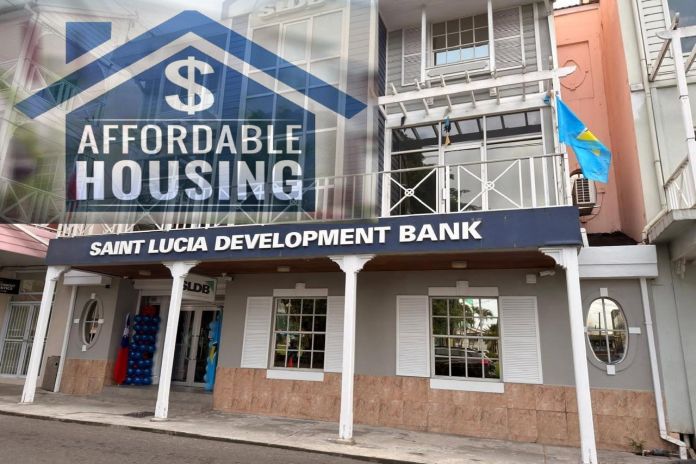
In furtherance of Taiwan Eximbank and Saint Lucia Development Bank (SLDB), with the government of Saint Lucia as guarantor – USD 20M/XCD 54M for the purpose of providing financing for the low to medium-income infrastructural development and home construction project, a Caribbean News Global (CNG) article on October 2, 2026, prompted various comments, conversations and concepts from contributors and our global audience.
Several messages included historical and comparative references pre-1997 to the then ‘Housing and Urban Development Corporation (HUDC)’, Carellie Park Housing Development was re-analysed.

Historical and demographic context
– Carellie Park Housing Development 1995 – 1997
Housing and Urban Development Corporation (HUDC) was mandated by the government to promote the development of affordable housing in Saint Lucia and to undertake the planning and development of land for residential, commercial, institutional, industrial and other community purposes.
– 120 acres of residential land;
– 500 fully serviced lots from 3, 000 – 10, 000 sq.ft.
– With access to recreational facilities, a primary school and community services.
The premature termination of the Carellie Park Housing Development – 1997 – is a caveat to politicisation of housing development in Saint Lucia.
Taiwan housing support
Copious conversations from contributors and readers also extended to prior and current Taiwan housing support, taking into account Saint Lucia’s housing deficit of 5,000, 7,000 or 12,000 housing units by 2030/2035 and housing financing – USD 20M/XCD 54M offered an impetus to reason on affordable housing, long-term mortgage access, and contractor/developer incentives that incorporate climate-resilient infrastructure. The scale, determination and client segment are substantial.
The core agreement and terms include a 5-year grace period and 15 years to repay USD 20M/XCD 54M – defined as the largest single inflow of financial resources into the Saint Lucia Development Bank (SLDB), and the largest single investment in housing in Saint Lucia’s history is a contingent fact of context.
The financing channel and duration of 20 years reflect the consolidation of diplomatic and geopolitical alignment. This is fundamental to future social, economic and development finance in Saint Lucia.
As to the caveats and organisational possibilities, allies contend that beyond the initial economic stimulation, policy and financial terms are mandatory for a successful execution from start to finish.
“And for the first time,” Prime Minister Philip J. Pierre pronounced, “the government is guaranteeing, for a bank, a substantial investment, USD 20M/XCD 54M, with the support of a foreign financial institution, the EXIM Bank of Taiwan.“
The SLDB also affirmed that “The facility is intended to expand affordable housing options for low- and middle-income households and to improve access to long-term, appropriately priced mortgage financing, with particular focus on first-time homebuyers and demographics that have traditionally been underserved by conventional lending.”
The affordability framework
A Taiwan Eximbank financing facility for SLDB to on-lend warrants consideration of interest rates to the bank, on-lending to prospective clients, maturity and drawdown terms. Other aspects include eligibility, disbursement speed and inflation. Slow disbursement and utilisation rates for renovation and new housing can impact price inflation, with potential fiscal and political costs.
The government’s obligation in the affordability segment is to keep inflation low and stable, while mindful of a gradual rate of increase over time.
In line with expectations, governance and rules, a reputable Caribbean economist/policy analyst submitted to CNG:
– What will SLDB do differentlyfrom that of commercial banks, credit-union lending, and other financial institutions to offset the housing deficit in Saint Lucia?
– How viable will SLDB affordable financing compare with commercial banks?
– At what interest rate will SLDB on-lend?
– Will SLDB tailor requirements for the affordability segment based on the size and complexity of disbursements?
– How many buyers in the affordable segment will benefit?
– What is the policy on down payments, low-interest mortgages, and credit guarantees?
– Will there be further government facilitation to reduce cost factors, increase capital and expand affordability?
– Will SLDB organisational structure enable rapid operationalisation to manage the financing facility, reporting structure, monitoring and evaluation, and public communication regularly?
– Will a mobilization/operationalisation unit be needed to clarify expectations, reasons, judgment, and matters of public concern, including additional tools that may be needed to identify or address risks?
Parliament resolution – USD 20M/XCD 54M
At the sitting of the House of Assembly on September 29 and the Senate on October 1, 2026, by affirmative resolution of parliament, grant a guarantee in accordance with an enactment:
– “Provided by section 27(3) of the Saint Lucia Development Bank Act, Cap. 12.02, that with the approval of parliament, the government may guarantee in such manner and on
such conditions as it may think fit, the repayment of principal and the payment of interest and other charges in respect of any borrowing by the Saint Lucia Development Bank;
– “USD 20 million from the Export-Import Bank of the Republic of China borrowed by the Saint Lucia Development Bank for the purpose of providing financing for the Low to Medium Income Infrastructural Development and Home Construction Project;
– “The rate of interest is the term secured overnight financing rate reference rate plus 0.2 percent plus 1.0 percent per annum;
– “The loan is repayable in 30 consecutive equal, or as nearly equal as possible, semi-annual instalments.”
– “The first instalment is payable on the last day of the 66-month period from the date on which the initial advance is made under the Loan Agreement.”
Reports suggest that the guarantee is manageable at this time, even with public debt-to-GDP floating around 76–77 percent. The Eastern Caribbean Currency Union (ECCU) target is 60 percent. And, whereas the financing facility expands mortgage capacity, analyses differ on whether it automatically translates into more affordable housing units and/or guaranteed mortgage access.
Matters of oversight
In short, the sovereign guarantee repayment is the obligation of the government of Saint Lucia (taxpayers) via the consolidated fund. Safeguards must exist to cushion against inflation on building materials, the potential for inflated construction cost and the overpriced market value of housing stock.
The challenge of housing affordability is proportional to stagnant wages and salaries, cost of living, cost of construction, personal credit rating, the stability of the governing financial system and Saint Luica’s economic activity. Intertwined with these are high-risk borrowers, for whom high non-performing loans could have an impact on SLDB and trigger the government guarantee.
This conversation lends itself to matters of oversight on the politics of lending, legitimate lending, monitoring and public information (disbursements, number of new units and cost factors, SLDB performance metrics) and the general public perception of the financing facility, given that taxpayers are stewards of the guarantor.
Housing demand and supply-side
Saint Lucia’s housing demand translates into both quantity and variable capacity, and the price point that renters and potential homeowners are willing to lease and/or purchase.
The scenario of “affordability” remains foundational to market behaviour, purchasing power and availability of housing stock.
– Saint Lucia’s housing deficit 5,000, 7,000 or 12,000 new housing units relative to the financing facility of USD 20M/XCD 54M is hard-pressed in comparative context and total scale to meet demand.
The supply-side housing mechanism can be reinforced by increasing production/construction output. Key to economic growth is fiscal and monetary stimulus, improved processes, and lowering barriers (interest rates, fees, taxes, unsupportive regulation, policy constraints, high construction costs, land scarcity, titling issues, financing costs). The aggregate of this is stable economic growth, more housing construction, enhanced planning and infrastructure readiness.
– A well-structured national housing development programme creates its own economic momentum, business expansion and entrepreneurial activity.

Saint Lucia’s housing deficit and SLDB financing facility are primarily on the demand side, for the purpose of providing financing for the low to medium-income, infrastructural development and home construction project.
Current estimates expect USD 20M/XCD 54M to help 200-250 buyers/new housing units over the facility’s lifetime. This is subject to the size of loan disbursement, SLDB requirements, number of buyers, actual mortgages and/or infrastructure improvements.
A concentrated supply-side approach inclusive of a larger pool of financing options (contractors and developers), subsidy and policy-reform models, would make an aggressive combined contribution.
– The modest goal towards the housing deficit in Saint Lucia is currently projected at 800 new units per year, to achieve 7, 200 total new-builds by 2035.
The government of Saint Lucia (ministry of physical development) has embarked on breaking down administrative barriers for local entrepreneurs and investors, in part to make business easier.
“A thriving economy requires a government that removes roadblocks,” said Keithson Hermine Charles, minister for physical development and public utilities. “The mandate is the Digitisation of the Land Registry and the rollout of the e-Land Registry platform. By moving property searches from filing cabinets to the cloud, we will drastically speed up land transactions and commercial loan approvals.”
Affordability and disparity
In the context of Saint Lucia’s housing deficit and the cumulative demand for affordable financing for many families, policymakers should consider leveraging the following concepts.
Domestic private finance and Public-Private Partnership (PPP) with government 100 percent tax concession and fees, on parity with hotel construction and CIP/CBI real estate projects can design retrofits and build new large-scale housing communities. (Maths and Computer Science Teacher)
A prefabricated/modular homegrown industry should be initiated utilising the youth economy and the trades industry.
This can be strategically developed via several wood milling specialist workshops, staffed by skilled tradesmen and supported by an apprenticeship program to produce adequately styled, resilient housing stock to withstand modern use. (Structural Engineer)
- A carpentry/wood milling workshop in the western corridor of Saint Lucia helped build three hotel developments. This workshop currently provides maintenance and refurbishment services, skilled jobs and related services.
Saint Lucia has a significant inventory of unsold homes, vacant apartments, derelict residential properties, high-end units with low occupancy, boutique hotels and underutilised middle-income housing. In that state of affairs, the objective should be maximising housing accessibility and economic impact, not necessarily maximising the number of new houses constructed.
Some of the benefits include faster delivery, lower cost per unit, revitalised neighbourhoods and reduced urban hardships. Also, a quick return to market of 30-60 percent of the cost of constructing a new house is significant.
Another option includes sensibly crafted allocation and assistance programs targeting a greater number of families for occupancy in affordable, up till now, adequate housing, at a much faster rate.
The counterbalance is to yield greater economic activity islandwide:
– Renovation of derelict and vacant housing-XCD 6M
– First-time buyer assistance fund-XCD 4M
– Infrastructure improvements-XCD 5M
– Workforce housing initiatives-XCD 3M
– Public-private partnership and seed funding-XCD 2M
The approach can potentially benefit several times more families and help bring housing stock back into productive use, and at the same time improve affordability, infrastructure, and financing access. (Tourism Expert)
The matrix
In 2015/16, the most recent period with available data, Saint Lucia’s national poverty rate stood at 25 percent, according to Poverty and Equity Brief, October 2025.
The national data suggest that inequality remained persistently high and virtually unchanged between 2006 and 2015/16. Saint Lucia’s national Gini index stood at 43.2 in 2015/16, nearly identical to the 2006 figure of 43.1 and exceeding the World Bank’s threshold of 40 for high inequality. Saint Lucia’s national poverty assessment highlights rising inequality in rural areas in the ten-year period leading up to 2015/16 and growing dispersion in labor earnings of wage and salary workers.

Saint Lucia’s housing deficit and financing facility requires a more ambitious and diversified toolkit to advance targeted impact.
These include targeted capital to achieve multiple strong results via government equity, commercial bank lending, credit-union lending, public-private partnership, independent developers and contractors, equity investment, the development bank and diplomatic bilateral partnership.
Supplementary funding sources mean more leverage, capital outflow, increased housing stock and more interest earned for lending institutions.
The Taiwan Eximbank financing facility of USD 20M/XCD 54M with SLDB is readily available; however, it is subject to quantitative estimates: 200-250 buyers, albeit with meaningful lending capacity, portfolio improvements, and interest earned for SLDB. On the other side of the ledger, commercial banks and other financial institutions are liquid.
– “Learning from ideas that have already been tested elsewhere can help reduce uncertainty, avoid costly trial and error, and accelerate action,” Marion Lagadic – (OECD).
Breaking the chains
The Taiwan Eximbank financing facility is an initial step. It must be followed up with clear expectations and actions that are transparent and consistent.
The matrix suggests creating a positive context to offset caveats. The origin points to economic rejuvenation and public policy that lowers the barriers and restores housing affordability.
- “The demand for houses is high, and that is why you get this 40,000 in our manifesto. We have moved beyond just speaking about allocation; we are doing construction,” minister of housing, Collin Croal, Guyana.
The biblical principle in Proverbs 22:7 warns that borrowing makes a person a servant to the lender. It also messages that the borrower is a slave to the lender. The transformation should attain a shift from being the retainer to being the principal of capital.
St Lucia – Taiwan Eximbank signs USD 20 million housing financing facility
About the Author