



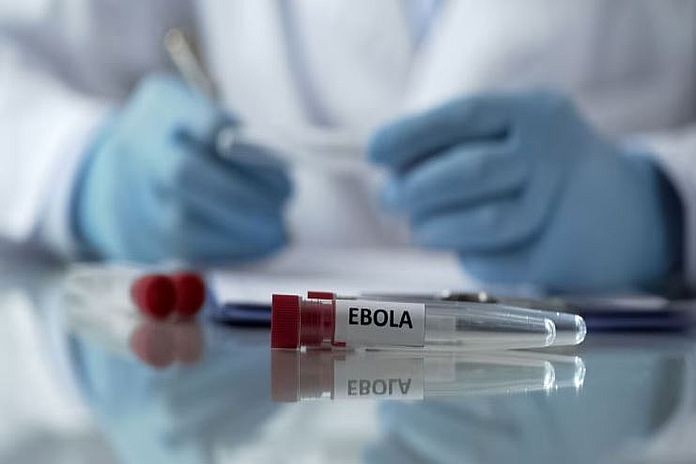
 WASHINGTON, USA, (PAHO) — The Pan American Health Organization (PAHO) is intensifying support to countries across the Americas to strengthen preparedness for Ebola, following the World Health Organization’s declaration of a Public Health Emergency of International Concern (PHEIC) related to the ongoing outbreak in the Democratic Republic of the Congo and Uganda, and to ensure readiness for any potential imported case.
While the risk of Ebola in the Americas remains low and no cases have been reported in the region, PAHO has activated its Incident Management System (IMS) to coordinate regional preparedness efforts. The Organisation is working with ministries of health to reinforce surveillance, laboratory diagnostics, infection prevention and control, and operational coordination, so countries can rapidly detect, isolate and care for people with suspected infection.
“Countries in the Americas are not currently affected by Ebola, and the risk to the Region remains low, but preparedness is our strongest tool to reduce risks and ensure a timely response,” said Dr Ciro Ugarte, director of Health Emergencies at PAHO. “Even with low risk, countries must be ready to detect and respond quickly to any possible importation to protect health workers and communities, and to prevent further transmission.”
Strengthening readiness across the region
PAHO, in collaboration with the Global Outbreak Alert and Response Network (GOARN), a WHO-coordinated network of technical institutions and partners for international outbreak response, is convening regional technical exchanges to support national preparedness efforts.
A technical session, organised by PAHO’s Emergency Operations Center (EOC) and held on 3 June, brought together 394 participants from 30 countries across the Region, including national professionals involved in Ebola preparedness and response and representatives from GOARN partner institutions in the Americas. Participants reviewed key preparedness actions, including laboratory diagnosis and biosafety, clinical management, infection prevention and control, medical evacuation, and safe and dignified burials.
The session included 12 speakers, panelists and moderators from PAHO, WHO, Johns Hopkins University/NETEC, Emory University/NETEC, Médecins Sans Frontières (MSF), ISARIC/University of Oxford, and the University of São Paulo Hospital, highlighting broad technical collaboration to strengthen Ebola readiness in the Americas.
A follow-up session on 10 June will bring together ministries of health and GOARN partners from the Americas to discuss the GOARN network, including opportunities to receive international technical support and to deploy national experts from the region to support outbreak responses. The session will also highlight the importance of contact tracing and the use of Go.Data, a digital tool developed by WHO and GOARN to strengthen surveillance during health emergencies, including practical experiences from measles response in Brazil and Ebola response in Uganda.
To support operational readiness, PAHO has issued a series of technical guidance documents covering the safe collection, handling, packaging and transport of potentially infected samples, as well as laboratory processing and inactivation procedures. These provide practical, step-by-step guidance to strengthen biosafety and diagnostic capacity.
In parallel, the Organisation is preparing shipments of materials and reagents for the molecular detection of Bundibugyo ebolavirus to selected countries with appropriate biosafety capacity, based on risk assessments.
PAHO is also facilitating international collaboration to ensure timely laboratory analysis through the referral of samples to specialised regional laboratories. For example, during a recent event in May, the Organisation supported the shipment of samples from the Bahamas to a PAHO/WHO Collaborating Centre for Hemorrhagic Fevers in the United States (CDC, Atlanta), following the identification of travellers with recent history in affected areas. Although both individuals tested negative for Ebola, these precautionary measures ensured that critical testing was completed without delay.
PAHO is also refining regional risk scenarios and supporting countries in planning essential supplies, including personal protective equipment, laboratory materials and other critical items needed for preparedness. The Organisation is sharing tools to estimate the quantities and specifications of supplies required under different scenarios, including triage, patient care, cleaning, transport, and safe burial. These tools aim to support advance procurement and stockpiling, while promoting effective infection prevention and control in healthcare settings.
Situation in Africa
As of 2 June 2026, the outbreak of Ebola disease caused by Bundibugyo virus continues to evolve in the Democratic Republic of the Congo and Uganda. In the Democratic Republic of the Congo, 344 confirmed cases and 60 confirmed deaths have been reported, along with 116 suspected cases under investigation. Confirmed cases have been reported in several provinces, including Ituri, North Kivu and South Kivu.
Uganda has reported 15 confirmed cases, including one death, with confirmed cases in two districts and reported infections among health workers.
WHO assesses the risk of this outbreak as very high at the national level in affected countries, high at the regional level in Africa, and low at the global level.
Ebola is a severe disease transmitted through direct contact with the blood or bodily fluids of infected (symptomatic) individuals or withcontaminated materials. While no licensed vaccines or therapeutics are currently available for Ebola disease caused by Bundibugyo virus, early supportive care significantly improves survival. Strong public health measures—including surveillance, isolation and care, contact tracing, and community engagement to build trust and support early care seeking—remain key to controlling outbreaks.
Preparedness measures and travel advice
In line with WHO recommendations under the International Health Regulations (2005), PAHO reiterates that countries should strengthen preparedness systems without imposing restrictions on travel or trade.
Measures for countries not affected by the outbreak include enhancing detection and management of travellers with febrile illness, strengthening communication with transport and border authorities, providing travellers with information on symptoms and when to seek care, and ensuring rapid reporting of suspected cases.
WHO advises against generalised travel restrictions, noting that such measures can disrupt response efforts and supply chains without reducing risk.
PAHO continues to work closely with countries across the Americas to support preparedness, strengthen health systems, and facilitate coordination with global partners, to support readiness across the region in the event of potential imported cases.