



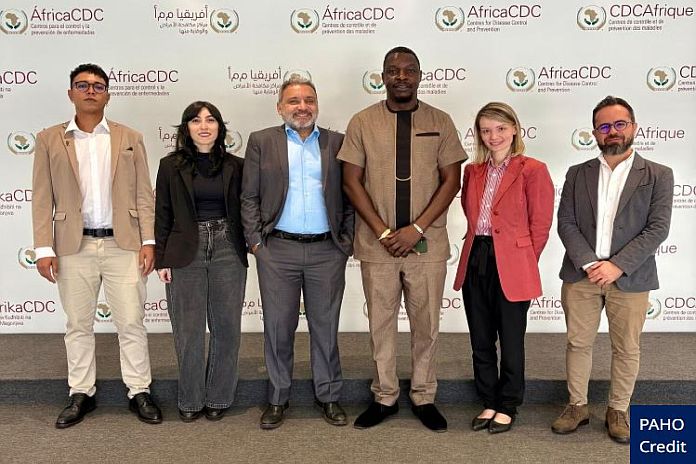
 WASHINGTON, USA, (PAHO) – The Pan American Health Organization (PAHO), together with the ministry of health of Brazil and the Africa Centres for Disease Control and Prevention (Africa CDC), is supporting a strategic technical cooperation initiative aimed at strengthening field epidemiology training and public health emergency workforce capacity through digital platforms and hybrid learning approaches.
As part of this collaboration, a preparatory meeting between the Brazilian delegation and PAHO was held at PAHO headquarters in Washington, DC, on 14–15 May 2026. The meeting aimed to align technical priorities, review Brazil’s experience with the EpiSUS program, and advance the development of a roadmap for knowledge and technology transfer with Africa CDC.
The initiative builds on more than 20 years of experience of the Brazilian Ministry of Health in implementing the Applied Epidemiology Training Program for the Unified Health System Services (EpiSUS), a tiered, competency-based field epidemiology training model that combines service-oriented practical learning with digital platforms and hybrid methodologies.
Through this collaboration, Brazil and Africa CDC agreed to implement, in an initial phase:
- Adaptation of training materials, instructional design, and tutor training strategies, with the participation of Portuguese-speaking countries during a meeting to be convened in June;
- Expansion of training coverage through scalable digital approaches; and
- Implementation of Moodle-based learning management systems.
The exchange seeks to support Africa CDC’s efforts to strengthen workforce development, epidemic intelligence, collaborative surveillance, and preparedness and response capacities across its member states. The mission also reflects broader global commitments to strengthening early warning systems and promoting South-South and triangular cooperation in public health.
Participants in the initiative include representatives from the ministry of health of Brazil, Africa CDC, PAHO/WHO, and technical experts in epidemiology, digital learning, preparedness, and public health emergency management.
Expected outcomes of the mission include the development of a preliminary implementation roadmap, adaptation of training frameworks, and review of training modules and tutor capacity-building plans to support future implementation across Africa CDC member states.
Dr Edenilo Baltazar Barreira Filho, director of the Department of Public Health Emergencies (DEMSP), emphasised that: “This activity is part of the implementation of the DEMSP workplan as a WHO Collaborating Centre and responds to the government’s broader cooperation agenda.”
Dr Maria Almiron, chief of the Health Emergency Information and Risk Assessment Unit at PAHO, highlighted the importance of the initiative:
“This collaboration demonstrates the value of South-South cooperation in strengthening epidemic intelligence capacities and developing sustainable workforce solutions tailored to regional realities. Sharing practical experiences and digital innovations is essential to building resilient health systems and improving preparedness for future public health emergencies.”
The collaboration contributes to ongoing efforts to strengthen epidemic intelligence, collaborative surveillance, and emergency preparedness and response capacities globally through practical, scalable, and sustainable approaches.