



-
- Caribbean households are paying more for fuel and electricity even as oil markets calm, signaling that the effects of a supply shock outlast the disruption that caused it.
GENEVA, Switzerland – Oil prices have returned to near pre-Hormuz Strait crisis levels. But for economies importing both fuel and food, the disruption does not end when markets settle. It persists through freight and energy costs that weigh most on small and vulnerable importers.
“Resilience to these shocks is unevenly distributed; small, import-dependent economies face the highest costs and the fewest alternatives,” said Pedro Manuel Moreno, acting secretary-general of UNCTAD.
UNCTAD’s latest monitor shows oil shocks
Fuel-importing economies with limited fiscal space are hit hardest, with small island developing states among the most exposed. Of 75 vulnerable economies analyzed, 65 are net oil importers, home to nearly 1 billion people.
With as much as 50% of food being imported through fuel-dependent logistics in some of the Caribbean islands, energy costs can rapidly feed into the price of essentials. As food prices are already up from 55 to 60 percent since 2018, households have little room to absorb another rise.
How pressures hit households
UNCTAD draws on WFP/CARICOM 2024-2026 survey of 13,686 people across ten Caribbean countries.
Initially, effects appear limited. Reports of “not having enough food” rose from 22.1 to 22.9 percent , while “going to bed hungry” increased from 21.0 to 21.6 percent . These modest increases warrant caution rather than reassurance as food-security indicators lag that of prices.
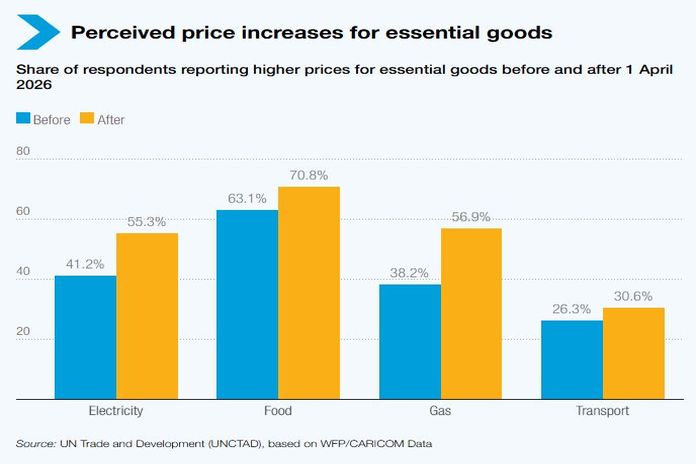
Household costs, however, rose sharply after April 2026, spreading across electricity, food, gas and transport.
Reports of perceived higher electricity prices increased from 41 to 55 percent and that of gas prices jumped from 38 to 57percent . Reports on perceived food prices also increased by 7percent , while that of transport increased by 4 percent . These combined increases in essential goods affect household budgets which will limit disposable income for food security.
Burden falls unevenly across the region
Jamaica reports the largest perceived increases, then Suriname and Saint Vincent and the Grenadines, while Guyana and Grenada are more muted. As exposure reflects each country’s food and energy system, not household circumstances, the most affected economies can be targeted for support ahead of future shocks.
CARICOM heads of government have linked regional food security to the Middle East crisis and are addressing fuel, freight and energy costs under Vision 25 by 2025+5.
Measures introduced now, while the shock is felt through higher costs, are more effective than those taken once food insecurity rises. The timing of the support should consider the lag time to avoid leaving households exposed at the point of greatest strain.