

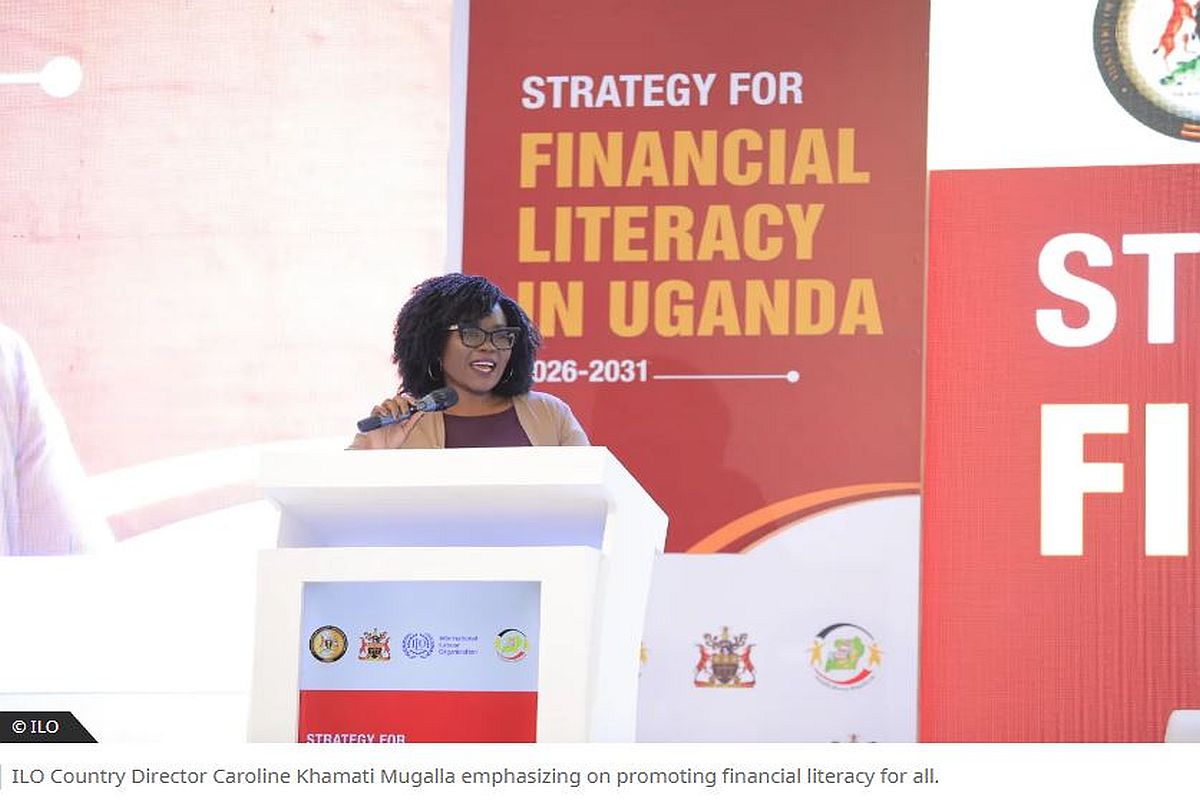
- Supported by the International Labour Organization (ILO), Uganda’s new Strategy for Financial Literacy (2026–2031) aims to strengthen financial capabilities, promote responsible financial decision-making and support more resilient livelihoods, particularly among underserved communities.
KAMPALA, Uganda, (ILO News) – The government of Uganda, through the Bank of Uganda has launched the Strategy for Financial Literacy (2026-2031), marking an important step towards strengthening financial inclusion, household resilience and sustainable economic growth.
Developed with support from the International Labour Organization (ILO), the strategy places particular emphasis on reaching underserved communities, including women, young people, refugees, persons with disabilities and rural populations.
The strategy was launched on 30 October 2026 at Speke resort Munyonno in Kampala, during an event held in conjunction with World Savings Day celebrations. It seeks to advance financial inclusion by ensuring that access to financial services is accompanied by the knowledge, skills and confidence needed to use them effectively.
Moving beyond access to financial services
The strategy aims to make sure people can use financial services well, not just access them, by building skills in saving, budgeting, responsible borrowing, investing and managing risk. It will reach people through community groups, schools and workplaces, and digital and media channels, with trained trainers and standard content keeping delivery consistent. Digital financial literacy is a key priority: safe mobile money use, spotting fraud, protecting data and understanding loan costs, with tools that also work on basic phones and links to fraud reporting and complaint channels.
Messages from the launch
Deputy Governor of the Bank of Uganda, Prof. Augustine Nuwagaba, stressed long-term planning and individual responsibility, while a statement on behalf of the Minister of Finance, Planning and Economic Development highlighted responsible borrowing.
ILO country director Caroline Khamati Mugalla said financial discipline separates entrepreneurs who survive from those who grow, and that financial education “must reach people where they are.”
ILO support and lessons from the previous strategy
The ILO supported the End-of-Term Evaluation of the 2019–2024 strategy and the development of the new framework. The evaluation found that financial education was seen as relevant but coverage was uneven; gains were strongest in saving and budgeting, with gaps in long-term planning, insurance uptake and responsible borrowing; and delivery was project-based, with weak coordination and no unified results framework.
The new strategy responds by widening geographic and demographic coverage, embedding financial literacy in schools, workplaces and communities, strengthening coordination from national to district level, introducing harmonised monitoring and reporting, and adding a focus on digital capability and consumer protection.
Advancing implementation through partnerships
Implementation will be coordinated by the Bank of Uganda, with policy leadership from the Ministry of Finance, Planning and Economic Development and collaboration across government, financial institutions and development partners.
Partnerships are already delivering results. Through the ILO’s PROSPECTS programme, Opportunity Bank Uganda Limited developed an agricultural loan product for refugees and host communities. Between December 2025 and April 2026, 684 people in Isingiro and Nakivale (403 women, 281 men) took out loans, and USD 2.81 million in financing has been leveraged. The product is now built into the bank’s systems and is being extended to other settlements. Linking finance with financial literacy and technical support has improved loan uptake and repayment.
By combining financial knowledge with practical skills and inclusive delivery, the strategy aims to help more Ugandans manage risks, seize economic opportunities and build more secure and resilient futures.
About the Author