
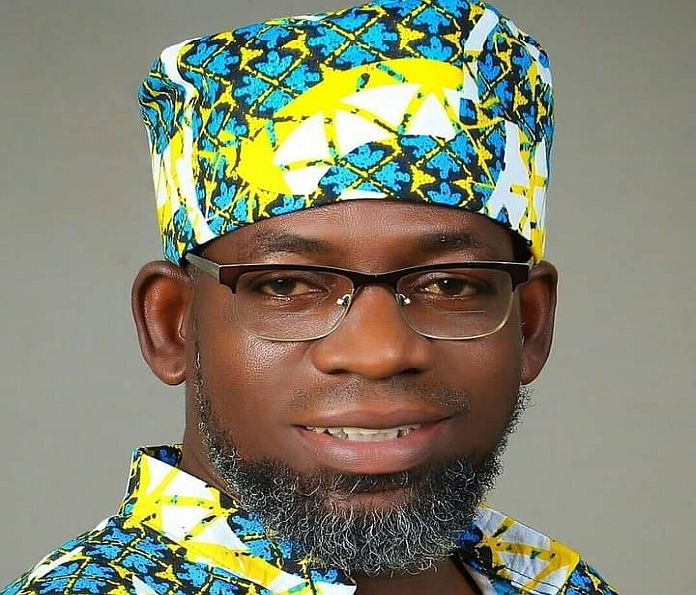
Garfield L. Angus is a Senior Journalist Based in Jamaica. He is also a Governor General’s Achievement Awards (GGAA) Recipient.
By Garfield L. Angus
Barbados Prime Minister Mia Mottley has once again demonstrated why she is among the most influential voices emerging from the Global South. Her announcement of a new Caribbean manifesto on reparatory justice, unveiled at a historic conference in Ghana, represents more than a political declaration.
It is a moral appeal to the conscience of humanity and a reminder that history’s deepest wounds cannot simply be ignored because centuries have passed. For generations, Caribbean nations have carried the scars left by slavery, colonial exploitation and the genocide of Indigenous peoples. The wealth that helped build many European empires was extracted through the forced labour, suffering and dehumanisation of millions of Africans.
Yet, despite universal acknowledgement that slavery was one of history’s greatest crimes, the question of repair has often been treated as inconvenient or politically uncomfortable. The United Nations’ landmark declaration recognising the transatlantic trafficking of enslaved Africans as the gravest crime against humanity has provided renewed momentum to a cause that Caribbean leaders have pursued for more than a decade.
The updated CARICOM reparations framework goes beyond historical symbolism and sets out a comprehensive vision for addressing the enduring consequences of slavery. Critics will inevitably dismiss the movement as an attempt to secure financial windfalls or reopen old grievances. Such arguments miss the essence of what reparatory justice represents. This is not about vengeance or guilt being imposed on present generations. It is about acknowledging that crimes against humanity created structures of inequality whose effects are still visible today.
The Caribbean’s economic vulnerabilities, educational disparities and developmental challenges did not emerge in isolation. They are rooted in centuries of exploitation. Nations that were once sources of immense wealth for colonial powers were left with distorted economies and societies struggling to overcome inherited disadvantages.
One of the most significant additions to the revised manifesto is its recognition of the specific suffering endured by women and girls during slavery. Historical records reveal that enslaved women experienced not only forced labour but also widespread sexual violence and the destruction of family structures. By explicitly calling for compensation relating to gender-based violence, the document broadens the understanding of historical injustice and recognises victims whose experiences have too often been marginalised.
Prime Minister Mottley was correct when she pointed out that reparations have been granted in other circumstances. Japanese Americans interned during the Second World War received compensation from the United States. Germany has paid reparations to Holocaust survivors and continues to support remembrance initiatives. These examples demonstrate that acknowledging historical wrongs and offering restitution are neither radical nor unprecedented. They are manifestations of moral responsibility.
Perhaps equally important is the manifesto’s assertion that Climate justice and reparatory justice are interconnected. Small island developing states, many of which contributed little to global emissions, now face existential threats from rising sea levels, hurricanes and environmental degradation. The countries that benefited most from centuries of colonial extraction were also among the principal architects of industrialisation. The link between historical exploitation and present vulnerability cannot be easily dismissed.
The inclusion of Indigenous peoples in the Caribbean conversation is another important step. Long before enslaved Africans arrived, Indigenous communities suffered displacement, extermination and cultural destruction. Any serious conversation about historical repair must acknowledge these tragedies and ensure that those communities are not forgotten.
Interestingly, the manifesto does not assign a specific monetary figure. Instead, it outlines a collective vision that includes financial compensation alongside formal apologies, education, training and developmental support. This approach recognises that reparatory justice cannot be reduced to a cheque. Healing requires truth-telling, acknowledgement and investment in human development.
Some Governments in Europe may continue to resist. Political leaders often fear that accepting responsibility could expose them to limitless legal claims. Others argue that contemporary citizens should not bear responsibility for actions committed centuries ago.
Yet moral accountability is not inherited guilt. Modern societies routinely benefit from institutions, wealth and structures created in earlier eras. Accepting responsibility for past injustices is not an admission of personal wrongdoing; it is an affirmation that humanity has evolved and possesses the courage to confront uncomfortable truths.
Prime Minister Mottley’s words in Ghana captured this reality. She stressed that the language of reparations is not one of aggression but one of healing. That distinction is crucial. Calls for repair are not aimed at dividing humanity but at reconciling it. Silence, denial and historical amnesia do not foster unity. Honest acknowledgement does.
The Caribbean’s pursuit of reparatory justice should therefore not be viewed as a campaign of resentment. Rather, it is an invitation to the world to demonstrate that crimes against humanity deserve more than remembrance; they deserve meaningful responses.
History cannot be rewritten, and the suffering of millions can never be undone. But societies have a choice. They can either continue to treat slavery as a closed chapter whose consequences ended with emancipation, or they can recognise that true justice requires confronting the legacies that persist.
Mia Mottley and Caribbean leaders have chosen the latter path. Whether the world responds with the same moral courage remains to be seen. But one thing is certain: the call for reparatory justice is no longer a whisper from the margins. It has become a powerful and unavoidable demand for fairness, dignity and healing.
About the Author