
Regional Cooperation to Strengthen Food Safety
SANTIAGO, Chile, (PANAFTOSA/VPH-PAHO/WHO) – Ten Latin American countries are strengthening their national food safety systems by developing 24 initiatives aimed at integrating risk analysis into public policy development and regulatory decision-making. The project is led by the Pan American Health Organization (PAHO/WHO), the Food and Agriculture Organization of the United Nations (FAO), and the University of Minnesota (UMN), with financial support from the Standards and Trade Development Facility (STDF).
The initiative seeks to strengthen countries’ technical capacities to develop science-based food safety measures aligned with the international principles of the Codex Alimentarius.
Foodborne diseases continue to pose a major public health challenge. According to estimates from the World Health Organization (WHO), 44 million people in the Americas become ill each year after consuming food contaminated with bacteria, viruses, parasites, chemicals, or toxins. These illnesses cause approximately 78,000 deaths annually in the Region and result in significant social and economic costs.
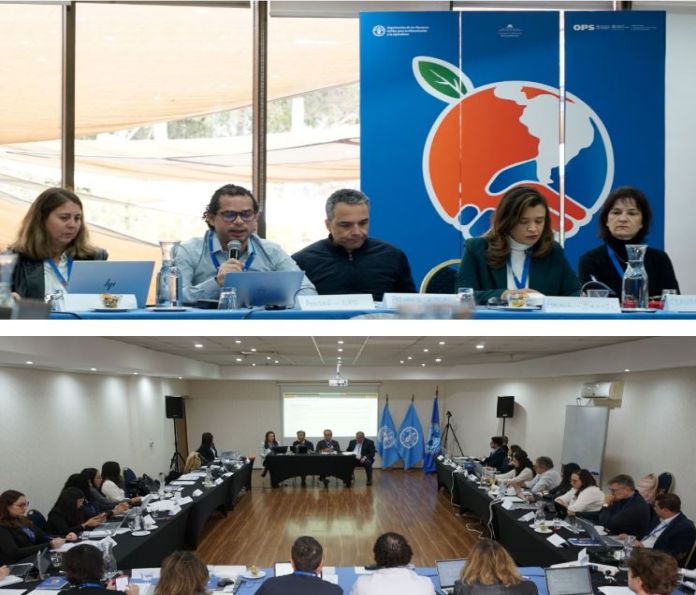
Authorities and representatives from Argentina, Brazil, Chile, Colombia, Costa Rica, Ecuador, Honduras, Paraguay, Peru, and Uruguay met this week to advance the application of the risk analysis approach as the foundation for regulatory decision-making and to strengthen the governance of food safety policies.
“This project demonstrates how regional cooperation and science can become practical tools for improving food safety. We are supporting countries in transforming technical knowledge into practical solutions, strengthening their food control systems, protecting public health, and facilitating safer and more transparent trade throughout the region,” said Leopoldo del Barrio, FAO better nutrition officer for Latin America and the Caribbean.
From learning to action
One of the initiative’s most innovative features is its learning-by-doing approach, delivered through a hybrid training program that enables national technical teams to build both theoretical and practical competencies by working on case studies directly linked to their own national priorities. These case studies form part of each country’s roadmap, promoting effective ownership of the knowledge and tools developed through targeted training, technical mentoring, and participation in peer-learning networks.
Based on the three components of risk analysis—risk assessment, risk management, and risk communication—the project will develop 24 case studies organised around six priority areas: Integrating the risk-based approach into national standard-setting processes; developing risk profiles; risk-based inspection, including establishment classification and border inspection; risk-based sampling; risk assessment; and risk communication.
The initiatives will be implemented and validated by national authorities with the goal of incorporating the knowledge gained into the strengthening of their national food control systems.
“Risk analysis is not only a technical tool; it is an essential component for modernising national food control systems and responding to emerging food safety challenges,” said André Santos, food safety technical advisor at PANAFTOSA. “Cooperation among countries is one of our Region’s greatest assets. By sharing experiences and building capacities together, we can advance toward stronger, more resilient food safety systems grounded in the best available scientific evidence.”
Regional cooperation to strengthen food safety
Fernando Sampedro, professor and researcher at the University of Minnesota, emphasised the importance of the training and academic capacity-building activities designed for participating countries, “our role is to train official inspectors across the region in the three pillars of risk analysis. Through these tools and the manuals currently under development, we will strengthen capacities that are closely aligned with the real needs identified through the case studies,” he said.
The meeting also served to introduce the future Regional Community of Practice on Food Safety, a permanent cooperation mechanism that will sustain technical exchange by creating a collaborative space for dialogue, peer learning, and the shared use of the tools and guidance documents developed throughout the project.
Through this initiative, PAHO, FAHO, the University of Minnesota, and the participating countries reaffirm their commitment to strengthening food safety governance through regional cooperation, innovation, and scientific evidence, contributing to safer, more resilient, and more sustainable food systems across Latin America.
About the Author