



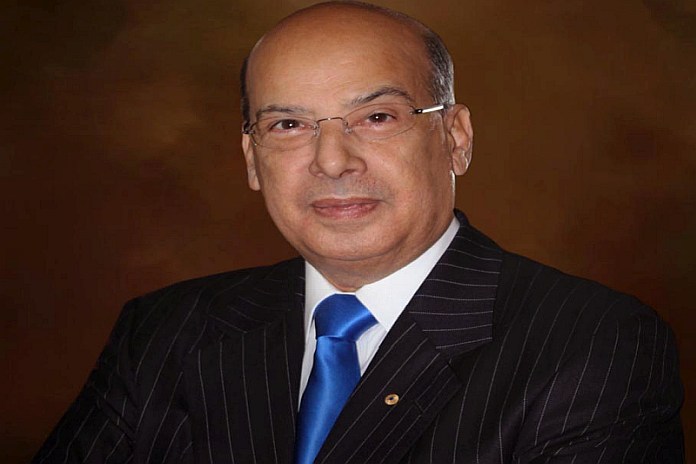
By Sir Ronald Sanders
For generations, Kenscoff was where people from Port-au-Prince went to breathe. Its cool hills offered relief, and its farmers supplied the capital’s markets. Gang attacks reached the commune in January 2025, but it remained an important barrier between gang-controlled territory and Pétion-Ville. On the night of 23 August, the Viv Ansanm coalition launched its largest attack on the community so far.
The United Nations says at least 47 people were killed and 22 injured, including five children. Twenty-two people were reportedly executed inside a church compound where they had sought shelter, and more than 50 others were abducted. It was one of the largest mass kidnappings Haiti has suffered in recent years.
Kenscoff was not a failure of diagnosis or planning. The danger was known, security machinery existed and international assistance had been promised. It was a failure to act in time and with sufficient strength. That failure now has names, bodies and grieving families attached to it.
Kenscoff’s Mayor, Jean Massillon, said gang reconnaissance drones had been seen over the town 15 days before the attack. Yet the warning did not produce the protection required. After the massacre, the chief prosecutor, Fritz Patterson Dorval, said eight armoured vehicles were in the area. Armoured vehicles protect no one if they are not where they are needed when gunmen arrive.
The slaughter at Kenscoff was not an isolated act. On 25 August, the United Nations Integrated Office in Haiti reported that, between April and June, at least 1,408 people were killed and 656 injured. Kidnappings rose from 57 in the previous quarter to 81. Fighting in Cité Soleil and the Plaine du Cul-de-Sac displaced more than 18,000 people.
During the same period, the United Nations documented 796 victims of gang-related rape: 772 women, 23 girls and one man. They ranged in age from ten to seventy-one. Eighty-seven percent were raped by more than one attacker, sometimes in the presence of their children or other relatives. In several cases, their homes were looted and burned.
The report also raises serious questions about the conduct of the security forces. Forty percent of those killed or injured during the quarter were victims of security operations against gangs. Twelve percent of them had no gang association, including children struck by bullets or drone explosions. The United Nations says it has received no information that investigations have been opened into these deaths and injuries.
On 25 August, United Nations Secretary-General António Guterres condemned the Kenscoff massacre and called for those responsible to be brought to justice through the specialised judicial units established with international support. No one doubts the sincerity of that statement. But condemnation has become the cheapest commodity in the international system. Haitians want to know which government will put an aircraft, a vehicle, an investigator or a prosecutor behind the words.
Kenscoff has exposed the central weakness of the Gang Suppression Force. It exists in mandate, but lacks the numbers and reach required to protect the Haitian people. The United Nations Security Council authorised 5,550 personnel. In July, only about 1,000 were in Haiti.
Jack Christofides, the Special Representative for the Force, told the Security Council that its headquarters, rules of engagement, intelligence structures and first forward operating base had been established, and regular patrols and initial operations had begun. These preparations do not amount to the operational strength required to confront gangs across several regions of Haiti.
The Force’s initial authorisation expires on 30 September, yet it remains far short of its authorised strength. Personnel, equipment and money have been promised, but promises do not secure communities. Countries with strategic airlift capacity must help move pledged contingents and their equipment to Haiti. A soldier pledged by a country but left at home cannot protect a family in Kenscoff.
Romain Le Cour, head of the Haiti Observatory at the Global Initiative Against Transnational Organized Crime, said of the international force and Haitian police: “They don’t have enough personnel.” He is right. One thousand personnel cannot protect Delmas, Tabarre, Cité Soleil, the Artibonite, Mirebalais and Kenscoff simultaneously. The gangs understand the arithmetic. They stretch the security forces by attacking communities where the State is already weak.
Even a fully deployed force will not succeed if the ground it recovers cannot be held by Haitian institutions. Monica Juma, executive director of the United Nations Office on Drugs and Crime, told the UN Security Council in July that Haiti is facing “a governance crisis, driven by organised crime”. She warned that, without functioning courts, prisons, police institutions and financial investigations, security gains would be temporary.
From 16 to 19 August, the Secretary General of the Organization of American States (OAS), Albert Ramdin, led a high-level delegation to Haiti. It included CARICOM Secretary-General Carla Barnett and representatives of the United Nations, the Pan American Health Organization and international financial institutions. Ramdin returned with an unambiguous message: the Gang Suppression Force needs more personnel, financing, logistical support and operational capacity, and progress must become “visible and measurable as soon as possible”.
As this Commentary is written, the Permanent Council of the OAS is due to consider how the organisation can support Haiti. The Council must not receive another report only to file it among the growing collection of plans for Haiti. It must require a programme of action identifying what will be delivered, by whom and by what date. Commitments of personnel, equipment, strategic airlift and money should be published. So should failures to honour them.
The OAS can use its machinery against organised crime, illicit firearms and money laundering to bring together customs services, financial intelligence units, coastguards, police forces and prosecutors. The weapons used in Kenscoff were not made there. The money used to buy and transport them did not appear from nowhere. The suppliers, financiers and political protectors of the gangs must be identified, sanctioned and prosecuted.
Haiti is a member of CARICOM and a founding member of the OAS. Its people are our people. Caribbean countries have limited resources, but we do not have limited standing. Our voices should be heard, and our actions must be seen and measured.
Kenscoff has stripped away every excuse. The danger was known. Personnel and equipment had been promised. Institutions had been created. Yet people were left to die. Governments must now be judged not by the plans they approve or statements they issue, but by the personnel, equipment, investigators and prosecutors they put into the field. Anything less leaves the next Haitian community waiting for its turn to be slaughtered.