



 GEORGETOWN, Guyana, (DPI) – Guyana is expected to remain one of the strongest-performing economies in the Caribbean and wider Latin America region as oil production continues to expand and economic transformation accelerates, according to the latest Global Economic Prospects report released by the World Bank Group.
The June 2026 flagship report projects that economic activity across the Caribbean will strengthen despite ongoing global uncertainties, with growth reaching 2.5 percent in 2026 and averaging approximately 3.9 percent between 2027 and 2028.
While the report noted that most Caribbean economies remain vulnerable to higher fuel costs because they are net energy importers, it identified Guyana as an exception, citing continued expansion in oil output as a major driver of growth.
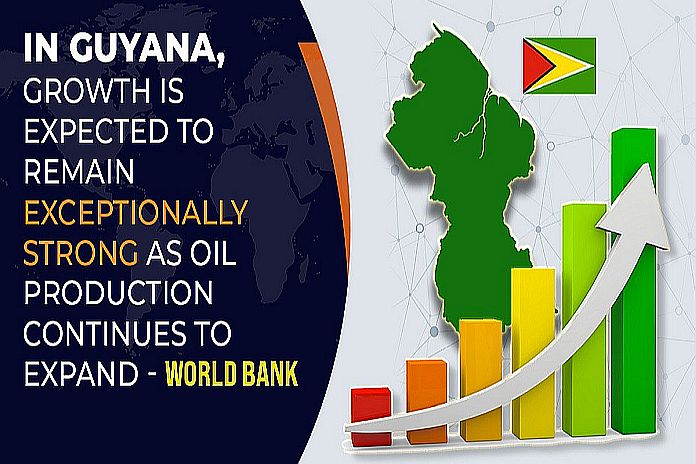
According to the World Bank, “growth is expected to remain exceptionally strong” in Guyana as petroleum production increases and economic activity broadens.
The report highlighted that regional recovery is being supported by stronger domestic demand and continued expansion in services, particularly tourism. However, Guyana’s performance continues to stand out because of its growing energy sector and strengthening export position.
Export performance across Latin America and the Caribbean was described as resilient, especially among commodity and energy exporters, including Guyana. The World Bank said favourable oil price developments have helped support export earnings and maintain economic momentum.
The government has repeatedly outlined its intention to use oil revenues to build a diversified economy capable of generating long-term opportunities across productive sectors.
Earlier World Bank assessments projected that Guyana would remain the fastest-growing economy in the Caribbean over the medium term, with its rapid expansion contributing significantly to overall regional growth.
The June 2026 report reinforces that outlook, positioning Guyana as a major economic growth engine within the Caribbean at a time when many economies continue to navigate inflationary pressures, energy costs and external trade uncertainty.