
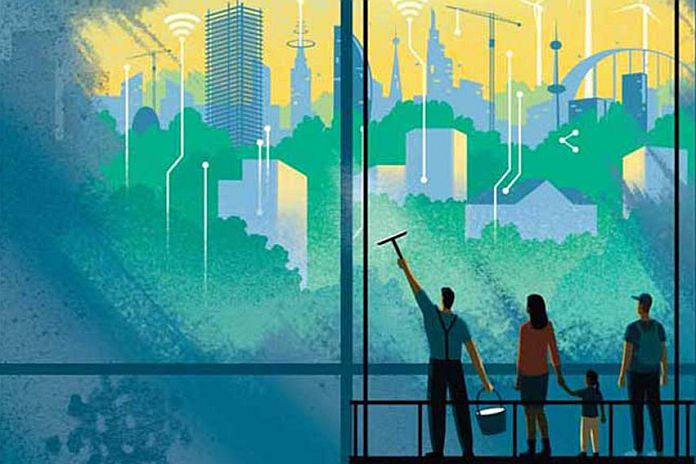
(IMAGE: DAVIDE BONAZZI)
By Gita Bhatt
There are decades where nothing happens, and there are weeks where decades happen. This saying could not be more apt today. The pandemic—which has disrupted the world in profound ways—has prompted countries to roll out significant policy changes that might otherwise have taken years. It has also sped the arrival of technologies and new ways of working and learning, moving us almost overnight into a new era.
For many professionals, working from home has become easier. Yet for many others, particularly workers in hospitality and tourism, delivery, retail, and basic care, deep economic scars are already forming. Among them: lost jobs, a widening skills gap, increasing inequality, and a toll on mental health. Women, youth, minorities, and the less skilled are disproportionately affected,and could face the beginning of many lost years. Those unlucky enough to start careers in a recession may experience lower earnings for 10 to 15 years after graduation, or longer.
This issue of Finance & Development, produced in partnership with the World Economic Forum, looks at the future of jobs and economic opportunity. It explores what can be done to shape a better tomorrow,one that puts people at the center of policy.
Reforms must focus on creating higher-quality jobs for more people in more places, says Martin Sandbu. “Work must be central because it is where many of the chronic and pandemic-related economic challenges intersect: inequality, precarity, and the new informality; geographic disparity; and technological change,” he writes.
The IMF’s Kristalina Georgieva highlights the importance of investing in women and young people and enhancing education, training, and re-skilling to open up opportunities. “People-focused policies can boost productivity, especially if investments enhance the abilities of workers in informal and low-skill job,” she argues.
Common threads run through the other articles. Heather Boushey and Lawrence Mishel argue for policies that strengthen worker power. Sabina Dewan and Ekkehard Ernst, who survey the economic fallout from the pandemic in developing economies, call for improved social protection and social insurance, especially for gig and informal workers. Binyamin Appelbaum shares his point of view on the role of economics in analyzing the inequities of distribution and incorporating insights from other disciplines.
Other contributors urge increased healthcare and childcare support; better designed progressive taxation to address income inequality, and scaled up investment in digital access as well as green technologies that would create new jobs in the process.
In the deepest crises are born great opportunities. This is such a moment—a window for radical change, not to be squandered. In weeks to come, decades can happen.

About the Author