
Image Credit: [Progress - Science Documentaries - https://www.youtube.com/watch?v=0Is0fVnE6b4]
“OPEC has issued three Solemn Declarations … namely, in Algeria in 1975, Venezuela in 2000 and Saudi Arabia in 2007. In each Declaration, the importance of dialogue was clear,” said HE Haitham Al Ghais, OPEC Secretary General, in his article, ‘Dialogue is central to OPEC’s objectives.’
“It has also been a core part of every OPEC Long-Term Strategy since the very first was issued in 2006.”
‘Other people’s wars, Caribbean bills,’ by Sir Ronald Sanders, articulates in part:
“Regional fuel trade already exists. Trinidad and Tobago’s storage, trading and distribution operations supply CARICOM markets, despite the closure of the Petrotrin refinery. Guyana exports crude internationally but still imports refined petroleum products. Its government is considering refinery and storage developments that could eventually serve the wider Community.
“CARICOM should assess collectively how existing supply relationships can be strengthened, storage expanded and emergency arrangements coordinated. It should examine whether collective purchasing or carefully designed longer-term contracts could improve bargaining power and supply reliability.
“The question is whether countries with the capacity to help are willing to do so before economic hardship deepens. For Guyana and Trinidad and Tobago, helping their neighbours would protect markets for their exports and strengthen regional relationships that serve their own prosperity and security. Now is the time to act.”
October 5, president Trump signed an Executive Order 14435 ‘Emergency Tax Relief on Diesel Fuel – announced an agreement for Russia to supply more than 300,000 tons of diesel immediately, 500,000 tons in November, and 1,000,000 tons thereafter, with 3,000,000 more tons to follow. Combined with Europe’s release of 100 million barrels of refined diesel from its strategic reserves, the added supply is aimed squarely at bringing prices down, reports White House weekly brief.
Highlights
- Trinidad and Tobago is restarting the Pointe-à-Pitre refinery and Guaracara Refinery
- The US has shown a keen interest in energy diplomacy and restarting oil refineries in Trinidad and Tobago. The US currently controls Venezuela’s oil.
- Europe is energy-challenged, caught between Russian oil and gas and a heavy dependence on Middle Eastern sources.
-
- The central question is how fast and reliably Guyana, Trinidad and Tobago, Suriname, and Venezuela are willing to deploy solutions collectively to serve the energy needs of the Caribbean region.
By Caribbean News Global 
In light of Venezuela’s oil exodus, market talk, and global energy supplies, policy decision-makers are left to deliberate: Who benefits from Caribbean oil exploration and energy sanctuary?
The Caribbean accounts for just 1 percent of global ocean area, while Venezuela represents roughly 17 percent of total oil reserves in the world and currently ranks as the 19th-largest global producer.
Guyana has become CARICOM’s largest oil exporter, currently experiencing rapid GDP growth as a major regional economic hub.
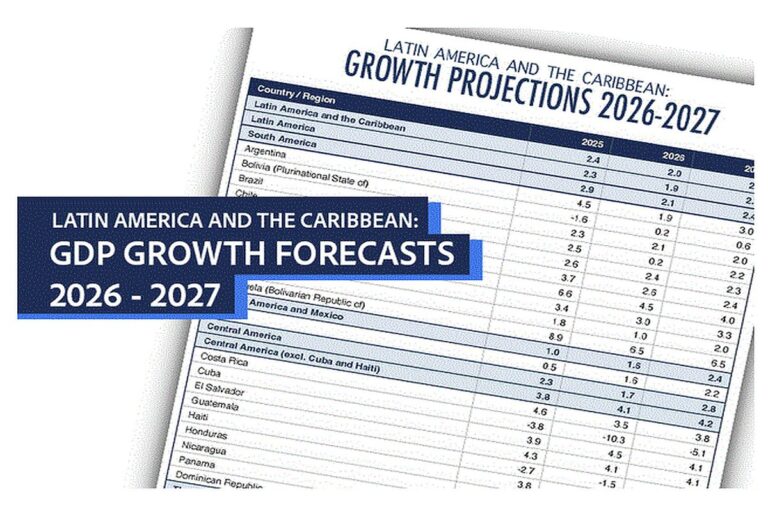
“Real GDP grew by over 19 percent in 2025, with oil and non-oil GDP increasing by 21 percent and 14 percent, respectively, as oil production exceeded 900,000 barrels per day, labor market conditions strengthened further, and private credit supported economic activity,” IMF, October 8, 2026. “Prudent macroeconomic policies, rising oil revenues, growing buffers, and strong public and private investment underpin stability and continued growth. Policies should continue to preserve macroeconomic and financial stability, strengthen policy frameworks, and support diversification and durable inclusive growth.”
Trinidad and Tobago’s economy and public finances are highly dependent on the energy sector, says an April 27, 2026 report.
“Oil and gas production has positioned the country as a leading petrochemical hub in the Caribbean, underpinning economic growth and facilitating convergence toward higher per capita income levels. In 2025, the energy sector accounted for nearly 20 percent of GDP, about 80 percent of exports of goods and roughly 35 percent of central government revenues. While this production structure has generated substantial benefits over the past decades, it has also increased the economy’s and public finances’ exposure to global energy price shocks.”
In Suriname, “Authorities face the twin tasks of safeguarding macroeconomic stability and strengthening institutional frameworks to support the transparent and efficient management of the coming oil revenue. Suriname faces offsetting effects from the war in the Middle East. In the near term, the windfall revenue gain from higher oil prices due to the war is expected to be broadly offset by increased spending on subsidies,” IMF, May 15, 2026.
“Resource GDP will get a significant boost with the commencement of new oil production in 2028, with moderate positive spillovers to non-natural resource GDP. The rise in global energy prices is expected to postpone a decline in annual inflation, which is now expected to return to single digits only in 2027. Elevated prices of oil and gold will boost fiscal revenues, especially once new oil production starts. Despite the expected spending increases under current policies, a substantial portion of fiscal revenues is expected to be used to accumulate assets and reduce debt over the medium term.”
Scott MacDonald wrote in his article: Is Trinidad and Tobago heading the same direction as Guyana and Suriname?
“If Trinidad and Tobago returns to the ranks of significant oil-producing economies, supplemented by natural gas and a LNG refinery, the role of the Southern Caribbean Energy matrix as a safe production zone will be further strengthened. Guyana, Suriname and Trinidad and Tobago are relatively politically stable, close to the US, open to foreign investment, and are nowhere near the Strait of Hormuz or Russian oil refineries being attacked by Ukrainian missiles and drones. For an energy-challenged Europe, caught between its stoppage of relying on Russian oil and gas and a heavy dependence on Middle Eastern sources, the Southern Caribbean is most inviting. TotalEnergies clearly understands this as does BP and Shell.”
Venezuela energy market
Venezuela is undergoing a massive US-backed restructuring to attract substantial foreign investment and reopen its energy market. National output is estimated at 1.2 million barrels per day (bdp) and is expected to increase production to 1.5 million bpd in 2027. The beneficiaries of Venezuela’s market developments and production are presently public entities and private investors. A reversal for Venezuela’s state-run oil company, PDVSA.
PDVSA’s chief executive, Hector Obregon, said October 9, 2026:
“The company had already signed 61 contracts, while another 44 remained pending. Venezuela aims to finalise 105 oil contracts by the end of 2026, with around 70 percent covering greenfield developments, as the country seeks to attract foreign investment into its energy sector.”
PDVSA’s refineries are processing approximately 350,000 mmbbl/d, a level Obregon said was sufficient to meet domestic gasoline demand as economic growth drives consumption higher. The company aims to increase refining throughput to between 500,000 and 600,000 barrels per day (bbl/d) in 2027, despite recurring fires, power disruptions, and operational outages at its refining facilities, as reported by Egypt Oil & Gas.
Key 2026 energy developments
- In 2026, the interim Venezuelan government signed a historic 100-year lease with private US firm North American Blue Energy Partners (NABEP). The deal grants the company control over 17 oil fields holding 65 billion barrels of reserves—with the US government maintaining a 35 percent ownership stake.
- Formalised under a January 2026 reform of the Organic Hydrocarbons Law, PDVSA has shifted from an exclusive state monopoly to a public contracting entity managing private corporate contracts. PDVSA plans to finalise 105 private oil contracts by the end of December 2026.
- High-profile private deals are altering regional dynamics. A notable example includes Colombian billionaire Jaime Gilinski securing a $500 million oil deal to exchange a heavy-oil field in the Orinoco Belt for control of GeoPark.
Venezuela’s extra-heavy crude
As a founding member of OPEC, Venezuela’s heavy crude is incredibly valuable to the US refinery complexes along the US Gulf Coast that are specifically engineered to process Venezuela’s heavy profile.
Strauss Center reports: “Venezuela’s Orinoco oil belt constitutes the majority of the country’s 298 billion barrels of proven oil reserves (and an estimated 513 billion barrels of recoverable oil), which are primarily heavy, sour crude. Venezuela’s extra-heavy crude must be processed by specialised refineries, making it costly to develop from an economic, environmental and technological standpoint,” adding, “Venezuela also has the second-largest natural gas reserves in the Americas, behind only the United States. However, its natural gas reserves remain underutilised, and a large portion of its current gas production is used to bolster the production of mature oil fields rather than sold to generate income.”
Where is Venezuela’s oil going?
The primary beneficiaries of Venezuela’s oil are China Shandong Province), the US Gulf Coast, Singapore, Spain and Italy.
“It will be recalled that PetroCaribe was established to act an economic “cushion,” giving countries time to adjust their rates of consumption, make lifestyle changes, and move toward renewable energy sources. It also created mechanism whereby a fund could be established to be used for the development of the energy sector as well as other areas such as social projects.”
Agreements with Cuba, CARICOM – PetroCaribe, and ALBA to provide oil on concessionary terms were miserable political experiments.
CARICOM’s pragmatic voluntary regional coordination respects sovereignty, regional solidarity, commercial realities and has high-value use for Venezuela’s oil and subsidiary products.
The current environment interlinks climate change with national security, food security, and energy security, among others. Any combination has linkages to energy volatility, deeper trade, food production, and infrastructure development. Oil storage, production, logistics and investment are actually of high consideration within the Caribbean.
There are sustainable benefits for CARICOM member countries to become a major producing region: Data indicates:
- Guyana is by far the dominant (and growing) producer and net exporter of light, sweet crude sold mainly into Atlantic Basin markets;
- Trinidad and Tobago is a mature, declining oil producer with stronger GAS/LNG and midstream assets;
- Trinidad and Tobago is restarting the Pointe-à-Pitre refinery and Guaracara Refinery;
- Suriname is still a small onshore producer awaiting large-scale offshore output;
- The other 12 member states and eight associate members are primarily net importers of refined fuels.
CARICOM member states stand to benefit from sharing resources and trade within the region, including commercial arrangements, and form credible institutions that guide investment and project execution. In the execution of this, a regional approach is needed for sustained energy security arrangements. Investments in joint infrastructure and logistics.
The resumption of Venezuela’s oil production offers expanding value that serves the region and creates mutual interest. One aspect of cooperation is shared storage, shipping proximity of CARICOM member states, shared capacity and volumes with Guyana, Suriname, alongside Trinidad and Tobago, restarting the Pointe-à-Pitre refinery and Guaracara Refinery.
The significance of restarting the Pointe-à-Pitre refinery ( idle since 2018) and Guaracara Refinery idle for nearly 8 years, as part of the restructuring of the state oil company Petrotrin has positive domestic economic output. This also reinforces regional energy security.
However, unlike before, when there was over-reliance on oil, weak institutions, corruption, and neglect of other service sectors, priority should be given to disciplined public investment, adjustment for openness and genuine economic diversification to support fiscal and development goals.
The US has shown a keen interest in energy diplomacy and restarting oil refineries in Trinidad and Tobago. The US currently controls Venezuela’s oil. Europe is energy-challenged, caught between Russian oil and gas and a heavy dependence on Middle Eastern sources. Collectively, these increase CARICOM region’s value proposition.
The underpins
Oil exploration in Barbados, Grenada and new potential in Jamaica serve as guarded opportunities for institutional machinery that is economically rational, while dispensing pragmatic energy supply, towards regional energy security.
Dialogue and knowledge transfer offer a durable path. This includes creating stronger regional economies, better regional infrastructure, more reliable energy options, and climate change adaptation.
CARICOM member states’ oil production and global ocean area are not sufficient to influence global oil prices and supply infrastructure. The Caribbean public good, however, has an opportunity for shared support for its energy self-sufficiency, while pairing energy security with food security, digital connectivity and knowledge transfer. This equilibrium links oil wealth with deeper economic pragmatism.
Reason to preserve Caribbean oil
CARICOM member states have a unique opportunity for significant investment in renewable energy and energy infrastructure, including deep-water ports, shipping and logistics. Benefits lead to market access and improvements in the value chain.
CARICOM member states and the region are attracting Global investment. Regional banks and financial institutions are liquid. Global cooperation is of high interest.
The Caribbean region can regain vitality to match tangible multilateral frameworks. Now is the time to get on the front end and negotiate a real deal, credible strengthening of trade, innovation and cooperation, while preserving a strategy of rebalancing.
“Renewed tensions in the Middle East, prices of crude oil, gas, and refined oil products, such as diesel and jet fuel, have risen sharply,” ~ IMF October 2026. “A more prolonged disruption of production and transport in the Middle East could lead to even higher prices of energy and other commodities.”
Energy and Oil ministers of countries participating in the Declaration of Cooperation (DoC) – Riyadh, 12 October 2026.
[… The ministers affirmed the critical importance of safeguarding the international maritime routes to ensure the uninterrupted flow of energy. They also noted that the current interruption of energy flows has elevated the cost of shipping and insurance, which have reached unprecedented levels of more than one-third of the commodity value, impeding the timely and efficient movement of crude oil and products, and placing additional inflationary pressures on the global economy.
“The ministers further stressed that these exceptionally elevated costs are ultimately transmitted across the oil value chain, increasing and prolonging the cost burden on producing and consuming countries and impacting global economic growth.]
CARICOM member states must accelerate readiness ( dialogue, grids, storage, agreements, investments, shipping and related services) to address bottlenecks to the global energy emergency while meeting growing demands for energy consumption.
- The central query is how fast and reliably Guyana, Trinidad and Tobago, Suriname, and Venezuela (Grenada and Barbados) are willing to deploy solutions collectively to serve the energy needs of the Caribbean region.

About the Author