
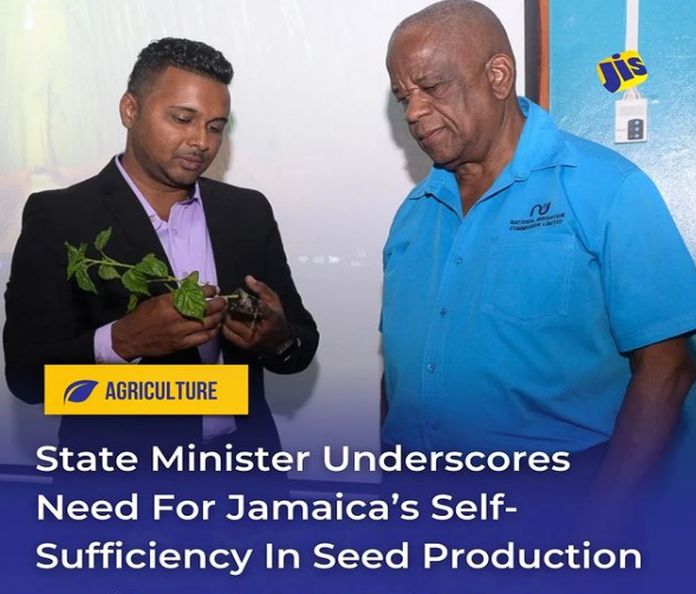
Acting Chief Plant Quarantine Produce Inspector, National Plant Protection Organisaton, Damian Rowe (left) and Minister of State in the Ministry of Agriculture, Fisheries and Mining, Franklin Witter
By Britney Stevens
KINGSTON, Jamaica, (JIS) – Minister of state in the ministry of agriculture, fisheries and mining, Franklin Witter, has underscored the need for Jamaica to become self-sufficient in seed production.
Addressing a recent plant breeding in hot pepper production training session at the Bodles Agricultural Research Station in Old Harbour, St Catherine, Witter noted that effective plant breeding strategies are essential for meeting Jamaica’s food security needs and enhancing crop resilience to pests and diseases.
“By developing improved cultivars, we can achieve increased crop yields, better nutritional quality and enhanced adaptability to environmental challenges,” Witter stated.
Against the background of concerns about the potential risks posed by local farmers’ reported increasing dependence on imported seeds, Witter pointed out that, “we aim to expand programmes that will enable local production of high-quality, affordable seeds, thereby lowering costs for farmers.”
In this regard, Witter indicated that, “the government will be spending over $6 billion over the next five years in improving our research facilities right here in Jamaica.”
“We want to [develop] crops that can withstand extreme weather conditions, [thereby] ensuring our farmers are prepared for future challenges,” Witter stated.
The training session was designed to provide technical officers within the agricultural sector with the skills needed to harness the genetic potential of crops, support national food security and improve crop resilience to pests and diseases. It was also intended to support the cultivation of high-demand peppers, including the Scotch Bonnet and West Indies Red varieties, which have significant market potential locally and internationally.
Additionally, the training exercise addressed the pressing issue of climate resilience, especially in the wake of recent hurricanes that have affected agricultural outputs.
The event was coordinated by the Food and Agriculture Organization (FAO) of the United Nations (UN).
Acting chief plant quarantine produce inspector, national plant protection organisaton, Damian Rowe, highlighted the initiative’s importance in promoting agricultural competitiveness.
“This programme is not just about training. It’s about forging a new path for our farming community and ensuring that they benefit directly from these initiatives,” Rowe said.
About the Author