



-
- The Philippines’ Walang Gutom Program is using electronic vouchers to reduce hunger, improve diets and support local economies.
MANILA, Philippines – The Philippines reached an important development milestone on July 1, when the World Bank reclassified it as an upper-middle-income country. Its economy has doubled in size since 2010, while reforms have created millions of jobs, reduced poverty and increased fiscal capacity.
Yet the benefits remain uneven. Around 17.5 million Filipinos still live below the national poverty line, while an estimated 55.6 million cannot regularly afford a healthy and varied diet. Rural communities dependent on low-productivity agriculture are among those most at risk of being left behind.
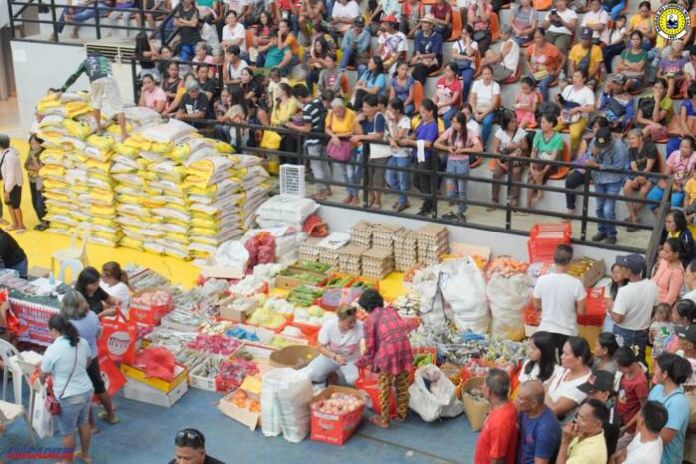
The government’s Walang Gutom – Filipino for Zero Hunger – Program is responding by combining direct food support with nutritional education and livelihood training. Eligible low-income households receive electronic cards loaded each month with ₱3,000 in food credits, equivalent to around USD 50.
The OPEC Fund was among the program’s earliest supporters, providing a USD 500,000 technical assistance grant for the pilot implemented by the Philippines Department of Social Welfare and Development.
OPEC Fund country manager Driss Belamine said: “This is a highly important and impactful project that tackles the twin challenge of food poverty and healthy nutrition. It is a prime example of what sustainable development means, combining quantity – the provision of sufficient food – with quality by helping secure a healthy diet.”
The vouchers are designed to encourage balanced purchases. Beneficiaries may spend up to half of their credits on carbohydrates, up to 30 percent on protein and no more than 20 percent on dietary fibre. Participating vendors record purchases, helping the program assess nutritional compliance and respond to consumer demand.
Households must also attend monthly social and behavioural communication sessions covering nutrition and livelihood skills. The aim is to help families sustain improvements in their diets and food security beyond the period of direct assistance.
The program began with a pilot reaching almost 2,500 households between December 2023 and July 2024. Coverage expanded to 300,000 households by mid-2025 and reached 600,000 in February 2026. The government plans to support 750,000 households by 2027.
An impact analysis co-financed through an OPEC Fund grant found that the incidence of frequent hunger among beneficiaries fell by 20 percent. Nutrition advice delivered through text messages and social media also helped influence shopping and cooking choices, contributing to a 36 percent increase in fruit and vegetable consumption and a 21 percent increase in protein consumption.
The benefits extended beyond participating households. More than 1,300 local retailers and agricultural cooperatives gained from increased demand for their products.
The Asian Development Bank is the program’s lead development partner. Other contributors include Agence Française de Développement, the Japan Fund for Prosperous and Resilient Asia and the Pacific, and the United Nations World Food Programme.
Preparations are now in their final stages for a proposed USD150 million OPEC Fund loan supporting the Reducing Food Insecurity and Undernutrition with Electronic Vouchers Project, known as REFUEL.
The wider rollout will also accelerate the use of digital payment systems in the Philippines. By combining social protection, better nutrition, local economic activity and digital delivery, the program supports both immediate household needs and longer-term development.