
Delegates at the International Civil Aviation Organization this week will direct the future of air transport
MONTREAL, Canada – With aviation facing mounting challenges from climate change, rapid technological disruption, and accommodating the projected growth in air traffic in a responsible manner, world air transport leaders will begin overhauling international aviation’s economic framework at high-stakes talks organised by the International Civil Aviation Organization (ICAO) Monday.
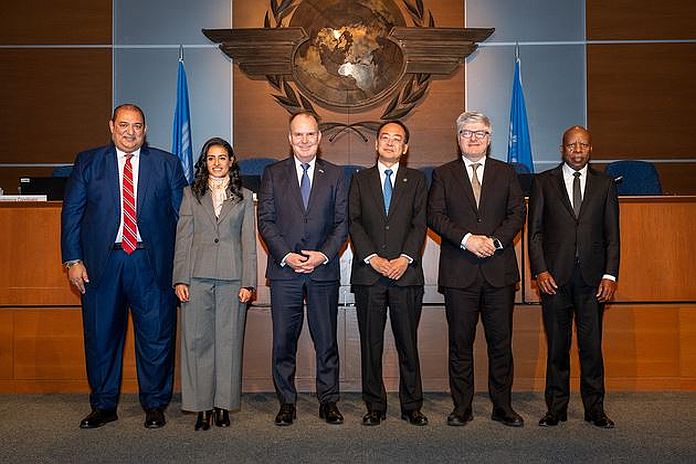
Laying the groundwork for stronger, more resilient, and sustainable global connectivity, the Seventh Worldwide Air Transport Conference at ICAO headquarters in Montréal has brought government ministers, industry figures, United Nations officials, development financiers, and innovators together for the first major overhaul of aviation’s economic framework in more than a decade. Delegates representing 115 member states are attending.
In his opening remarks, ICAO Council president Toshiyuki Onuma called for decisive action to prepare the sector for a radically changing future.
“Drawing on our shared legacy of bold innovation, the decisions made here will define the future of international air transport,” president Onuma told delegates. “These decisions will also define how aviation serves humanity and supports the global economy through 2050 and beyond.”
Participants are expected to debate new measures on consumer protection, harmonised aviation charges, strategies for financing cleaner energy, and measures to support technological leaps, including flying taxis and supersonic aircraft.
“We need a new global economic framework for international air transport that addresses rapid changes in technology, rising ambitions for climate action and changes in demand for aviation worldwide. This requires a shared commitment to a more resilient, sustainable and accessible air transport system that delivers lasting benefits for all,” emphasised Juan Carlos Salazar, ICAO secretary general.
The conference also marks the first year of ICAO’s Strategic Plan for 2050, which envisions “air transport for all” with net-zero carbon emissions and zero fatalities. Delegates are expected to support this plan through the adoption of a Ministerial Declaration at the end of the week, laying a common path for governments and industries to manage challenges ranging from cybersecurity to supply chain disruption and accelerating climate action.
This gathering takes place as aviation faces increasing pressures from geopolitical tensions, energy volatility, and global economic uncertainty. ICAO has organised these talks to address challenges, recognising the urgent need to modernise the frameworks that have long supported aviation’s growth and ensure adaptation to today’s dynamic environment.
- Deliberations will conclude on 20 November.
About the Author