



By ITC News
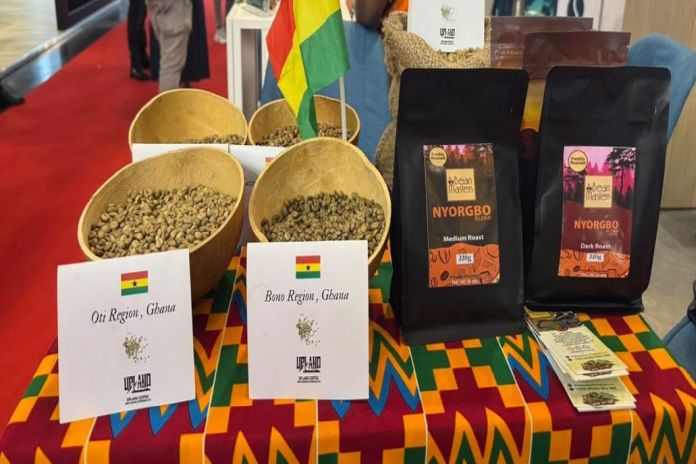
GHANA / BRUSSELS – Ghana produces coffee. Not many people know that yet, but the women growing, processing, and trading it just made sure the world’s coffee industry does.
Coffee has long played second fiddle to cocoa in Ghana’s agricultural identity. But the country has real and growing potential: Robusta coffee, well suited to Ghana’s lowland tropical climate, is produced by smallholder families across 10 regions, and is increasingly promoted as a strong second cash crop for cocoa-growing households.
Women are central to that production system, yet they represent only around 35 percent of supported smallholders, a gap rooted in unequal access to land, finance, training, and decision-making, despite carrying much of the sector’s day-to-day labour.
The International Women’s Coffee Alliance (IWCA) Ghana Chapter, launched in June 2026 on the sidelines of World of Coffee Brussels, exists specifically to close that gap. Bringing together farmers, processors, traders, roasters, exporters, and baristas across the value chain under a single women-led national platform, it creates the institutional infrastructure that allows women’s participation to be tracked, supported, and scaled, rather than left to informal or fragmented efforts. It also connects Ghanaian women in coffee to the global IWCA network, giving them access to peer learning, international visibility, and market linkages that would be far harder to build alone.
The Chapter’s formation was led by women in Ghana’s coffee sector, and facilitated by ITC under the EU–OACPS Business Friendly Programme, through stakeholder consultations, governance framework development, and capacity-building design. An IWCA Chapter, once launched, is self-governing. ITC’s role is to help get it structurally sound before stepping back.
Choosing to launch at World of Coffee Brussels was itself deliberate. The event draws buyers, roasters, and coffee organisations from across every producing and consuming region. Presenting the Ghana Chapter there sent an immediate signal: these women are entering the global stage where markets, partnerships, and recognition are made.
For the coffee sector in Ghana and globally, this move adds to a growing body of evidence that closing gender gaps in value chains is not a side issue. It is a core lever for quality, sustainability, and growth.