

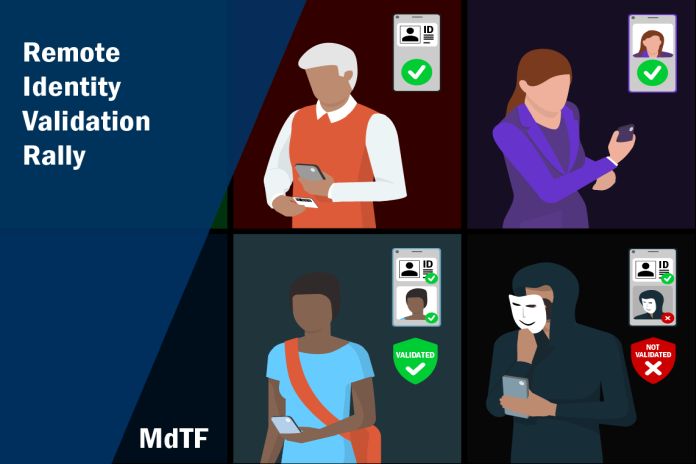
WASHINGTON, USA – Embracing an industry-first approach to rapidly identify and deploy cutting-edge security solutions, the Department of Homeland Security (DHS) Science and Technology Directorate (S&T) announced the expansion of the Remote Identity Validation Rally (RIVR). This series of technology challenges invites established technology companies and agile startups capable of rapid product delivery to test, refine, and improve their identity verification technologies.
By challenging the private sector to develop and improve these critical technologies, DHS aims to accelerate the deployment of tools necessary to reduce friction for transactions that require identity assertion while cracking down on a whole host of crimes that rely on identity fraud, including human trafficking, financial fraud, and identity theft.
“Identity fraud doesn’t just affect government systems; it impacts the daily lives of citizens and the economic security of the private sector,” said under secretary for science and technology Pedro Allende. “Through initiatives like RIVR, S&T is serving as a catalyst. We are bringing together startups, established tech leaders, federal partners, technology developers, and globally recognised testing resources to establish a unified front against identity fraud, ensuring our digital infrastructure is both seamless and secure.”
To maximise industry participation and focus on distinct technological capabilities, the 2026 RIVR challenges will feature a staggered application timeline targeting specific focus areas:
- October 2026: Applications open for companies developing Document Validation technologies (differentiating between genuine and fraudulent documents, including AI-generated fake documents) and selfie-to-document Matching systems (verifying the person in a selfie matches the ID photo).
- November 2026 (Threat Data Sharing): To build more robust evaluations, DHS S&T is calling on organisations that can produce or share examples of identity deepfakes attacks and the methods used to create them. Identity deepfakes, which may include face-swap videos or digitally generated or altered identity documents. This data will help the S&T develop a more complete and rigorous dataset for testing.
- December 2026: Applications open for companies developing presentation attack detection (detecting physical spoofing like masks or photos) and Biometric Deepfake Detection (detecting AI-generated impersonations, such as in video chats or teleconferencing).
This year’s event expands on the 2025 RIVR challenges by incorporating a broader set of real and fraudulent passports and driver’s licenses, more sophisticated attacks, and covering expanded use cases. These updates are designed to better assess performance differences across various solutions, smartphones, document characteristics, and real-world conditions.
“As digital threats grow more sophisticated—from AI-generated documents to real-time video impersonations—our defensive capabilities must evolve even faster,” said Arun Vemury, senior advisor for Biometric and Identity at S&T. “The expanded RIVR challenges demonstrate our commitment to collaborating with industry to rapidly assess and improve technologies that protect our citizens, streamline government operations, and dismantle the criminal networks that rely on identity fraud.”
The goal of each RIVR challenge is to enable industry to develop more secure, accurate, and easy-to-use technologies; objectively measure performance against realistic and sophisticated attacks; answer questions about overall performance and risks; and inform efforts to standardise technologies that remain effective against rapidly evolving digital threats.
About the Author