
-
- Rising debt burdens are threatening the world’s already fragile path to sustainable development, warns the UN ahead of the 4th International Conference on Financing for Development.
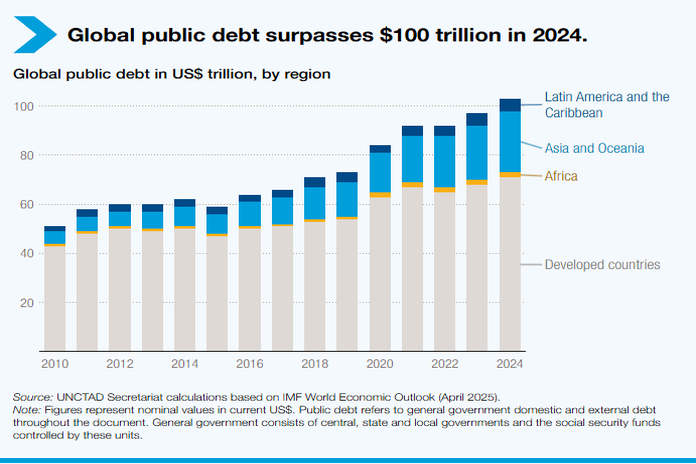
GENEVA, Switzerland – Global public debt rose to $102 trillion in 2024. Developing countries accounted for nearly one third of that amount – $31 trillion – and paid a record $921 billion in interests, straining budgets and putting vital public services at risk.
In the latest edition of its “A world of debt” report series, UN Trade and Development (UNCTAD) notes that public debt in developing countries has grown twice as fast as in richer nations since 2010.
Debt can be a powerful tool to finance infrastructure and improve lives. But when it becomes too large or too costly, it holds back economies and undermines development.
Countries – especially those in the developing world – urgently need more sustainable and affordable ways to finance the future.
Stark disparities and systemic inequalities
The report flags stark contrasts among developing regions, with Asia and Oceania holding 24 percent of global public debt, followed by Latin America and the Caribbean (5%), and Africa (2%).
Worldwide, public debt burdens vary significantly across countries, depending on the terms of financing and the types of creditors to which they can access.
Systemic inequalities in international financial systems are making things even more challenging.
Since 2020, developing regions have been borrowing at rates two to four times higher than the United States, for example.
In 2023, developing countries paid $487 billion to lenders abroad. Half of these economies spent at least 6.5 percent of their export earnings to repay external public debt.
People pay the price
In 2023, developing countries paid $25 billion more to creditors than they received in fresh debt disbursements, leading to an overall net debt outflow for years in a row.
This negative trend is worsening, the report warns, as high interest rates, low global growth and rising uncertainty continue to strain public finances and make it harder to sustainably manage debt.
In 2024, developing nations paid $921 billion in net interest on public debt, up 10 percent from the previous year.
A record 61 developing economies spent at least 10 percent of their government revenues on interest payments, leaving less for critical areas like health, education and climate action.
Today, 3.4 billion people live in countries that spend more on interest than on health or education.
A call to action
Rising debt, falling investment and shrinking aid are among the biggest financing threats facing the world today and putting the Sustainable Development Goals further out of reach.
The UN’s upcoming 4th International Conference on Financing for Development offers a once-in-a-decade opportunity to mobilize finance at scale and reform global financial rules to better serve people and the planet.
Ahead of the summit, UN Trade and Development highlights key actions needed:
- Making international economic governance more inclusive by giving developing countries a real voice in how global financial systems are run.
- Improving access to liquidity in times of crisis, including greater use of Special Drawing Rights, temporary suspension of IMF surcharges, better access to emergency financing funding and stronger South-South financial cooperation.
- Fixing the international debt system, by creating a fair and effective mechanism that goes beyond the limits of the current G20 Common Framework for Debt Treatment.
- Providing more affordable finance and technical support, including delivering on aid and climate finance commitments, reforming multilateral development banks and helping countries manage debt more effectively.
About the Author