
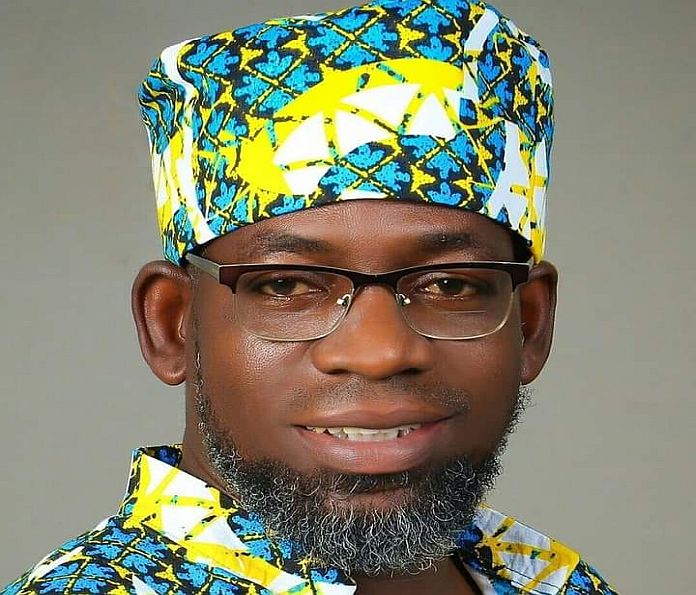
Garfield L. Angus is a Senior Journalist Based in Jamaica. He is also a Governor General’s Achievement Awards (GGAA) Recipient.
By Garfield L. Angus
The Caribbean media cannot continue to demand transparency, accountability and democratic governance from governments and public institutions while failing to examine those same principles within its own organisations. The Fourth Estate has a special responsibility because journalists question authority, expose wrongdoing, inform citizens and give voice to communities that might otherwise remain unheard.
But the credibility of that role depends not only on what journalists report. It also depends on whether the institutions representing the profession practise the openness, fairness and accountability they champion throughout Caribbean society. If media organisations expect governments and public bodies to operate transparently, they must be prepared to subject their own structures and practices to similar scrutiny.
Across the Caribbean, there is a need for serious democratic renewal within professional media organisations. This is not about personalities, factions or settling old scores. It is about strengthening institutions, widening participation and ensuring that organisations established to represent journalists remain responsive to the professionals they were created to serve.
Too often, professional organisations risk becoming disconnected from ordinary members when decision-making is concentrated among a small group. When journalists believe that important decisions are made without meaningful consultation, participation declines. The result is an unhealthy distance between leadership and membership at a time when the profession requires greater unity and engagement.
A modern Caribbean professional association must therefore provide meaningful opportunities for members to participate in decision-making. Members should be able to nominate leaders, question candidates, debate ideas, propose reforms and influence the direction of their organisations. Democratic participation cannot simply mean attending an occasional meeting or endorsing decisions already made.
The Jamaica Teachers’ Association (JTA) provides a model worth examining. Its governance structure includes president, president-Elect and an immediate past president, with elected officers representing parish and district associations. The JTA says its district associations provide teachers with opportunities to participate in policy formation and programmes. Its president-elect system also provides a visible succession mechanism. In 2026, two candidates contested the president-Elect election, with 11,275 votes cast, according to the JTA. The successful candidate was designated president-elect and was scheduled to be officially proclaimed at the Association’s annual conference.
This principle could be adapted by Caribbean media organisations. Rather than waiting until an administration is nearing its end before determining who will lead next, members could elect a president-elect, creating a clear and continuous leadership transition.
The proposed system should provide for two-year terms for each administration, with the president-elect succeeding the sitting president at the end of the term. This would ensure that there is always a person elected by the membership who is preparing to assume leadership, while the outgoing president could provide institutional continuity as immediate past president.
Such an arrangement could reduce uncertainty, encourage succession planning and give incoming leaders time to understand the organisation’s programmes, finances, relationships and responsibilities before assuming office. Most importantly, it would make leadership transition a predictable democratic process rather than an exercise dependent on informal networks.
The system should be genuinely open. Candidates should be able to declare their interest within clearly established rules, present their programmes to members and participate in debates or forums. Members should have sufficient information to make their own decisions, while the election process should be administered according to published procedures.
The changing nature of journalism makes such reform even more urgent. Artificial intelligence, social media, misinformation, declining traditional advertising revenues and digital disruption are transforming newsrooms across the Caribbean. Organisations representing journalists must evolve as well, providing practical support for professionals navigating this increasingly complex environment.
Young journalists must have a meaningful place in that future. They should see themselves reflected in leadership, committees, training programmes, conferences and policy discussions. Their participation should not be symbolic. Their experiences should help shape the agenda of the organisations that claim to represent them.
At the same time, the experience of veteran journalists must not be discarded. Those who spent decades covering governments, elections, courts, communities, disasters and major national events possess institutional knowledge that cannot simply be downloaded from the internet. Strong mentorship programmes can connect experienced practitioners with younger journalists and preserve the history of Caribbean journalism.
The region must also strengthen professional development. Journalists should have greater access to training in investigative journalism, artificial intelligence, multimedia production, data journalism, fact-checking, digital security and emerging technologies. The Caribbean may be divided by geography, but its journalists can become more closely connected through knowledge-sharing and regional collaboration.
Professional advancement, however, must not depend on who knows whom. Talent should have a pathway. Commitment should have a pathway. Excellence should have a pathway. A young reporter working in a small newsroom should be able to believe that quality journalism and professional integrity can open doors regardless of geography, social connections or membership in an influential circle.
This brings us to professional recognition. Awards and honours have an important place in journalism. They encourage excellence, preserve the history of the profession and demonstrate to younger practitioners that outstanding work is valued. Recognition can also remind society that journalism remains essential to democratic life.
But recognition loses some of its meaning when journalists believe that the process is closed, predetermined or influenced by personal relationships. The perception of favouritism can damage confidence in an institution even where no wrongdoing has been established. The solution is therefore greater transparency.
Caribbean professional organisations should establish clear, open and credible systems for recognition and awards. Eligibility requirements should be published, nomination procedures clearly explained and judging criteria accessible. Members should know how nominees are assessed and what standards judges are expected to apply.
Judging panels should be properly constituted, with safeguards against conflicts of interest. Where appropriate, information should be provided about the composition of panels, the categories being assessed and the broad methodology used to determine selections. Transparency will not eliminate disagreement, but it can reduce unnecessary suspicion.
Recognition should also extend beyond the familiar names that repeatedly appear on programmes, plaques and lists of honourees. Across the Caribbean, journalists work quietly in regional offices, community newspapers, radio stations, television newsrooms, digital platforms and specialised beats. Their contributions may not always attract attention from centres of influence, but their work matters.
The region must therefore confront the persistence of “Boys Club” type operations, closed circles in which recognition, influence and professional opportunities can appear to circulate among a select few. Whether deliberately created or sustained through longstanding relationships, such arrangements can undermine confidence in organisations that are supposed to represent the entire profession.
The answer is not to replace one circle with another. It is to build systems in which no circle has disproportionate control. Professional recognition should be based on published standards, transparent procedures and demonstrable achievement rather than personal relationships, institutional favour or informal networks.
The same principle should govern leadership. A transparent election system, including a President-Elect model, can help ensure that leadership is determined openly by the membership. A two-year administration would provide sufficient time to implement programmes while ensuring regular opportunities for members to renew or change their leadership.
This is not a demand for recognition for recognition’s sake. It is a demand for fairness, accountability and respect for professional excellence. Journalists who devote decades to informing the public, defending democratic values and documenting Caribbean history should not have to depend on personal relationships or membership in an informal circle to have their contribution acknowledged.
The Caribbean media cannot credibly champion transparency in government, business and public institutions while tolerating opaque practices within its own ranks. If journalism is to remain a pillar of democracy, the institutions representing and celebrating journalists must demonstrate the same principles of fairness, openness and accountability they expect from everyone else.
The time has come for Caribbean media organisations to embrace open elections, two-year administrations, a permanent president-elect succession system and transparent recognition processes. Members should know the rules, understand the standards and have a clear pathway to leadership and professional recognition.
The Caribbean does not need weaker media institutions. It needs stronger and more democratic ones. It does not need fewer voices around the table. It needs broader participation, greater accountability and leadership chosen through processes that members can see, understand and trust.
The Fourth Estate must therefore reclaim its democratic character, not only in the stories Caribbean journalists publish, but in the institutions they build and sustain. No closed circle should be bigger than the profession. No private network should be more powerful than transparent rules. And no journalist who has served with distinction should be invisible simply because he or she is outside the circle.
The future of Caribbean journalism depends not only on our ability to report on democracy, but on our willingness to practise it, with open elections, orderly succession, transparent recognition and institutions that truly belong to the professionals they were established to serve.
About the Author