
SAN JOSE, Costa Rica, (IICA) – Central America and Mexico will strengthen their capacities to detect and respond more quickly to New World Screwworm (NWS) through “Strengthening New World Screwworm Control and Eradication,” a new regional project aimed at enhancing epidemiological surveillance, risk-based animal movement management, and stakeholder engagement in the implementation of sanitary measures.
The new regional project, “Strengthening New World Screwworm Control and Eradication,” will be implemented by the Inter-American Institute for Cooperation on Agriculture (IICA) with the support of the US Department of State and the participation of the United States Department of Agriculture (USDA). The initiative will receive USD 3 million in funding and will be implemented over 12 months, from October 2026 to September 2027, to strengthen technical and institutional capacities in Central America and Mexico for NWS control and eradication and to support the effective implementation of the Sterile Insect Technique (SIT).
As part of the project’s launch, representatives of the Official Veterinary Services of Central America and Mexico, together with specialists from IICA and partner organisations, participated in the Regional Planning Workshop for the Implementation of “Strengthening New World Screwworm Control and Eradication.” The workshop focused on identifying priorities and gaps, leveraging existing capacities, and jointly defining the actions to be carried out in participating countries.
The new work plan builds on capacities already developed in the region and seeks to move them into a new phase of operational implementation, leveraging existing tools, knowledge, and experience to accelerate the sanitary response and avoid duplication of efforts.
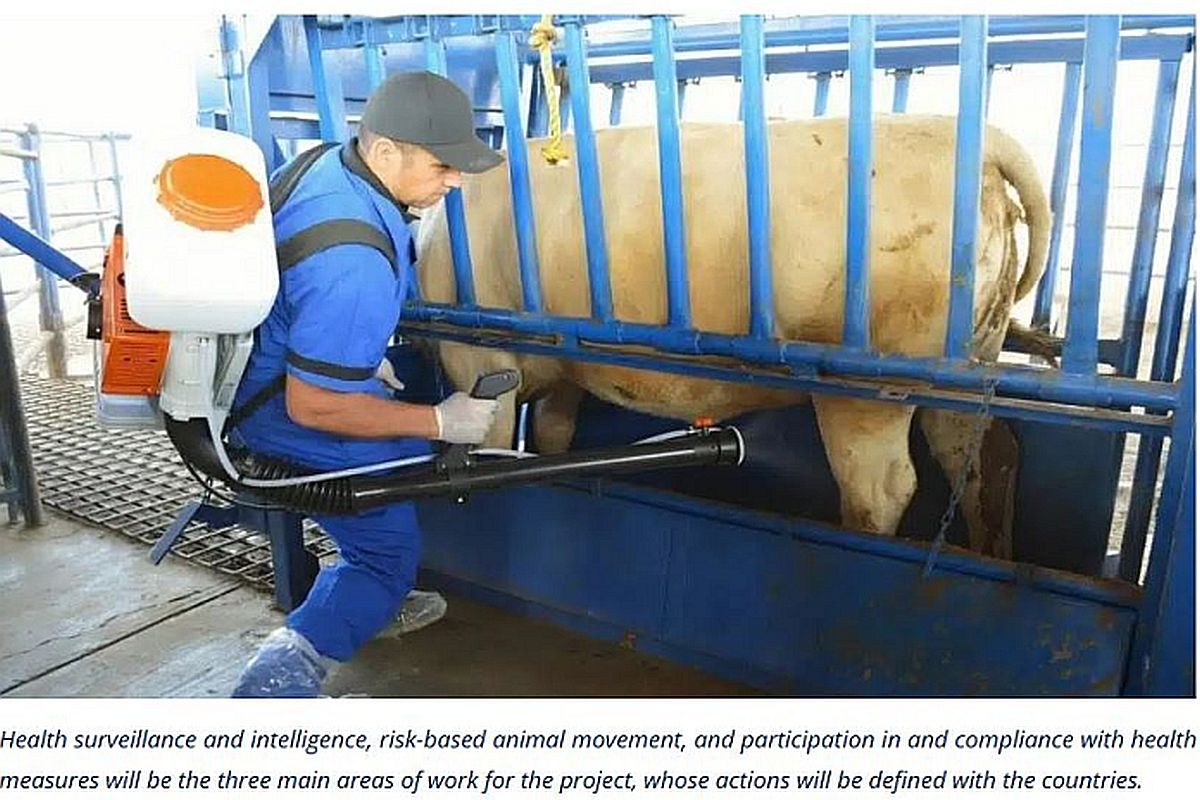
The project will focus on three complementary areas: surveillance and animal health intelligence, risk-based animal movement management, and stakeholder engagement and compliance with sanitary measures. The programming and implementation of the different stages of the initiative will be defined jointly with the countries, based on their national priorities and available resources.
In terms of surveillance, the project aims to strengthen early detection, reporting, and diagnosis of NWS, while improving information analysis so that countries can respond more rapidly to new cases.
These efforts will be complemented by the review and improvement of surveillance protocols, the development of tools to analyze animal health information, and the strengthening of regional capacities, with the aim of supporting timely decision-making and a more coordinated response to the disease.
José Urdaz, manager of IICA’s Agricultural Health, Biosecurity, and Food Safety and Quality Program, emphasized that the new project does not propose a one-size-fits-all response, but rather interventions tailored to the needs and capacities of each country.
“We are not seeking uniform responses to different realities. We want each country to be able to move forward according to its own needs and capacities, while at the same time contributing to a more active regional response,” said Urdaz.
The project will also strengthen the management of animal movement through inspection, traceability, and risk-based controls, supported by operational procedures, simulation and preparedness exercises, and technical assistance at priority locations.
“Eradicating New World Screwworm is a shared challenge. Moving toward eradication requires continuity, commitment, and regional cooperation that transforms the capacities we have built into sustainable results,” added Urdaz.
Protecting animals, producers, and markets
Engaging producers, organisations, veterinarians, transporters, and traders will be another central component of the project. The initiative will strengthen existing organisations and networks, conduct regional and national capacity-building activities, and enhance risk communication to promote sustained implementation of sanitary measures.
In addition to strengthening capacities, the project has established measurable results. Its targets include reaching 1,500 participants through project-supported activities, enabling 500 people to apply improved practices or technologies, and advancing eight eligible technologies, practices, or approaches, supported by mechanisms for monitoring and verifying results.
During the workshop, countries are working to translate the new project’s regional objectives into national actions: first by identifying capacities, gaps, and opportunities for cooperation; then by prioritising activities, outputs, targets, and resources; and finally by reviewing indicators and agreements to consolidate their plans.
“Strengthening New World Screwworm Control and Eradication” opens a new stage of cooperation to confront an animal health threat that knows no borders, transforming regional capacities, experience, and knowledge into an effective response that will enable countries to detect cases earlier, act faster, and make joint progress toward the control and eradication of New World Screwworm.
About the Author